
Every pantry looks organized for a day—rows of boxes, jars lined up, clean shelf lines. But let the week actually start, and those tidy setups show their fault lines fast. By Wednesday, what looked sorted is already breaking down: categories blur, someone reaches twice for the same snack, and finding the basics means shifting random overflow out of the way.
The Disappearing Line: When Open Shelves Stop Holding Order
Open shelves promise order by putting everything in view—cereal, grains, snacks all lined up neat. But visual calm doesn’t last past real use. Without built-in boundaries, every reach for oatmeal or a soup can slides something out of line. Groceries get restocked wherever there’s a gap, not necessarily in their old spot. Suddenly breakfast bars mingle with sauces, cans block rice, and what started organized turns into a daily search—especially in kitchens shared by more than one person.
This drift isn’t dramatic, but it’s constant. One box moves left, a bottle tilts forward, a snack bag squeezes in sideways. Each day’s quick fix—just shove this here, just move that there—creates a new tangle. Over time, the shelf “system” dissolves. Finding what you need is slower, and putting things back rarely restores order.
Routine Friction: The Hidden Cost of Unclear Zones
The true issue is structure, not square footage. When shelf lines mean nothing, categories collapse into each other. Suddenly, pulling out the peanut butter knocks over spices. Grabbing flour means shifting coffee tins out of the way and guessing where the pasta disappeared to this time. The original category edges, once obvious, go missing in the shuffle.
The pain points stack up in real use:
- Second-guessing every grab because the “zone” for rice or soup is gone.
- Dragging everything forward to chase down a single can, only to push it all back afterward.
- Interrupting a recipe to look for what has slid behind bulk snacks.
- Dealing with spills set off by balancing just one extra bag on a shelf that was already full.
These aren’t disasters, but they repeat. Small delays multiply, clean-up gets more tedious, and the space only looks organized if nobody’s using it much. Put simply: easy access on day one fades into cluttered friction by day five.
Enter the Open Bin: Setting Physical Boundaries Without Hiding Access
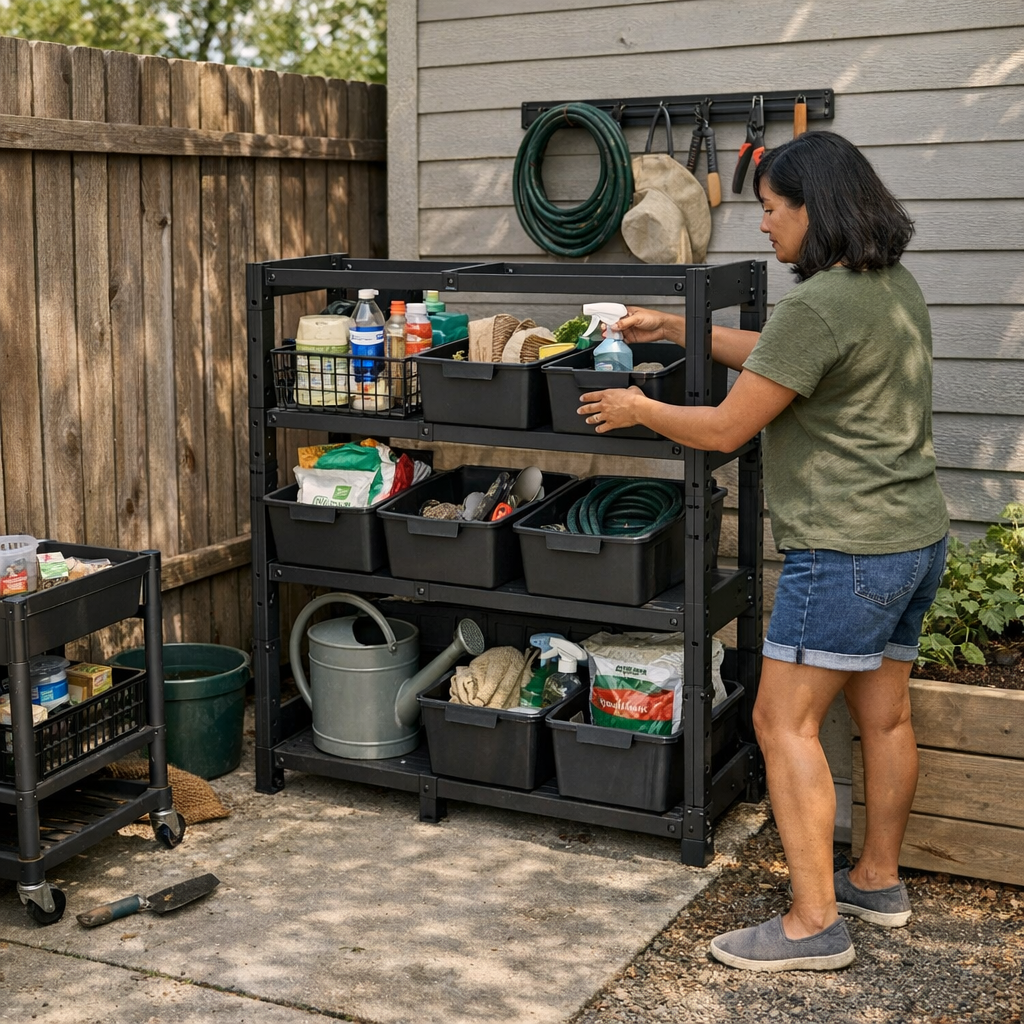
Open shelf bins change the rules. Instead of a blank landscape of shelf, you get visible, physical zones—snacks in one bin, grains in another, cans with their own territory. Now, boundaries mean something. It’s not about looking nice—it’s about corralling drift before it starts.
Physical edges do what shelf lines can’t: grab the grain bin, and you move the whole category in one motion, without bumping into oil bottles or extraneous boxes. Restocking gets clearer—lift the bin, see exactly what’s inside, spot hopeless drifters and reset them with one move. The open-top design keeps things fast: you see what’s missing, nothing gets buried, and there’s no wrestling with stuck lids or hidden surprises in the far back.”
Shared Kitchens, Shared Success
The bigger the cast, the more open bins matter. Different people see “where things go” their own way—open bins lay down rules everyone can follow. Misplaced snacks are obvious because they’re the only thing out of place. Return flow improves: even when rushed, most things land close to right. It’s not flawless, but the system recovers faster—and repair is built into the setup, not just the end-of-week panic sort.
The Reset Difference: Faster, Less Frustrating Maintenance
The crunch isn’t that the system fails, it’s what it takes to fix it. Before bins, resetting a pantry meant unloading half a shelf, reordering scattered items, and forcing things to fit. Fifteen minutes for a deep reset isn’t rare. With open bins, reset is, at worst, a few quick lifts and shuffles. Audit a whole category at once, identify drift, redistribute, and slide back. Spotting what’s off is natural, and three minutes later, order feels restored—without dreading the next round.
Maintaining Bins, Not Fighting Clutter
Bins can fail too if you ignore their boundaries. When “miscellaneous” becomes every bin’s theme, drift returns—snack overflow into pasta, breakfast bars hiding in the soup section. The fix: only let each bin have one clear purpose and correct small drift at every restock, not just at big resets. The less ambiguous the zone, the less mess you’ll face next time.
Real-World Tips for Lasting Pantry Zones
Fit bin sizes to how you actually restock and grab items. Bins need room to slide—leave about an inch of space so you’re not wedging bins out past shelf edges. Tight shelves turn bins into obstacles, not fixes. Choose mesh or see-through sides for instant inventory, or just label solid bins up front for the same effect. Skip lids for daily-use zones: open-tops keep everything quick and easy to spot.
Multi-user homes benefit from a “misc” bin on a lower shelf, confined intentionally. This catches oddball snacks and orphan items before they corrupt the main zones. During regular cleanups, sweep these out to their right bins and reset—this tiny, fast task keeps your whole structure from unraveling under minor exceptions.
Good Storage Doesn’t Eliminate Work—It Makes It Manageable
Category bins don’t make daily life flawless. Some chaos survives: a rushed week, an unexpected haul, absent-minded returns. But the improvement is visible—order lasts longer, corrections require less work, and most of the routine organizing happens as part of use, not as a separate, dreaded project.
With a true bin system, you see drift before it triggers a crisis, pulling things back into line with almost no resistance. Retrieval costs less effort, returning things feels obvious, and the shelf looks organized not just after a reset, but through a typical, messy week. Storage serves the routine, not just the setup photo.