
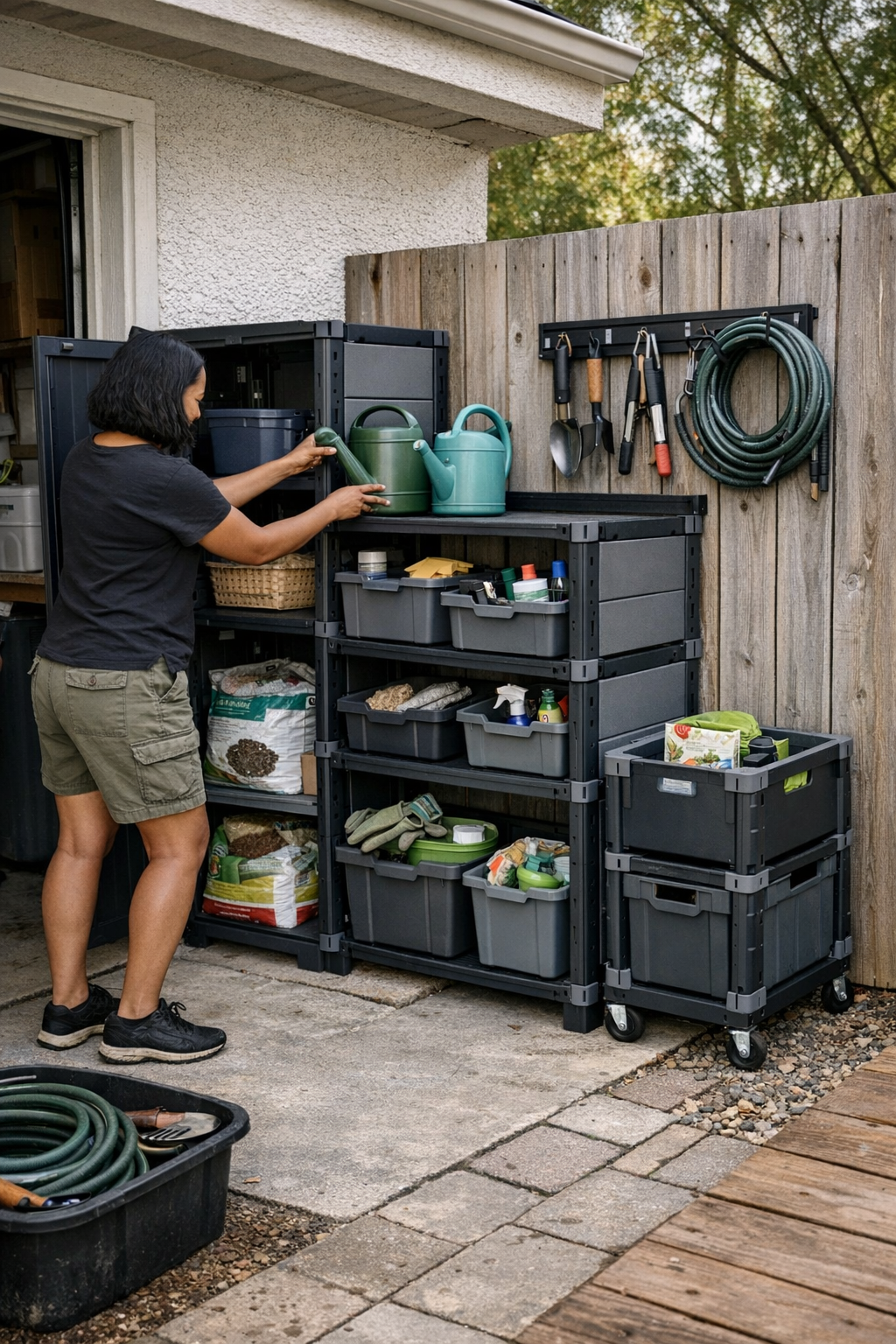
The first week is always the lie: you reset your backyard, tuck everything into its spot, and for a moment, your storage setup almost looks like the catalog photo. But by Friday, that order is slipping—one piece at a time. It isn’t that your gear outnumbers your space; it’s that the setup can’t keep up with real backyard movement. What feels organized on day one is outflanked by day six: the mower stuck behind the soil bags, the soccer net dragged back to the fence, the hose left curving across the walk because shuffling everything back just isn’t worth it after a long day. This is the gritty divide between ‘looked right’ and ‘works right’—the difference between setup that survives a snapshot versus one that keeps up with real use, especially in small, side-yard strips or tight utility corners.
The Subtle Breakdown of “Looks Organized”
Walk through your yard at the end of any normal week and you’ll spot the routine cracks: a neat shed that becomes a bottleneck, a wall rack whose top shelf never actually gets used, a side-yard supposed to keep paths clear but that you start dodging by Wednesday. The promise of ‘a place for everything’ wears thin under repeat pressure—reset after mowing, toys cycling out after school, planters shifting for the weekend BBQ. None of the mess explodes overnight. Instead, it’s the steady build of friction: stacking the hose so you can park the wheelbarrow, wedging the rake behind a container because nothing else will fit. Every return gets slower, every zone feels tighter, and what began as organization ends in one more ‘temporary’ pile blocking the run to the gate.
It’s easy to underestimate how quickly ‘convenience’ can disappear if storage is even a few steps off the natural path, or if “putting away” demands a shuffle of other stuff first. In real yards, that means anything stacked or far from where it gets used will be back underfoot by next weekend.
The Realities of Fixed, Wall, and Mobile Storage
Fixed Units: Stable—Until They Box You In
Bolted-down sheds and outdoor cabinets promise protection, but their demands are hidden in daily use. Doors need full swings. Floor space has to stay empty. If you’re squeezing gear along a garage edge or fence line, all it takes is one bulky mower or bag in the way and the setup grinds to a halt. You end up leaving items just outside “for a second”—and by next downpour, tools and toys gather like driftwood at the shed door, waiting out the next full reset nobody has time for. Fixed units punish blended routines: if one person’s stuff gets in first, everyone else’s gear is stuck outside the system.
Wall Systems: Vertical Space, Hidden Snares
Hanging racks, hooks, and shelves sound like the answer for narrow alleys or utility zones where ground space is gold. But vertical solutions only work when the details match how—and where—stuff actually moves. Shelves just out of reach? Tools start returning to the ground. Awkward bins at shoulder height? You’ll balance spades sideways or leave them wherever it’s easy in the moment. A badly chosen hook can quietly trigger a slow failure: items stop ‘returning’ and migrate to a new pile on the patio. Even a few inches’ mismatch between shelf height and real use will break your quick reset, especially when speed matters more than ideal storage form.
Mobile and Modular: Flexible—Until They Lose Their Anchor
Carts and modular bins are lifesavers—when they know where to dock. But mobility turns to mess if you skip this anchor point. One rainstorm or a busy weekend, and suddenly bins are stranded in walkways, carts cluster by the hose reel, and a slope sends everything inching toward the garage threshold. What looked adaptable becomes a game of Tetris no one wants to finish. Without a true ‘home base,’ mobile pieces get left wherever is least in the way until the next big clean-up—by which time, the setup feels like part of the problem, not the solution.
Backyard Reality: The Small Frictions
Here’s how it actually goes: Saturday, you’re done mowing. The only spot left for the mower is inside the shed, but a garden fork is propped against the entryway—move it, and now it blocks the spreader. You leave the mower outside, just until later. By Wednesday, kids’ balls and discarded pool floats queue by the shed, all “waiting” for the next round of tidying nobody can do quickly. Instead of a reset, you get a queue—and by Thursday, the clear path is just another tight spot to sidestep.
Or: you grab your favorite trowel from a just-out-of-reach wall rack during a planting rush. Later, you don’t bother with the extra reach and drop it by the fence, meaning to hang it later. By next week, that awkward corner is crowded with “temporarily” placed tools and bags, waiting for a bigger reset that never comes. Zone by zone, each inconvenient return becomes tomorrow’s visible pile.
Space and Flow: When Products Show Their Limits
It’s rarely about having too little space—it’s about how easily things move in and out, day after day. A storage bench might fit against the fence on the sketch, but in practice, its open lid cuts deep into the path. Line up containers in a side yard and suddenly it’s a tightrope act just to reach the compost bin. Shared yards expose weak return flow even faster: the quickest landing point becomes the new ‘home’ for everything, and assigned spots go empty. The setup’s original promise—clear zones, open walkways—breaks down as overflow collects in the most convenient-to-drop dead corners or gets stranded after the first downpour.
Dead corners never lie: wherever it’s easiest to drop gear will fill up first. If your storage system interrupts more paths than it opens, or if a zone feels like a holding tank for overflow rather than a real home, resets will keep getting pushed off—and so will your use of the space itself.
The ‘Return Flow’ Reality Check
The best outdoor setups fade into the background; returning things becomes automatic, almost effortless. But every hidden step—unlocking a latch, moving three bins, lifting a heavy lid just to return one toy—adds friction, and friction gets paid back with clutter. These aren’t user flaws. They’re system reveals: a few extra seconds per reset is all it takes for gear, tools, and toys to migrate from their ‘intended’ spot to wherever feels less annoying in the moment.
Wall systems work beautifully for what fits—until you need to park something heavy or awkward. Floor units keep bulkier items dry, but force a shuffle every time you need to grab something fast. Mobile bins offer real flexibility only if they have a clearly marked “landing zone” that’s actually convenient, not just out of the way. In practical terms, the real test isn’t how your setup looks once tidied, but how fast things flow back after a typical, slightly rushed day.
Making Space Actually Work—Not Just Look Full
Functional organization only proves itself when your path doesn’t slow down. In truly workable setups:
- Footpaths stay open without endless rearranging.
- Bulky things—ladders, carts—slide back into a spot you can actually reach, not wherever they first fit.
- Frequent-use tools don’t require double-backs just to hang or stash them away.
- Overflow piles aren’t inevitable every Wednesday; returning items makes more sense than leaving them out “just for now.”
If you keep finding yourself stepping over the same pile, skipping resets, or reshuffling gear just to get by, the problem isn’t you. It’s a return flow mismatch: the system isn’t matching how your routines play out. Notice what gets stranded or parked awkwardly, and you’ll spot where the setup stops working and real frictions add up.
Practical Adjustments That Actually Change the Routine
- Set shelf and bin heights to match your natural reach. If a shelf is a stretch, move essentials down to hooks or baskets at elbow level, and use the hard-to-reach space for true seldom-use items.
- Create a clearly visible “home base” for mobile gear. Don’t settle for vague corners—mark the reset point near the main path, where returning carts or bins doesn’t feel like extra work.
- Leverage vertical space where it counts—but avoid forcing bending or over-stacking. Every extra lift or reach equals one more reason to skip the return.
- Confine fixed storage in tight spots to single-purpose zones. Multi-user gear fighting for a single container guarantees someone will be left stashing gear in the overflow corner.
The real test is always the midweek look: pay attention to where items actually cluster after every normal use—not the reset snapshot, not the “best-case” layout, but the lived-in, slightly messy day-to-day. That’s what separates a yard that works from one that