
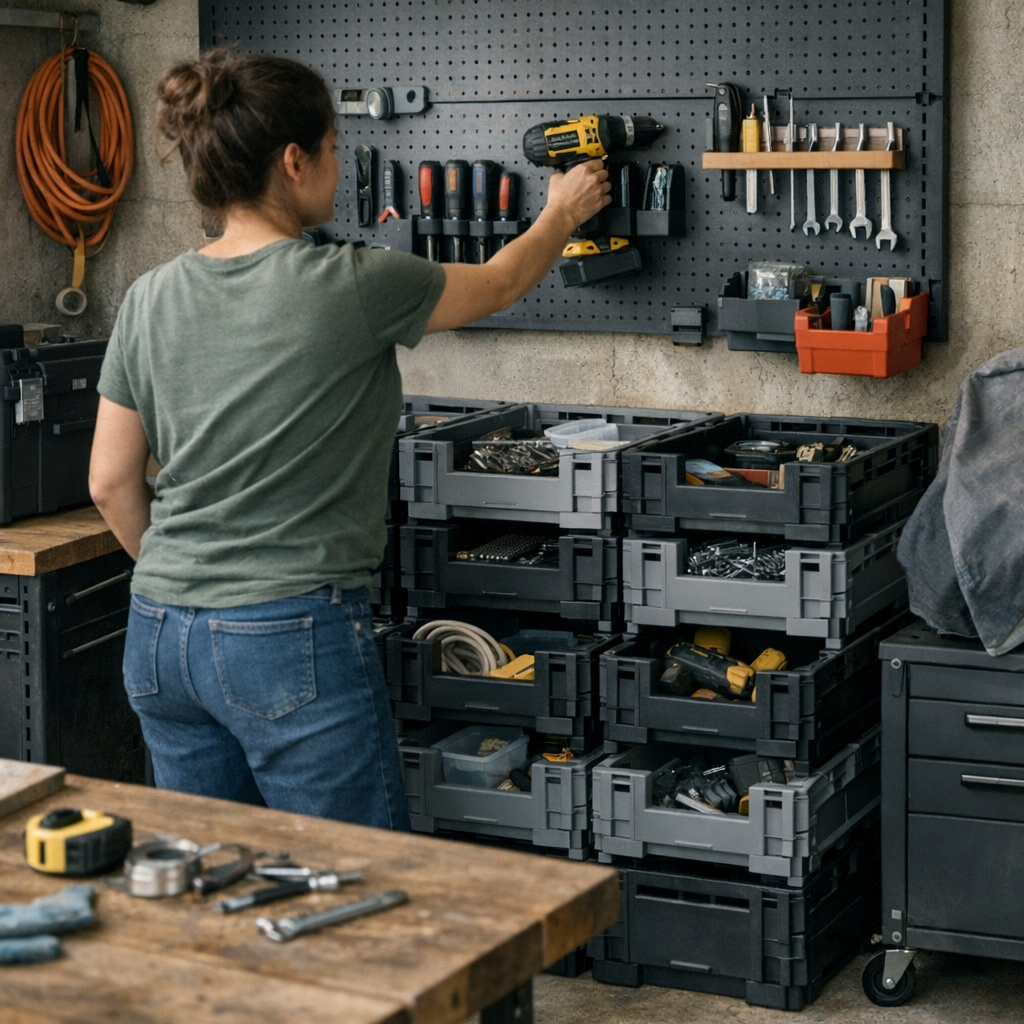
The illusion of organization fades fast when real life kicks in. Day one of a new garage setup always looks promising—rows of crates, tool rails, and freshly mounted walls suggest order has finally arrived. But it’s never day one that tests you. It’s day seven, when you’ve juggled projects, grabbed supplies on the fly, and raced to put things back before dinner. That’s when the cracks form. Tools are out of place, supplies drift onto any open surface, and what’s supposed to work—just doesn’t. The setup that looked clean on install turns patchy the moment routines collide with reality.
Visible Order vs. Daily Chaos
You roll your cart along what should be a clear path, only to squeeze past a shelf that juts too far or sidestep a bin left in the “close enough” zone. Maybe you reach for a drill, but first you have to move yesterday’s project overflow off your workbench. Modular crates sit fully loaded beneath a neat pegboard, yet you catch yourself hesitating—do these pliers go here, or should you drop them anywhere that isn’t full? It isn’t about how tidy your wall looks right now. It’s about whether the space lets you move, grab, and reset without having to think.
The Places Where Clutter Sneaks In
Clutter rarely arrives all at once. It’s the gloves tossed on top of a random crate—the one that now mixes sandpaper, hose attachments, and a stray measuring tape. It’s the flat spot near the door collecting everything you intend to put back “properly” later. These are not storage shortages. They’re signals that return points are unclear—or too far out of the way. Every extra second spent making that decision becomes the beginning of a pile. Pretty soon, your cart is blocked in, the wall looks busy but yields nothing instantly, and a “dead” corner swallows a bucket you won’t need for weeks.
Why “It’ll Do” Layouts Fall Apart
Forget blaming lazy habits. In real setups, every small inefficiency gets multiplied by routine: re-parking your rolling chest just to get through the space; grouping paint supplies with cable ties because “they’ll sort later”; shoving bins aside to access what’s actually needed. Unlabeled crates become catch-alls. Wall hooks turn into drop zones for whatever fits. Corners and ledges attract overflow just because they’re empty. The friction builds—not with dramatic messes, but in a slow, steady creep of stuff that chokes your flow and leaves resets feeling endless.
Movement Blocked, Momentum Lost
The hidden cost isn’t the occasional mess, but the way your layout starts to fight you. Reaching around the same bulky edge, nudging a rolling cart past boxes that missed their mark, or bending awkwardly because a return spot is just out of the way—all those tiny blockages wear you down. They discourage tidying up on auto-pilot. Instead, you make do. The original plan, clean on paper, now quietly undermines the way you really use the space.
The Practical Shift: Make Returns Instinctive
Improvement starts not with buying more storage, but by erasing friction from return actions. When every tool or supply has a single, unmistakable slot, resets become nearly automatic. Swapping generic bins for wall-mounted holders shaped for each item transformed my bench overnight. Drivers slipped in by handle, the tape measure found its shape-fit cradle, and tools stopped lingering in piles. No “almost” homes—just obvious, instant returns with zero double takes.
The Speed of No-Think Storage
Within days, what used to stall—pausing to remember which crate was for pliers, or hunting bits—gave way to quick, seamless resets. When you use labels, distinct shapes, and visible cues—even for garden corners or deep utility shelves—there’s no incentive to cut corners, even in a rush. It’s the difference between tossing gloves in a random crate and sliding them into a bin made just for them. The right storage doesn’t add work; it removes decisions.
Trouble Signs: Is Your Setup Getting in the Way?
If you see tools spreading across any flat surface, or materials clustered on the top of carts and chests, your layout is slowing you down. If you reset by shuffling gear “just for now”—knowing you’ll need to sort it later—that’s your cue. Your space’s true test is how it handles the return moments, especially after a busy stretch when you’re most tempted to skip steps.
Micro Tweaks, Lasting Results
You don’t need a full rebuild to fix these pressure points. Sometimes it’s as simple as adding shape-matched holders, popping in clear labels, or carving out wall space that’s obvious even when your hands are full. Notice where overflow collects—those “almost” spots are prime upgrade targets. If something repeatedly lands where it doesn’t belong, it’s because its real home isn’t quick enough to reach.
Let Routines Dictate Layout, Not Just Looks
The most effective setups aren’t measured by how much they hold, but by how little they force you to stop and think. Week after week, it’s the layouts where every item has an obvious, repeatable home that keep everything moving. Access stays direct. Paths stay clear. Gear resets itself—not from magic tidying, but from design that matches the tug-and-pull of real use. That’s when your walls, crates, and benches finally work with you, not against you.