
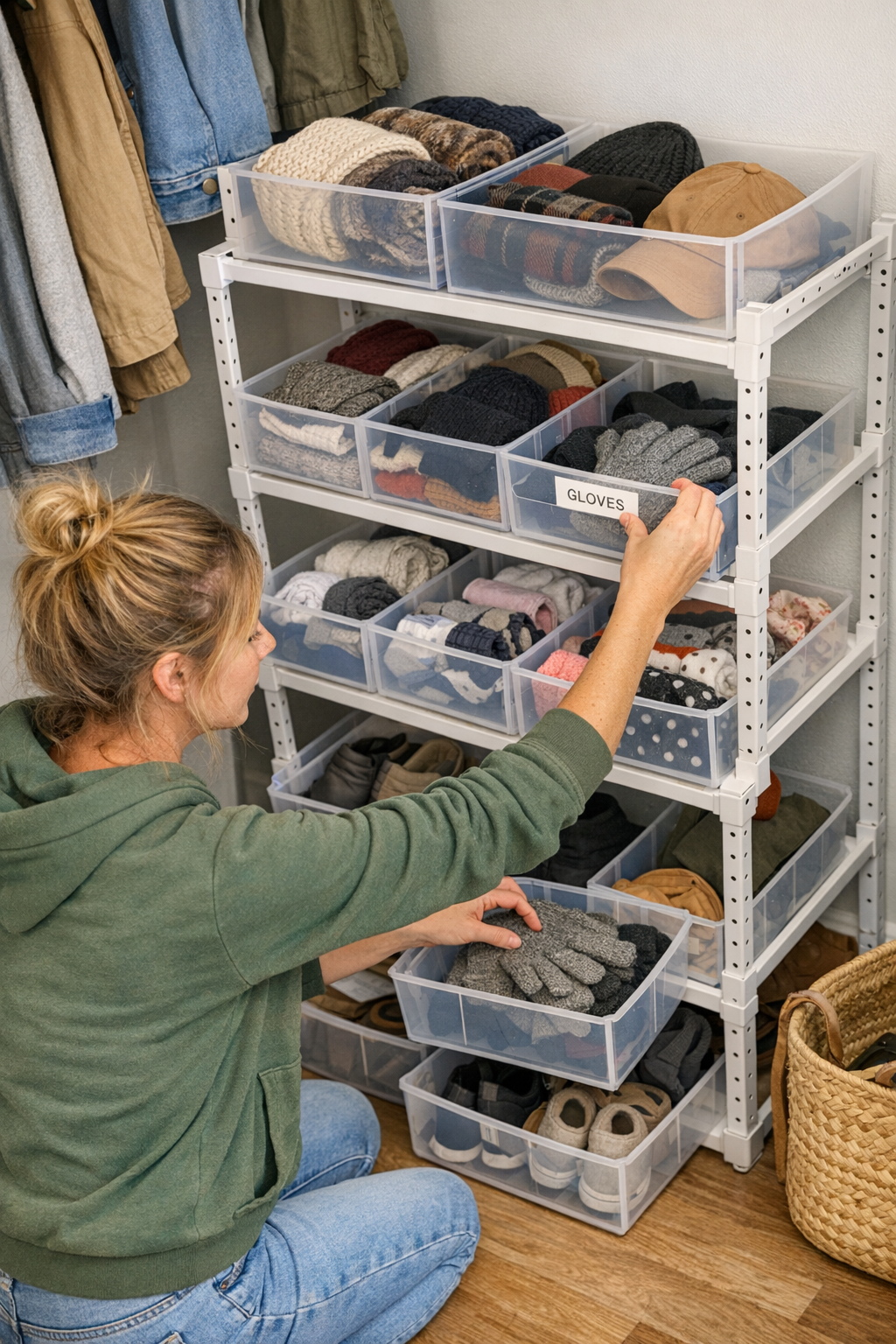
The promise of perfect storage—those rows of matching baskets, spotless glass jars, and deep, coordinated bins—rarely survives a busy week. Real life immediately tests your setup. Suddenly, the “minimal” shelf isn’t minimal at all: it’s a catch-all for loose receipts, tangled chargers, and single socks gone missing in the deepest bin. The pristine order you built quietly dissolves—because underneath the surface calm, your storage is causing as much chaos as it hides.
When Looks Smother Function
There’s a quiet thrill in lining up identical bins after a organizing session. But the illusion breaks the moment you’re short on time or energy. Need a scarf before work? You’re elbow-deep in a bin, disrupting three other stacks. Searching for the right pair of flats? Now all four shoe baskets are on the floor. That sense of visual calm, so appealing at first, quickly turns to stubborn friction: you end up shifting, restacking, and digging for simple things that should be easy grabs.
It happens everywhere—bedroom closets, hallway shelves, laundry built-ins. Deep bins and layered baskets offer instant “tidy,” but their peace is fragile. Every small search becomes a little excavation. Hats and scarves blur together, folded stacks collapse the second one item is pulled. The system starts turning your time-saving routines into slow, daily scavenger hunts.
What “Looks Tidy” Gets Wrong
There’s a painful difference between storage that poses for a photo—and storage that holds up during a hectic Tuesday morning.
Open shelves and shallow bins look almost plain in comparison, but that’s what makes them powerful. They force the mess to the surface. A missing glove is spotted at a glance. A half-empty bathroom tray shouts for a refill. Instead of hiding problems, these setups solve them in real time: corrections happen the moment something slips, no buried clutter or blind rummaging.
Hidden or deep containers break that feedback loop. You never see what’s missing or misplaced until you’re frustrated by it. Categories melt together. You avoid the system because it’s extra work just to use it. The end result? Your “organized” room silently breeds more shuffling, more piles in new places, more abandoned corners as your effort fails to stick.
How the Mess Returns: Scenes from Real Life
Take a hallway closet meant for everyday grab-and-go: kids’ sneakers, scarves, reusable shopping bags. Maybe you started with neat baskets for each category. But after one frantic week (soccer games, late returns, weather shifts), everything blends. Gloves wind up lost inside tote bags, hats mingle with dog leashes, unread mail covers the lot. By Friday, that “just organized” closet is a puzzle you have to solve on your hands and knees.
Or look at a utility shelf stocked with cleaning supplies. Sliding bottles behind bigger bottles, stacking extra sponges on top, the old spray cleaner vanishes to the back. You forget it exists until you buy another—and by the time you sort things out, you’re dealing with expired products, overflows, and a jammed shelf that won’t close.
The same happens in laundry rooms and pantries: oversized bins swallow socks, folded stacks topple as you reach for a shirt, and shelves meant for rowed order become layered mysteries that eat entire evenings when it’s time to reset.
Why Easy Reset Beats Impressive Style
The mark of useful storage isn’t a spotless look—it’s how quickly you spot a mess and restore order without starting over.
Switching from deep bins to shallow trays, or simply adding clear dividers, quietly transforms how you interact with your space. No more guessing where things belong. Categories hold their shape. What used to be a Sunday afternoon overhaul is now a three-minute tidy: slip shoes back in one move, slide loose batteries into their tray, get the lids back on cleaners without a shuffle. Sometimes, it’s as simple as capping bin depth at eight inches—enough to see everything, too shallow for anything to get lost.
Two Sharper Habits that Outperform Expensive “Fixes”
- Keep it shallow and open: Visibility comes first. Open-top, low bins are never glamorous, but you can see instantly when you’ve run low on batteries or when the “keys and wallet” spot is drifting. The fewer layers to peel back, the less chaos builds behind the scenes.
- Give every staple a clear-cut home: Real boundaries matter. Think shelf dividers for purse and bulk food, labeled trays for charger cords and loose coins. When each daily-use item has a visible zone, you train yourself—and everyone else—to return things right. Less re-sorting, less relabeling, less wondering “where did that go?” after a long day.
The Difference You’ll Notice—Even on Bad Weeks
Good storage setups make routines frictionless. You open a closet, see what’s missing, act in seconds. Mornings move; evenings end with a 30-second tidy, not a mini-rebuild. On the rare week when chaos wins—entry bench buried in muddy shoes, craft bin flooding with random schoolwork—it isn’t a crisis. The disorder is visible, isolated, and fixing it doesn’t mean repacking everything, just pulling one section back into line.
If grabbing or returning something takes more than ten seconds, your “organized” setup is slowing you down, not helping—even if it looks the part.
Change just one thing this week: swap a deep catch-all for an open tray. Add a divider to the bin that always reverts to a jumble. Watch how much less time you spend searching, stacking, and reorganizing—proof that real storage wins in the daily trenches, not the staged reveal.
For practical storage systems built for everyday routines—not just showroom gloss—visit ClosetWorks.