
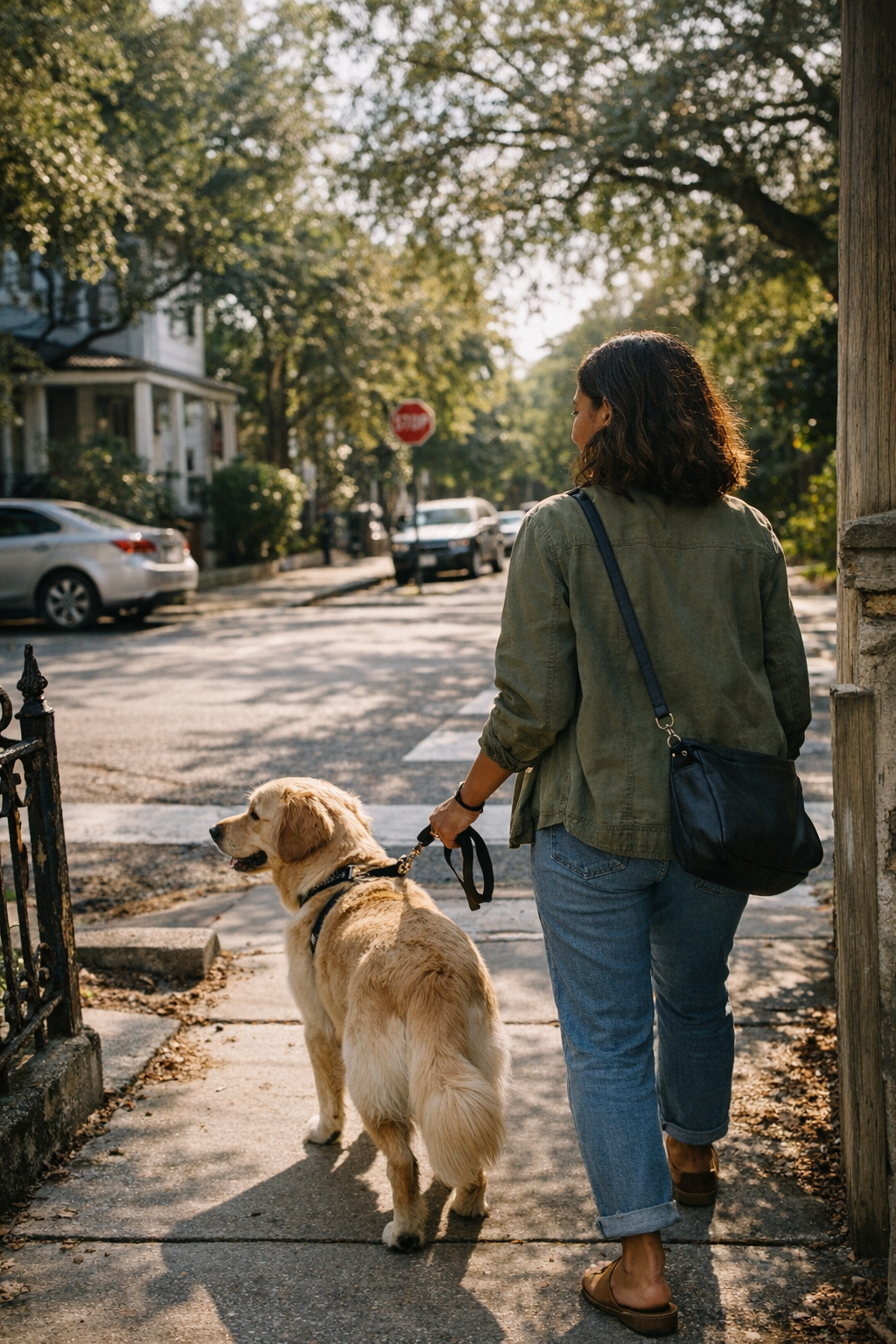
The difference between a calm walk and a tangled, rushed one often shows up in the first ten seconds at the door. You reach for the leash, but the harness is stuffed under a bag. Your dog noses ahead before you even find your keys. The walk already feels half-lost—not because of your dog’s manners, but because a single awkward moment at the threshold sets off a cascade: more pulling, more stops, and a routine that keeps tripping over itself. For most dog owners, this friction is the default, and the space right by the door—no matter how tidy it looks—keeps exposing the same weak spot. DogPile’s world is shaped around these repeated, practical bottlenecks, where routine falls apart not in theory but in actual, daily-use pressure points.
Where Walk Flow Breaks Down—And Where It Starts
No one plans for their walk to degrade, but it rarely begins with a dramatic tug. Instead, minor stumbles start the slide—a harness buried under yesterday’s bag, a leash that won’t unclip fast, your dog feeling the lull and surging forward as you try to untangle yourself at the door. Even before your first step outside, your timing is hijacked. These barely-noticed moments—pausing for keys, leash slightly tight as you fumble, your dog inching ahead—signal the real issue: the routine lets the dog set the pace before you’ve left the house. Each time you cave to a small rush, control fades a little more.
Small surrenders compound fast. Your walking rhythm shifts. Now, every pause on the sidewalk or stop at a crossing becomes an awkward shuffle instead of a steady wait. You grab for a bag or coat, and your dog pulls further ahead. Even clipping the leash sometimes feels like negotiating with a moving target. The walk you meant to set, you now scramble to manage—reacting, not leading, as the routine unravels block by block.
How Escalation Creeps In Without Warning
The friction isn’t in any single slip—it’s in the repetition. An imperfect setup at the door, a leash you can’t grab cleanly, or a wipedown kit just out of reach: these details get repeated day after day until the chaos feels normal. Your walk looks organized—a designated hook, shelf, treat pouch by the door—yet the feeling is tense. The problem keeps creeping in:
- Leash tension building sooner each session, turning short waits into contests
- Stops at intersections chopped up by restlessness—no real pause, just tangled steps
- Your dog anticipating motion instead of watching for your cue—ownership of the routine slipping
Each “just this once” shortcut—letting the dog edge forward at the threshold, stepping in time with their hurry—cements the habit. By week’s end, your walk isn’t a routine but a string of quick, compensating moves. The true cost: the routine quietly exhausts you instead of structuring the day.
The Unseen Costs of Losing Walk Pace
Once you slip out of control, it doesn’t stay outside. The after-effects spill into the next hour: a dog who stays wound up, a leash that’s hard to hook back for a second trip, or getting flustered picking up keys and bags at the door. Even after, feeding and rest are rougher—your dog is still wired, not winding down. The pinch point—by the entryway, where everything should just flow—becomes a site of repeated, subtle failure. Supplies are there, but you can’t grab them fast. You end up kneeling on the mat, redoing cleanup or grabbing towels with your free hand, while your dog paces circles. “Tidy” isn’t smooth if the right gear keeps being out of reach when you actually need it.
Why Early Correction Makes All the Difference
Stopping the slide requires actively resetting walk pace before a single step outside. The real shift happens not after you lose the pace, but in the moment you stand still at the threshold, leash set, making your dog wait and align beside you. No edge-out, no pressure—movement starts on your word, not theirs. Even one pause, right after latching the leash, interrupts the old routine. This minor, visible reset—every walk, not just once—pushes calm forward into the rest of your day. Suddenly, those common pitfalls—reaching for wipes, grabbing a second leash, cleaning muddy paws—start happening in order, not in a scramble. The difference: less time chasing your routine, more time actually living it.
Small Frictions That Add Up
- Reaching for the leash—but it’s tangled, or the harness is under a coat. By the time you fumble it out, your dog has surged forward and the routine’s already scrambled.
- Returning from a walk—wipes and towels are nearby, but not where you can reach them while holding the leash, so you’re forced to juggle, drop, or stretch.
- Pausing for a crossing—your dog circles back, leash tightens, and you lose your window to scan for cars without getting twisted up.
- Doorway waiting—the rest area looks comfortable, but it’s not placed so you can slide your dog into it as you re-enter and reset your shoes or coat.
- Cleanup zone—towels exist, but never in your hand at the exact moment muddy paws race in, forcing a delayed, extra-messy cleanup.
Each moment feels minor. But the pattern—supplies present but not useful, order on the surface but chaos in the process—drags down every part of the routine. Over time, calm gives way to friction, and what pretends at organization proves unreliable when tested by real, repeated use.
Changing the Everyday Walk Rhythm
When a dog learns that movement always starts when they say so—door cracks open, they bolt—every outing becomes a contest. The fix isn’t rigidity; it’s insisting on your pace, especially during the critical minutes at the start. Pause, align, proceed. If you don’t interrupt your dog’s default urgency, you start each walk behind. Build this minor reset into your rhythm: every walk, every day. It isn’t about perfection; it’s about handing yourself back a little more margin for error—so you don’t end up tangled, rushed, or fighting for control at every crosswalk or greeting on the block.
Small, repeated pauses beat one big correction. Make your baseline the norm, not your reaction to chaos. Dogs adapt fast: when walks start with your timing, they hold that rhythm through slowdowns, crossings, and returns—even through the expected interruptions of life in a real home.
The Reset Pattern in Action
Change starts, sometimes, with just a pause: leash clipped, you stand still, dog beside you, movement on your cue. A week of this, and real signs surface:
- Your dog starts looking up for movement, rather than lunging on the click—timing shifts to match you
- Fewer leash tangles at the door; pushing through together, not against each other
- Supplies—treats, wipes, bags—deployed where a hand can reach without acrobatics; less frantic grabbing
- Easier settle after the walk; dog chills in their corner, instead of bouncing through the next task
The benefit runs through the routine—transitions that flow, resets that don’t demand two hands and an extra five minutes, fewer places where dog gear spills into your movement space.
Balancing Calm and Real Life
No setup erases real-world chaos: sometimes you drop the bag, or the harness is hiding under the couch, or you’re already five minutes late. Still, a walk that begins on your pace softens the downstream mess. Small failures no longer rip up the routine—they just slow things, briefly. What changes isn’t the end of interruption, but how quickly you catch and reset after it. Less arm strain, fewer awkward pauses at the door, less sense that your dog’s walk energy is spilling into every bite and nap after.
Letting your dog pull for one block isn’t the end of the world—but letting it become normal leaves you working against your own setup every day. Control the starting pace, and you don’t have to overcorrect just to survive the rest of the week.
What Actually Changes After the Walk?
The biggest improvement often comes after the walk: does your setup let your dog settle, or does the threshold chaos drag on? When walk pace is managed at the start, ending transitions are simpler—paw wiping, leash re-clipping, dropping gear by the door are no longer a relay of tiny struggles. Your entryway clears, your dog resets quicker, and movement from walk to home stops being a stumbling point. You notice calm because the old friction—retracing steps to grab towels, stepping around scattered gear, delayed rest—simply doesn’t happen as often. Even busy mornings run closer to