
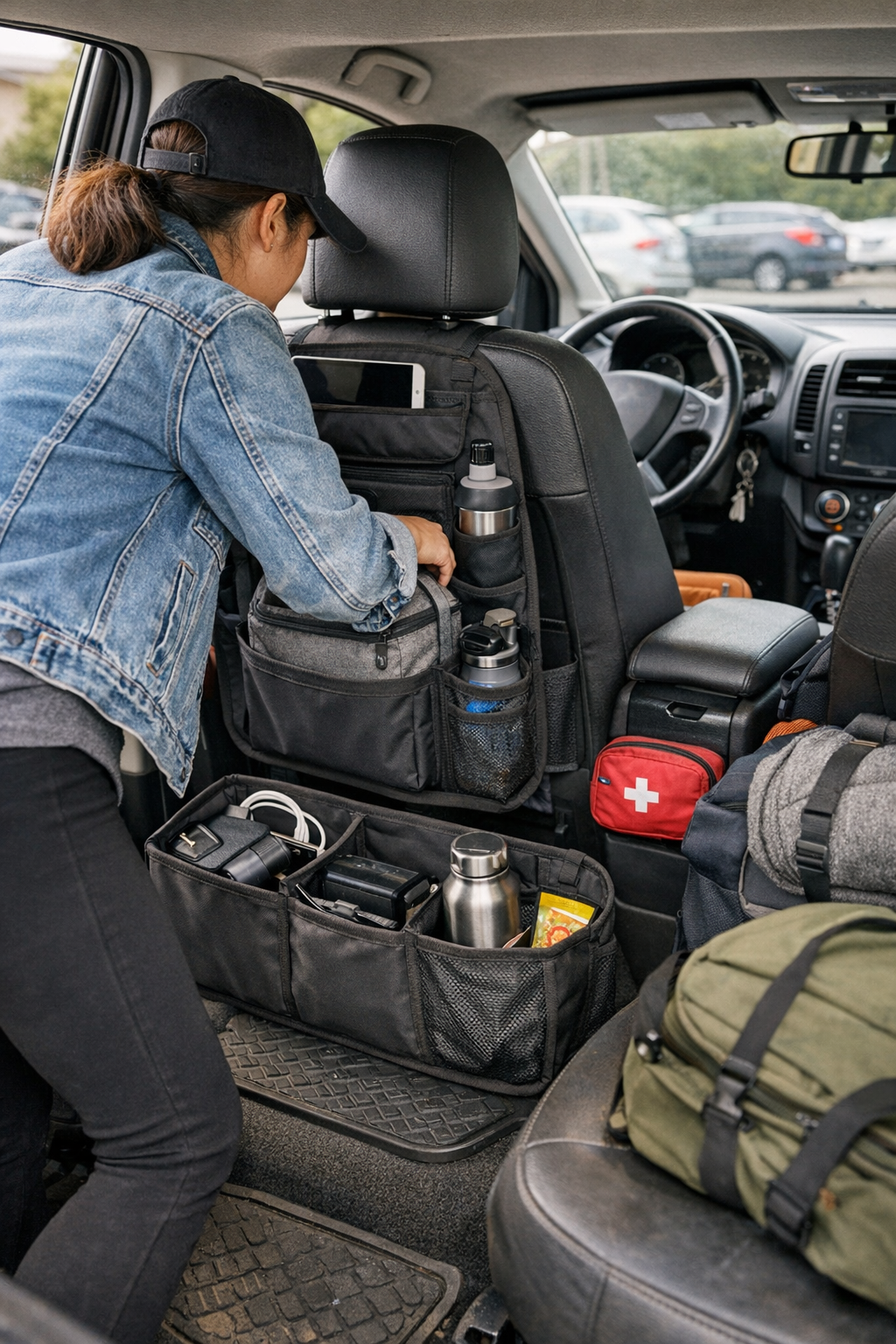
Most car back seats are a trap—organized for five minutes, inconvenient by day two. You climb in thinking a recent cleanup means less work ahead. But what looks under control quickly turns useless in actual use: phone chargers snake across seat gaps, water bottles wedge under the driver’s feet, and gym bags or jackets migrate into corners and block seat buckles. The “tidy” appearance fools you—for a while. By midweek, every stop means shifting something, untangling cables, and digging for whatever’s slid out of reach. What seemed fine after cleaning spirals into a chore you’re repeating every drive.
Appearing Tidy Isn’t the Same as Working Smoothly
If you shuttle kids, run carpools, or just have a busy week, the cycle shows itself fast. After a quick reset the back seat looks ready, but your routine never matches the clean slate: by the third or fourth drive, friction returns. A cable loops over the seat edge, making even a quick phone grab awkward. Bottles tuck themselves next to buckles so seatbelts become a two-handed job. A backup hoodie you tossed in is suddenly buried under a backpack and a half-empty snack bag. These aren’t dramatic messes—they’re interruptions that add seconds and stress, until you’re hunting for lost items every re-entry.
The Real Problem: No Assigned Zones
The issue isn’t just clutter—it’s the absence of assigned zones. No pocket for chargers, no upright holder for bottles, nothing for snack packs or spare masks. Without dividers, every item migrates, turning the cleanest seat into a jumble when real life hits. You can drive carefully, keep your crew on alert, and still end up untangling a cable from under the seat in the rain, or scrambling for your keys while bags fight for floor space. The visual “reset” has zero staying power when there’s nothing stopping gear from slipping, bunching, or blocking access in a moving car.
Repeated-Use Friction—Why Setup Matters More Than Ever
The cost of a weak setup isn’t about looks—it’s about everything that requires extra effort after multiple uses. Real routines stress-test your back seat: reaching for charging cables while parked, dropping a gym bag after work, keeping space for a passenger or kid in a hurry. Patterns show up fast:
- Cables loop, tangle, and cross seat spaces, dragging hands off routine actions just to fix them again.
- Bottles and cups roll into footwells, requiring blind sweeps under the seat for simple hydration.
- Seat access gets blocked by last-trip leftovers, forcing shifting—and sometimes frustration—before you can even sit down.
- Cleanup becomes a running task: each drive, you reset the same mess, feeling a little more annoyed every time.
These aren’t one-time hassles. What really wears on you is the repetition—the moment you reach for something and realize the system broke again after a single turn or brake tap.
False Sense of Order: Why Resets Only Work Once
A fresh clean might feel like a fix: bags lined up, cables coiled, drinks stowed. But the first unscheduled turn or braking in traffic, and the order goes sideways. Every drive without real zones is just clutter on a timer. Nothing stays put, and you find yourself pulling items from under seats or re-buckling seatbelts around gear that shouldn’t be there. The cost isn’t in the size of the mess—it’s in breaking your own routine each time something slides, wedges, or hides again.
Hidden Chaos vs. True Order
If you’ve fished a bottle from under the seat more than once this week, or if your charger’s been trapped between cushions mid-errand, you know: clean visuals don’t survive repeated use. The difference is simple boundaries—a pocket that holds, a groove that keeps bottles upright, a divider that stops a gym bag from creeping across the seat. Without these, every drive means repeat: stash, slide, search, reset. The frustration isn’t dramatic, but the time-loss is real.
When Routines Stack Up: The Real Cost of Unzoned Interiors
Busy weeks stress-test any setup. A sudden rainstorm, a bag of groceries dumped in the back, extra passengers—these expose every gap in structure. Picture it: you jump in, arms full, and a cable catches your boot, your work backpack slides down, and seat access is blocked until you reshuffle everything. No one’s pausing to re-sort after each errand. So by week’s end, improvised piles fill every pocket and corner. “Orderly” becomes a joke—now every stop means re-clearing space just to move.
Why Repeated Friction Stays Under the Radar
Most people dismiss these as minor annoyances. But when every quick trip steals another minute to reset, the system itself drags you down. The pain isn’t just finding a mess—it’s having to play cleanup crew after each ordinary drive. The wrong setup multiplies micro-annoyances. Only a system with real, stable zones keeps up.
How Simple Zones Restore Car Usability
Add basic order—split seatback organizers, upright bottle pockets, bag hooks—and the grind changes fast. A week with real zones, and you notice it: less energy lost on cleanup, less time untangling, more reach-and-go flow. The lost bottle now lands in a fixed slot. Chargers stay coiled, not tangled around bags or under feet. With each drive, you spend less time fighting the interior and more time moving ahead. The car doesn’t have to look “showroom ready”—it finally works the way you thought it would.
Noticeable Change After the First Few Drives
The payoff isn’t in pristine surfaces—it’s in not having to think about what’s drifting, blocking, or missing. Fewer “where did I put that?” moments. Fewer pause-and-shift routines before dropping in groceries or grabbing a charger. The car interior finally matches your daily rhythm, making access quicker and return-to-car smoother. Cleanup is lighter, almost automatic, instead of a recurring task list.
Choosing Zones Over “Just Tidy” – What Actually Changes?
- Access beats appearances: Items with a set “home” don’t wander. You reach, you find, you go.
- Cleanup becomes a snap: Less untangling, less lost time, because everything has a place—and stays there drive after drive.
- Routine feels less interrupted: Every trip is more predictable, with fewer last-second scrambles or blocked seats.
- Shared rides stop the cycle of chaos: Passengers actually know where to put things, and the gear you need remains findable after they leave.
Recognizing and Fixing a Common Mistake
Most drivers repeat the same error: thinking a tidy reset is enough for real life. If there’s no solid boundary—no pocket, hook, or slot—whatever order you impose in the morning will unravel by afternoon. Keeping things separated, stable, and reachable is what breaks the cycle of always restoring order. A seat pocket here, a cable holder there, an upright bottle slot—that’s what stops the drain from small, repeated blockages. The result isn’t perfection; it’s that your setup actually helps you, instead of fighting you, as car use stacks up.
Find practical, real-world back seat organization solutions at DriveWellSupply.