
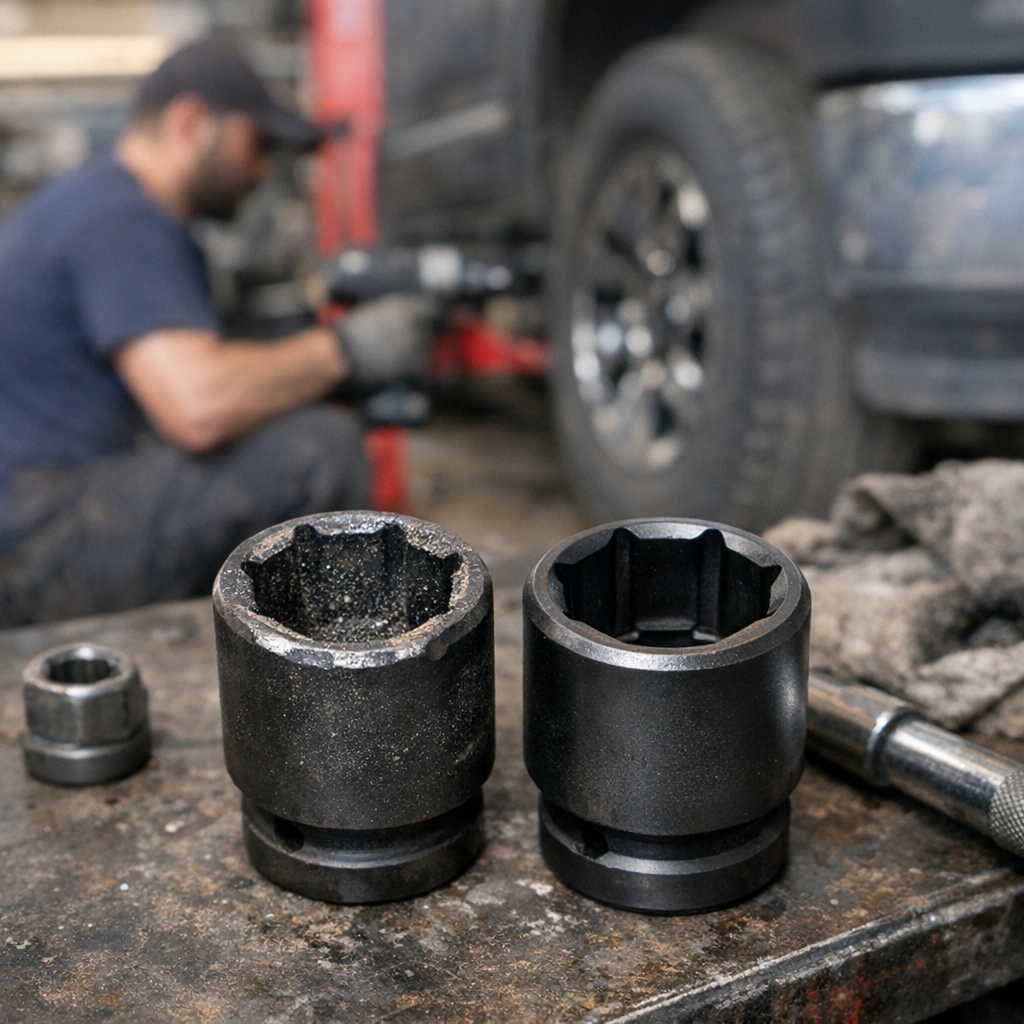
Most days in the shop, you don’t think twice about your impact sockets—until one suddenly holds you up. On a brake job where every bolt seems welded in place, or a wheel rotation turning into a battle with salt-locked lugs, the difference between a “decent” socket and one built for real abuse isn’t theoretical. It’s right there in your workflow: slipping, rounding, or that sickening snap that leaves you reaching for an extractor before you’ve even finished your coffee. In those moments, the right socket isn’t a luxury—it’s the difference between moving fast and losing an afternoon.
How Trouble Starts: The Subtle Signs Your Socket’s Failing
The warning signals rarely arrive as dramatic failures. Instead, it’s the everyday annoyances: trace amounts of metal dust in the palm of your glove, tiny steel splinters falling from the socket right onto your workbench, or a growing slackness as you wrench u-joints or hammer seized fasteners. One minute the tool fits; the next, you’re fighting to keep it aligned under torque, feeling the slop creep in as the edges start to lose their bite.
By the time you notice heat radiating from the socket or hear the changed pitch in your impact driver, you’re already riding past the socket’s best days. Cycle after cycle, things get gritty—biting down harder just to break loose another bolt, cleaning up flakes off your work surface, and spending more time fussing over fit than finishing the job. The progression is slow—until suddenly, it isn’t.
Socket Materials: Why Shortcuts Cost You in the Long Run
From a distance, most impact sockets look interchangeable. Identical finishes, similar heft. But take a pile of “budget” sockets through back-to-back jobs—be it an engine tear-down or a day of frame restoration—and shortcuts start bleeding out in the worst ways. Softer steel and lazy heat treating don’t just dent; they transmit punishing vibration right up your wrist and start shedding metal dust with every stubborn fastener.
On high-resistance tasks—rusted suspension bolts, caliper hardware that’s seen a dozen winters—low-quality sockets will telegraph their limits. Edges go blunt in the middle of a job, alignment suffers, and you spend more minutes backtracking, digging out leftovers from rounded heads, and vacuuming steel shavings before you can even swap wheels. All that fatigue adds up—on you, your tools, and your patience.
Day Two Headaches: What You Really Pay For
If you’ve ever powered through a fleet tire change only to realize half your sockets now spin loose or wedge tight, you know the true price wasn’t on the packaging. “Good enough” sockets lead to stop-start progress—a pulsing rhythm of re-seating, cursing, and searching for your last good size. Debris piles up. Your hands grow sore from vibration. By the second or third project, the inconvenience shifts from background noise to workflow-killer.
Swap in a top-tier impact socket for just one rotation, and the difference shows up immediately. Clean seating, crisp engagement, and less time cleaning up after metallic carnage. That means steadier progress, less uncertainty, and a smoother finish when your shift is already running long. It’s not tool snobbery—it’s the difference between cycling through wheels or bits without dread and dreading when the next jam is coming.
Hardness Ratings—And Why They Matter Only When They’re Right
On paper, that Rockwell HRC range (42–48) is just a number. Under actual use, it’s a shield against the pile of half-usable sockets in your drawer. Too soft and the socket mushrooms out under stress. Too hard, and you’ll chip it on a gnarly exhaust clamp. The right hardness doesn’t just survive round after round of impact blows—it keeps its edges, seats predictably, and lets you focus on the job instead of the next tool failure.
Even a microscopic difference matters. If your socket is just a hair oversized, or if hardness is off by a single rating, you’ll notice bolt heads start to round off and vibration rebound straight into your grip. Over time, that extra wear translates into unpredictable breakdowns and more hours lost on mid-job fixes. Consistent fit equals fewer tools trashed, fewer fasteners ruined, and just plain less stress with every rotation.
Real-World Red Flags: When to Swap, Not Push Through
It doesn’t take a catastrophic break to tell you a socket’s shot. Watch for gritty dust collecting in your toolbox, rounded edges, that telltale looseness when you drive into a head, or that subtle grind as you push to break a bolt free. Extra flakes on your bench? More resistance with every pass? Those are your cues to retire it. Ignore them and you’re burning both time and your next paycheck on replacements.
The Cost of Using the Wrong Socket
Grab a regular chrome socket for a high-torque job and you can almost predict how it’ll play out. One hesitation, and it shatters—leaving you with a cracked mess locked on the fastener. If you’ve ever fought to drill or chisel a broken socket out of a transmission housing or a cramped wheel hub, you know how quickly productivity grinds to a halt. It isn’t just an inconvenience. It’s time lost, parts at risk, and the creeping hassle of undoing mistakes you could have avoided by grabbing the right tool from the start.
Finding Sockets That Earn Their Place—Not Just Their Price
Choosing the right impact socket doesn’t suddenly make shop life easy. But consistently reaching for quality saves you from compounding mistakes and punishing detours. Look for real, field-proven materials—ones with heat treatment that stands up over hundreds of cycles and reviews that talk about months or years of steady use, not just first-day shine. Before every demanding session, do a quick fit check. That small habit means catching drift before your day turns rough. And for the key sizes—ones you hammer every week—keep a backup ready. One failed socket shouldn’t sideline your entire schedule.
The best socket hardly gets noticed: it does the job, doesn’t slow you down, and won’t have you scrubbing steel dust off your knuckles after close. Real toughness is measured in the rhythm of your work—when you can lock in, stay focused, and actually finish without your tools turning against you.
Browse Gumboll’s full range of impact sockets and accessories