
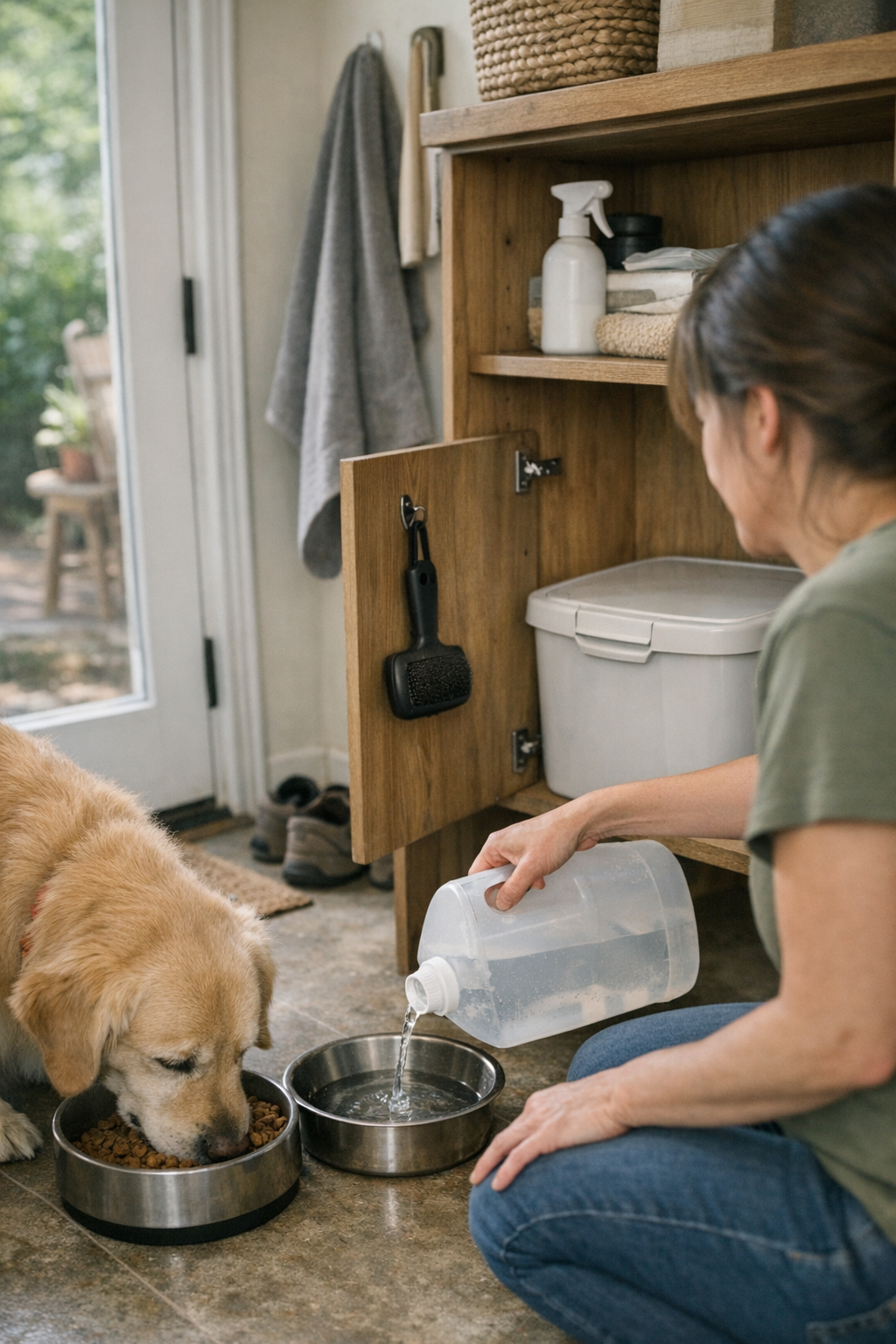
A crowded pet-care shelf isn’t just an eyesore—it’s a daily speed bump. The moment you’re rushing, a buried food scoop or misplaced towel means shifting bottles, dodging falling brushes, and losing precious minutes you don’t have. That setup you called “ready” on Sunday now jams up your week: morning feeds get slower, after-walk wipe-downs stall, and “organized” turns into repeated shuffling just to reach the basics. If each day includes sliding one container to get to another or dropping a stack while you’re half-awake, you’re not just losing time—you’re building constant friction into your pet care routine. This is where nearly every “well-stocked” setup falters, and why a smooth routine depends more on reach and reset than on appearance.
Everyday Friction Adds Up
The slowdowns don’t announce themselves. You notice them when you’re tired or in a hurry—after a muddy walk when you reach for the cleaning towel and have to nudge bottles aside, or refilling the water bowl with one hand while holding a leash in the other. Shelves look neat, but care supplies end up blocked in practice. The brush you need is behind last week’s unopened shampoo, the only towel you trust now squashed under random bottles. Each micro-shuffle delays what should be simple, pushing you to leave things out “for later,” which then spreads clutter onto counters and other parts of your home.
Surface Order, Hidden Inefficiency
Even when a shelf looks organized—everything upright, no obvious mess—friction builds underneath. A kibble scoop winds up trapped behind bulky treat bags, or your main bowls bounce from place to place because their spot is blocked with wipes or bottles. Wipe packs stack up, backing into each other. The quickest task turns awkward: a refill or cleanup that was meant to be automatic now means juggling supplies and mentally tracking where things landed. Shared spaces like kitchens are especially vulnerable—tools go back in the wrong spot, backups stay on counters, and whatever system you had on Monday is unraveling by Thursday.
Repeated Small Barriers
Real routine drag shows up when small barriers repeat. You step in from outside with a muddy-pawed dog—every second counts, but the towel is pinned behind a row of bottles. You steady one with your elbow and finally claim the towel, but now there’s no place to hang it back after use, so it lands on the counter. By the end of the day, the “temporary” pile grows and the shelf looks fine from afar but is frustrating in the moment. The next quick cleanup is already slower before you’ve even started.
When Setup Looks Good, But Slows You Down
Shifting clutter out of sight or stacking non-essentials behind pretty bins only hides the blockage. If the brush you use twice a week gets buried, or you have to move two things for a simple refill, nothing is really easier. Daily frictions keep returning: the carefully arranged wipes block the food container, quick-access bins require repeated balancing acts, and sometimes you end up searching the pantry for that one thing you use every single night. It isn’t obvious mess that wears you down—it’s the pointless background effort embedded in every care step.
Making Daily Basics Instantly Usable
The strongest fix? Strip your shelf to only the essentials you grab every single day. Place main food, a single water refill bottle, the one brush or towel you actually use, and just one pack of wipes within arm’s reach. All extras—refills, seldom-used tools, seasonal stuff—leave the daily zone entirely. If you notice you’re hesitating because you’ll have to restack things, or you often leave supplies out instead of putting them back, your routine is already getting crowded. The CalmPetSupply approach is simple: if it’s not part of your daily grab, don’t let it block the path.
Spotting Repeat Trouble Points
There’s usually one spot that gives itself away—a lid that never sits flat because too much is stuffed in the bin, a brush that lives on the counter because it’s a pain to put away, or a crowded hook that won’t hold one more towel. These micro-failures prove that the system fails the “rush test.” If grabbing or returning an essential turns into its own task, your setup is creating more work. Each slight pause sneaks into your day, leaving a shelf that looks managed but functions as another hidden chore.
The Difference Between Appearing Tidy and Operating Smoothly
The real test? When daily resets are nearly automatic. Bowls slide back into place, wipes stay easy to grab, refills aren’t buried, and even on your most hectic days, nothing migrates onto kitchen counters or piles up in walking paths. The relief isn’t obvious right away, but after a few days, your background effort drops—you stop double-handling supplies, your brain doesn’t get snagged on, “Where does this go?” and cleanup fades into routine instead of lingering work. Appearance tricked you once; actual order is friction shrinking every time you move.
Practical Shift for Smoother Days
Try this: make only your must-used items visible and reachable. Example: one refill bottle at the front, the towel you actually use hanging on a hook—never buried in a drawer—one brush that’s within single-reach in the cabinet. Closed bins mean “end of feeding,” not “stash everything at random.” Proof shows up in little ways: bin lids close cleanly, counters remain clear of stray supplies, you touch every essential only as often as needed. When you stop having to reshuffle for quick tasks, your after-walk resets and late cleanups stop dragging you down.
Daily Routine, Uninterrupted
Each unnecessary shuffle quietly steals time and focus from the rest of your day. Keep only daily must-haves accessible—extras go elsewhere—and your entire care flow improves. The win isn’t just less visible mess. It’s the shift back to dependable routines, less mental drag, and a setup that finally supports—not sabotages—your real daily care rhythm.
For more practical organization tips and better daily pet care, visit our store at CalmPetSupply.