
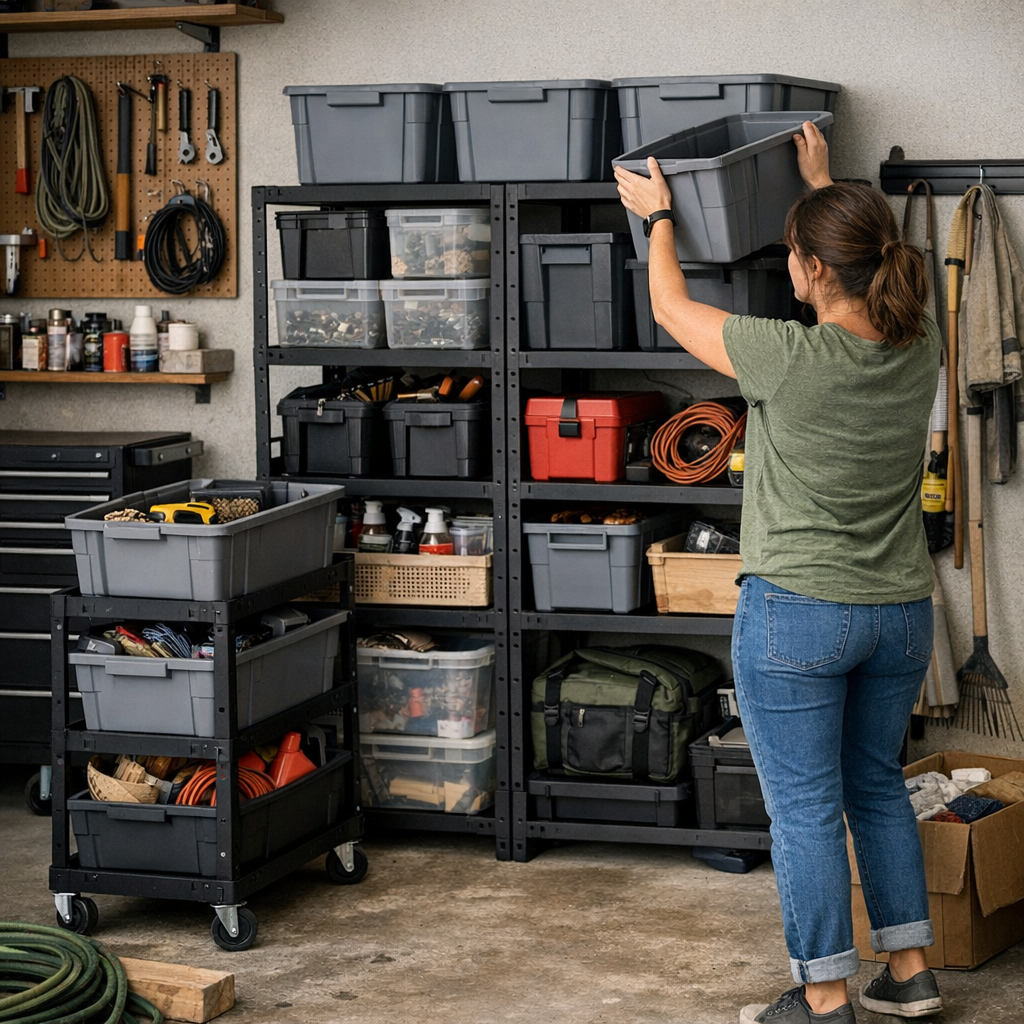
At the start, garage organization feels like a big win. The shelves are lined up just right, bins have labels, every tool claims a slot. But give it a few days—a few busy afternoons, a handful of trips in and out—and the cracks start showing. The modular rack you planned so carefully is blocked by a rolling cart you had to nudge sideways. That open walkway is now pinched by a pile of odds and ends waiting for “later.” Bins don’t line up. A dead zone is forming. What felt efficient on paper becomes a daily source of little frustrations, all stacking up the more you actually use your setup.
Where “Looks Organized” Stops Working
At a glance, it’s still neat: bins in rows, no obvious chaos. But open one, and you’re reminded why it’s rarely used—a heavier bin is always sitting on top, so accessing anything means a drawn-out game of Jenga. Return a rake to its bracket and it instantly tips into the wheel path because another tool didn’t get fully returned last time. The cart rolls—but always needs to be pulled out again just to open a lower shelf.
This is the hidden friction: Every movement is a workaround. A corner you planned on being flexible is already clogged. That “perfectly filled” wall rack now demands a sidestep or a shuffle every other time you reach for something. Small, repeated interruptions eat away at the feeling of order you started with.
When Wall Space Isn’t Really Useful
There’s a difference between filling the walls and actually clearing your movement. Mounting racks edge-to-edge may look efficient, but if getting to what you use most means squeezing past unmovable bins, your daily routines get slower, not smoother. The real test isn’t how many cubic feet you use—it’s how quickly you can put your hand on what you need and reset the zone after.
Daily Reality: Efficiency Slips, Slowdowns Stack Up
Fast-forward to midweek. That open zone by the door has picked up overflow. Projects-in-progress are perched wherever there’s a flat surface. To pull out one power tool, you need to drag the cart away from the shelf, detour past a stack of tubs, and edge sideways through a narrow gap—hoping not to catch a handle or send a pile cascading. Resetting the space after a project now takes as long as the work itself. The “system” stores things, but actually breaks up the flow you need to move.
When Setup Meets Real Movement
Initial plans don’t stand up to surprise runs for supplies—or a project that turns out messier than expected. Rigid layouts, with every slot filled and all bins stacked high, have nowhere to flex. Suddenly an empty shelf becomes priceless, and the absence of slack is the main thing slowing you down. Instead of returning quickly, you circle around, searching for a place where new overflow won’t block the next routine.
Obstacles That Keep Returning
Pay attention to where you keep getting stuck:
- Shifting the same cart or rack over and over, just to open a path.
- A dead corner collects bags, boxes, or tools that never seem to get re-homed.
- Wall panels technically store more—but reaching what you need is never simple.
- You rarely return each tool to its “slot” because it’s too much work after a long session.
- The floor claims new piles every week—inevitably in the way.
These aren’t quirks; they’re the system revealing its weak points. If it feels like you’re always resetting things two or three times, the setup fits your area—but not the way you actually work and move through it.
Don’t Just Clear Space—Make Setup Support the Way You Work
It’s tempting to squeeze storage into every available inch, but the best setups are honest about movement. Real efficiency is built in the gaps: a place to park a cart without blocking a main thoroughfare, a shelf that’s purposefully left clear for project fallout, a bin that’s always open for fast drop-offs. Fill every wall and you lose the adaptability you need at peak mess. Sometimes it’s the small slack—a cart that actually docks at the edge, or a shelf that’s never overstuffed—that keeps the whole zone moving.
Simple, Real-World Tweaks to Cut Friction
1. Always-open overflow: Designate a shelf or bin that’s never filled with permanent storage. It catches all the in-progress tools and avoids the pile on the floor.
2. Nudge for breathing room: Even moving a main rack a few inches off a corner or away from a walkway can eliminate an awkward turn-around—so you aren’t body-blocked by your own system.
Let Use, Not Just Looks, Guide Your Garage
Order isn’t about how packed or pristine your setup seems after a weekend re-org. Long-term, it comes down to how easily you reset the space after real, repeated use. The best systems don’t just store more—they reduce backtracking, stop piles from returning, and let you move as directly as possible. That’s the difference between “organized” and usable. When you stop fighting clutter and start flowing through your garage, you know the setup is actually working.
Find modular solutions and practical setup ideas at StackNest.