
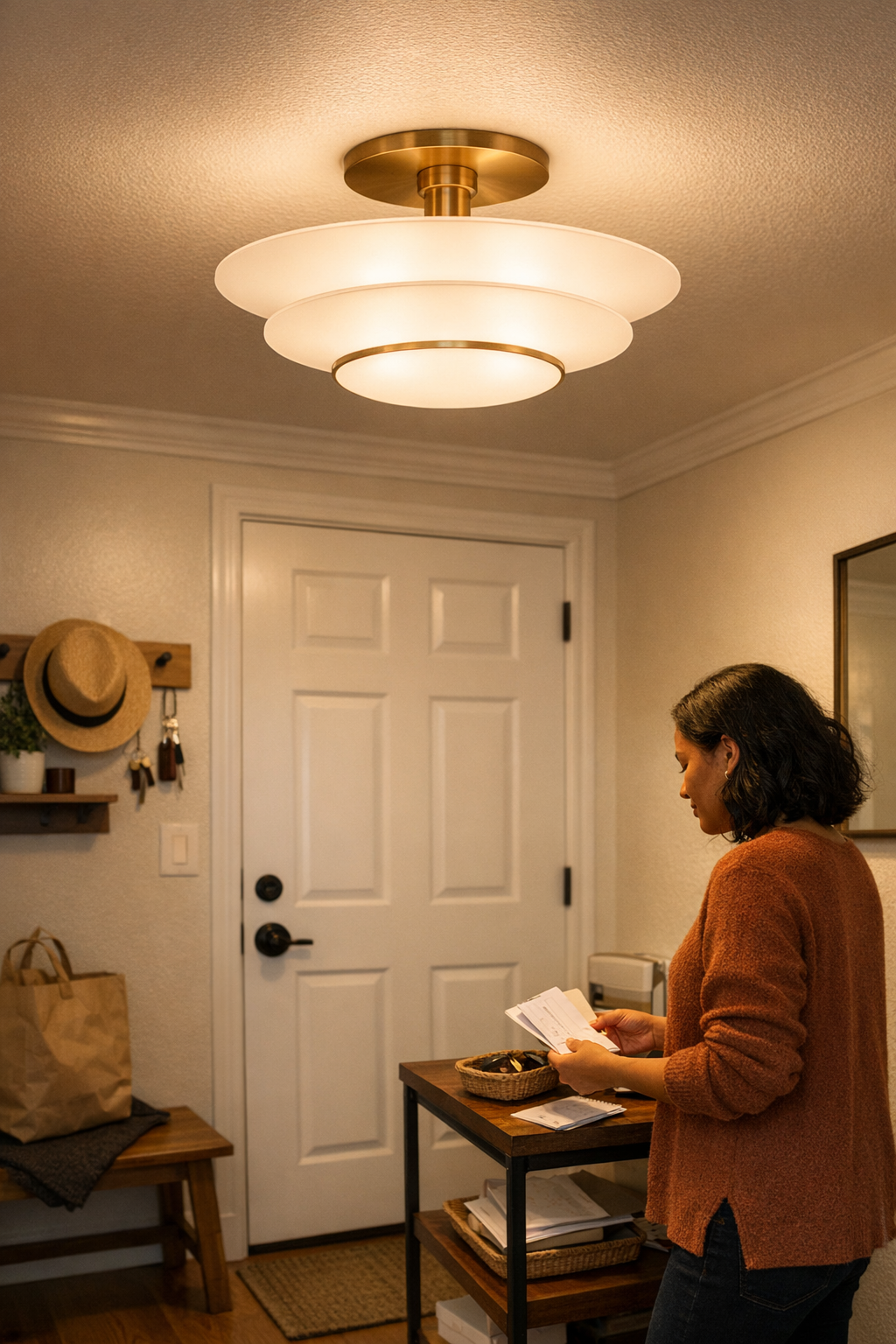
The wrong bulb makes itself known every time you enter. The entryway appears crisp at first: cool light, hidden cables, shelf edges that look sharp—almost professional. But after a week, you start feeling the real drag: glare when you reach for keys, the mirror shows tired shadows, and dropping a package means half-turning away from light that’s too bright and too cold. It’s not the fixture’s fault. It’s the color temperature—impossible to ignore once you live with it.
Cold Light Looks Clean, Then Turns Against You
Flip the switch on a new 3500K or higher LED: entry lines snap into focus, surfaces gleam, and cables seem to disappear. The setup passes the “just installed” test. But after a few days, daily use breaks the illusion. The blue-white glow exaggerates marks on the floor, casts hard-edged shadows over the shelf, and makes metal supports reflect in ways you can’t unsee. Pause to sort mail and your eyes squint against the glare, every label dulled and your own face washed out in the wall mirror. The supposed “finished” look begins to highlight what doesn’t work instead of what does.
This is friction you can’t clean away. Rushed exits get sharper and less comfortable. Pausing to untangle headphones or check a bag leaves you with a metallic glare off every hook. Shelves that once vanished into the background now demand energy to ignore, and every tangle of wire beneath looks newly exposed. The modern look doesn’t change—the lived-in drag is what you feel.
Unseen Problems Build Up in Everyday Details
Even slim LED panels and flush ceiling mounts amplify the issue if their color temperature stays too cold. Shelves look tidied in catalog photos, but in use, cool light throws out long, blue shadows where you actually need to find things. On a normal weekday, as you drop groceries or hunt for keys, small annoyances gather:
- Glare bouncing off hooks and hardware interrupts your focus
- Blue, sharp shadow lines break up work surfaces and hide the objects you actually touch
- Every cable, plug, or support bracket stands out in relief, no longer hidden by lighting design
- Notes and deliveries look oddly colorless, losing visibility when you need it
You start adjusting habits—standing differently, shading your eyes, shifting packages out of the direct light—just to avoid the strain. The hardware isn’t failing. The light just isn’t tuned for routine use.
The Routine Gets Clumsier—and Doesn’t Stop
Most entryways aren’t pure pass-throughs. You pause: dropping a jacket, reading a note, or searching for headphones at the worst moment. Under cold lighting, every routine stop feels exposed and hard-edged. Fine details get lost in glare—the doormat’s texture disappears, keys blend into the background, and cables or brackets that once felt hidden now stand out. Each pause comes with a visual penalty.
The strain spreads. Bring in guests at night and they glance away or hurry past, dodging the overlit feeling. Try to read a label while standing in the edge shadow—now you’re angling items or physically moving to find a spot where the light isn’t working against you. Minimal fixtures and flush supports create a tidy silhouette, but if the light’s temperature is off, your entryway becomes a series of interruptions, not a landing zone.
Warm Light Restores Comfort at Every Station
Switch to a soft white bulb—around 2700K—and the difference is immediate. Edges soften, glare drops, and the spaces you actually use lose their visual harshness. Swap out a “daylight” bulb for a warm one, and you’ll find shelf details reappear, doormat texture stands out, and keys become obvious without effort. You stop repositioning yourself just to avoid the sharpest line of sight.
Warm light clarifies what matters: notes stay readable, packages are easy to inspect, and cable runs fade into the background instead of drawing the eye. Wall brackets lose their blue-shadowed outlines and become visual afterthoughts, not daily irritants. The background looks resolved, and the friction points step back where they belong.
Real-World Use Decides If Lighting Works
The value of a 2700K-3000K bulb shows up because you use your entryway again and again: there’s less glare, softer transitions, and fewer visual interruptions. The right color temperature doesn’t draw attention to itself—it lets routines run smoother. When you’re not forced to notice cables, squint at shadows, or adjust to avoid eye strain, the space finally fits its role: a working, welcoming passage.
Most people don’t blame lighting at first—they blame clutter, support hardware, or floor mess. But if you’re constantly catching visual distractions or dodging glare, the color temperature is almost always the real issue. Even the best bracket, cable manager, or fixture style can only do so much if the light itself keeps throwing obstacles into daily use.
Simple Fix, Noticeable Shift
The most effective adjustment: switch to a bulb marked “soft white” (2700K), or install adjustable color-temp fixtures and dial down the coldness before calling it done. In entryways with metal, gloss, or any line of exposed cable, warmth wins over sterile brightness every time. The improvement isn’t just visible—it’s immediate: less shifting for comfort, less glare, and fewer small irritations. The space stops feeling like a collection of problems and starts working as an actual entry zone.
Prioritize the comfort of real use over the cleanest first impression. A minimal profile can look perfect, but only the right light temperature will make your entryway feel—and work—right with your daily routines.
Find smart indoor lighting, support parts, and practical accessories that make every everyday setup easier at LightSupport.