
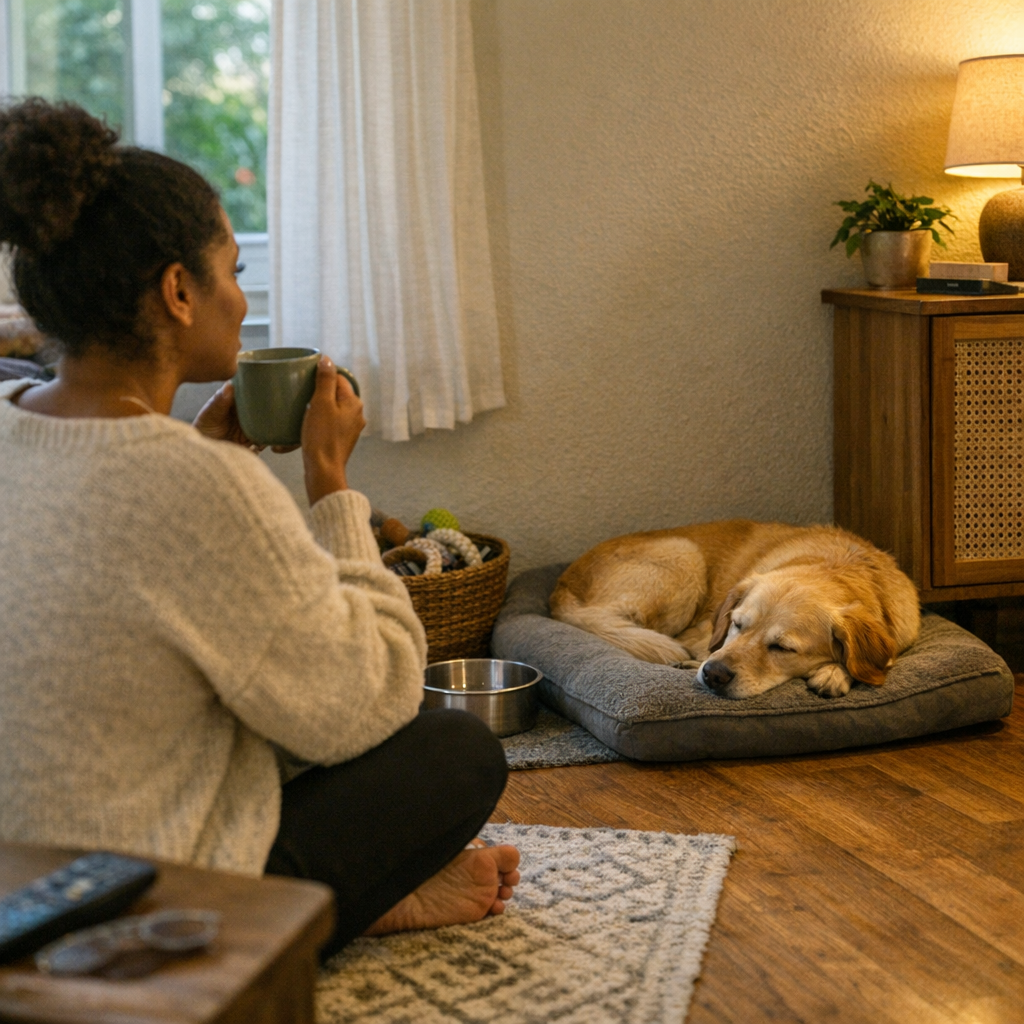
The most common dog-home setups fail for reasons that only show up after the third or fourth walk, when you’re juggling a leash, coffee, and suddenly can’t grab the towel fast enough. At the start, it all seems simple: bed in a corner, bowls somewhere out of the way, toys lined up by the wall. But after a few days, friction creeps in. The bowl keeps blocking your path to the fridge. Toys migrate right where you step coming in. The bed sits in a quiet-looking corner—until every grocery run, laundry trip, or after-work crash lands right on top of it. The space looks organized, yet you find yourself sidestepping, stepping over, or resetting the same tangled spot, while your dog circles, hesitates, or abandons “their” corner for a colder, emptier patch of floor. A setup that looks tidy in photos turns into a slow-motion obstacle course the moment daily routines repeat. The “invisible drag” isn’t a one-time hassle—it’s the everyday slowdown you only really see when comfort, access, and cleanup keep tripping over the same arrangement.
Where Dog Spaces Start to Unravel
Most setups are made for first impressions—bed here, bowl there, toys in a basket. The trouble starts after enough repetition. You put the bed near the kitchen for easier hanging out; the bowl close to the door for fast post-walk water. At first, no problem. Then morning routines stack up: someone crosses the bed to get coffee, the fridge door thuds inches from the bowl, a leash gets snagged behind a crate, or your dog dodges the laundry basket on their way to rest. There’s rarely a single bad incident—just the slow realization that every step now means a detour or quick shuffle. Helpers like towels or wipes are within reach…until you need them fast, and find yourself stretching awkwardly or dealing with muddy paws a minute too late. Each day’s cycle adds another micro-delay; “good enough” placement becomes a source of low-grade tension.
Invisible Friction in Daily Flow
A dog-friendly space isn’t about what looks neat on paper; it’s about whether the same motion—grab leash, dry paws, refill bowl—flows or stalls. Repeated friction shows not as piles of toys or mess, but as longer hesitations: the extra circling before lying down, the pause before drinking, or the interrupted nap each time someone passes. Many owners shrug it off (“He’s just restless,” or “She always wants to supervise”), but most of the time it’s the setup quietly demanding your dog—and you—keep working around the layout instead of letting routines settle in.
When the Routine Keeps Hitting the Same Snag
Picture an ordinary evening: you pass through with groceries, someone else reaches for a snack, the TV kicks up. If the bed is right next to your footpath or if the bowl is jammed by a door that constantly swings, your dog’s rest is always on standby. The dog hops up when feet pass too close. Or abandons their bed for a tile patch. Or stands waiting—again—for you to clear a blocked walkway before water or dinner. There’s rarely one glaring failure; just the constant, repeated disruption that makes “settle time” a moving target. You “fixed” the spot once already, but the same jams keep happening—with just enough friction to drain both your patience and your dog’s routine comfort.
It Looks Tidy—So Why Isn’t It Working?
The difference between a setup that holds together and one that keeps falling apart shows up in the details: the bowl tucked “out of the way” under the coat hooks becomes a morning bottleneck when three people and one dog all need that space at once; the plush bed fills a corner perfectly—except that corner’s a crosswalk for laundry, groceries, and gym bags. Toys collected in a basket look neat until playtime reloads the floor with underfoot hazards, and you find yourself picking up the same items three times a day. Visual order doesn’t guarantee smooth function—the daily reset just covers up how many steps, sidesteps, and short tempers the dog area actually causes. You start to recognize the “weak point” as the spot you keep cleaning, stepping over, or reshuffling, no matter how often you straighten up.
Spotting the Weak Point: Patterns You Can See (and Fix)
The surest signal is repetition—your dog pauses at the same spot, at the same time, every day. After walks, you’re both searching: towel hidden or too high, water bowl dangerously close to the doorway, feeding time always means sidestepping a crate or tripping over a toy. These aren’t “training” moments—they’re the daily signals that the structure isn’t supporting the flow. Delayed wipe access means muddy prints wander inside. Bowl placement means your dog watches and waits for you to finish using the fridge before eating. Each time, both of you end up doubling back, losing seconds, breaking the rhythm. The best setups aren’t about static tidiness—they’re about how well the structure clears a path each time routine passes through.
“One Meter Matters”: Small Shifts, Big Difference
Fixing the weak point is rarely about a dramatic overhaul. Simply pulling the bed a meter out of the walkway, or rotating it so it’s shielded by a chair or table leg, can take it from interruption zone to actual resting place. One shift—a bed tucked behind the sofa arm instead of beside the main walk—lets the dog drop in and stay asleep even when people pass close by. Moving the water bowl from a crowded threshold into a sheltered niche means no more accidental spills, no hesitation about whether to drink, and no more wet paw mess at every entrance. Towel hooks moved to the point you actually stand after coming inside means paws get wiped, not ignored. The test of the setup? The background stress—pacing, circling, abandoning the “nice” spot—just disappears. Transitions get faster, cleanups take half the effort, and the day’s routine flows instead of stalling at the same old friction points.
Setup Friction in Real Moments
Doorway Traffic and Walk-Interruptions
Thresholds reveal the weak spots quickest. You reach for the leash only to wrestle it off a crate handle. Your coffee needs a safe place but every surface is buried under gear. The dog waits by the door, but there’s no safe patch to sit—just toys or baskets blocking the landing zone. After the walk, you need the towel but it’s stashed too high, or you’re one hand short. The result: muddy paw prints and a slow, awkward entry every single day, adding up to frustration and extra cleaning that never quite goes away.
Toy Zones and Home Movement
Toy bins and baskets make for good pictures but rarely stand up to daily play. Balls, ropes, plush toys roll and scatter right through your movement routes, turning basic paths into daily obstacle courses. The “tidy” zone reloads itself with clutter each time play ramps up, and both you and your dog end up dodging or resetting the same hazards. Each extra pickup, blocked route, or closed-off play area adds up to a routine that keeps working against itself, even when you try to design for order.
Rest Zones, Resets, and the “Almost Fine” Trap
Consistency is what most setups lack. The bed looks inviting until family activity spills into the same space—then it’s a nightly cycle of fluff, reset, and restless settling as your dog hunts for quiet just out of reach. You expect your dog to adapt; instead, you find the “problem” never quite goes away. Every evening you reset the area, refill bowls, restock toys—yet the next day, the same sticky spot slows everything down. It’s not a major failure, just a setup that eats time and comfort in quiet, repeated ways.
Choosing and Adjusting: Making Your Setup Work for You
You don’t need a perfect show-home; you need a routine that moves naturally—leash where you grab it, wipes where you actually need them, bed where feet don’t trample through. The trick: watch for the friction that never quite leaves, and move just one thing until it disappears. Low-traffic, draft-free corners outside busy lines work better than side-of-door placements that look out of the way but jam up when life happens. Avoid placing beds next to walkways, bowls by swinging doors, or toy bins that dump every play session into the hallway. Spaces tucked behind furniture, inside kitchen alcoves, or at the end of quiet paths take less work and fewer resets in the long run.
Routine comfort is an act, not an arrangement. The most effective setups don’t just look tidy at noon—they let
DogPile prove itself in the details, every walk, every reset, every routine friction that finally disappears for good.