
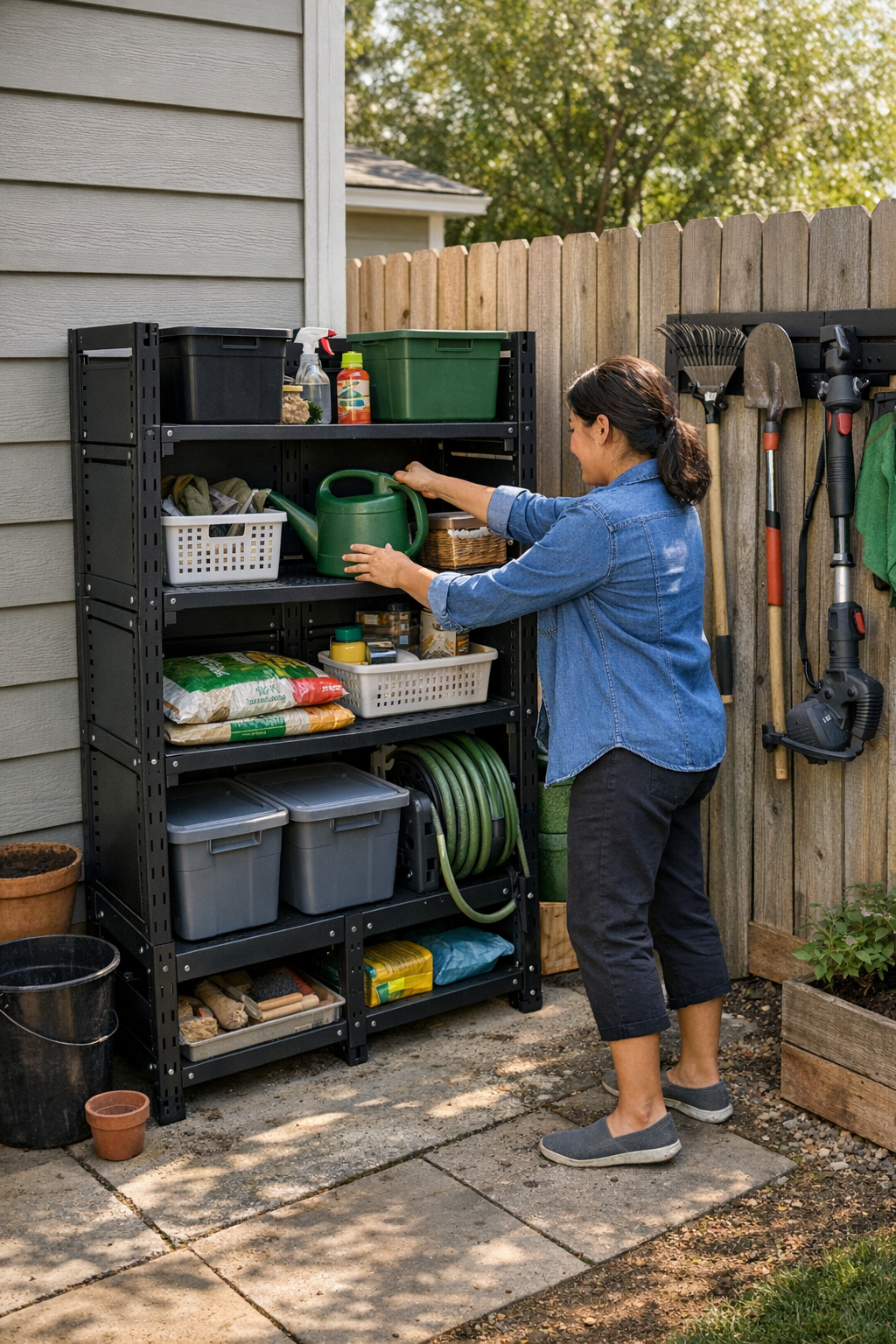
In backyard corners and side-yard strips, order can look flawless for a moment—but the illusion rarely lasts long. You mount a new rack, stack crisp bins, maybe line up tools along a shed wall. For a day or two, the setup feels sharp: every shovel, trimmer, and half-empty fertilizer bag finally has a home. But the real test comes fast. By the next weekend, a wheelbarrow blocks the narrow walkway, the mower handle juts out further than planned, and the “quick grab” shelf is overflowing with stray trowels and gloves left in a hurry.
How Outdoor Organization Unravels—One Small Friction at a Time
Storage in real outdoor spaces rarely fails dramatically. It erodes, day by day, as minor obstacles stack up. You nudge a stray planter just to reach the seed spreader. You shuffle a pile of rakes to unhook one broom. Even sliding a bin from a corner can turn into a struggle if its neighbors shift midweek. When the hose caddy swings loose and bumps your shin every time you reach beside it, you notice: the friction is small but relentless. None of these make you abandon the system at once. Instead, they wear down your willingness to reset, one annoying moment at a time.
Photographs catch the moment before complexity wins. In real use, organized looks become slow routines: reach for a tool, then pause to untangle its handle; replace a bag of soil, but first shift those “temporaries” someone tossed on top. The area designed to give you time quietly takes it back. The longer you delay a full reset, the more anything you move causes a chain reaction.
Real Use Glitches: The System That Can’t Keep Up
The Return Blockade
Picture a narrow utility strip: wall rack, long-handled tools, storage bin beneath. On setup day, it feels efficient—each item sorted by type, smaller handhelds clipped at the edge. Soon the flaw emerges. That post-hole digger catches you every time you reach for the shears. To put one thing back, you have to move another. Once you’re rushing, tools end up jammed wherever there’s space. The next person struggles with the tangle, and the wall that looked “organized” starts acting like a barricade.
The Patio-Edge Creep
Floor plans lie when lived-in. A mower that slid snugly against the wall ends up parked halfway across the walking path after a rushed return. The bin for small garden gear—pruners, seed packets, twine—turns into a catchall for everything you’ll “sort later.” You start stepping around piles. The path narrows. You dodge and curse, recognizing that the “layout” works until you actually use it during a busy weekend or after a surprise rainstorm.
When “Fits the Space” Isn’t Enough
A setup that swallows your tools doesn’t always support your habits. The gap reveals itself at the most inconvenient moments—needing that tarp right before it rains, hustling to reset the yard before guests arrive, realizing you need to correct three things just to return one. Time pressure exposes the system’s design flaw: storage that interrupts your routine instead of following it.
Hidden overflow zones never vanish on their own. That “temporary” bag in the dead corner becomes a permanent fixture. In a few weeks, you forget what the corner looked like before the drift set in. Resetting these areas quickly goes from “simple cleanup” to “where do I even start?”
Small Adjustments, Huge Payoff
Sometimes a single tweak—like moving a rack a few studs aside—opens a crucial foot of space for walking or returning things in one motion. Separating high-use from almost-never-use tools removes the daily crossover that leads to jams. When there’s always space for the most-used items—free and clear, in line with your movement—the battle to keep the area working tilts your way. Resetting stops feeling like solving a puzzle every time.
Real Tip: Modularity for Shared Spaces
In any household with more than one set of hands in the storage zone, confusion snowballs fast. If every return or grab can happen without disturbing the rest, routines get smoother. That’s what modular bins do: they turn “whose stuff is this, and where does it go?” into easy parallel flows. Each person’s clutter stays contained. Traditional racks, as needs shift with the season or guests, clog with cross-purpose objects—and the reset cycle grows longer the busier everyone gets.
Overflow Is More Than Mess
Watch for piles at the foot of any rack or the edge of a setup. Once these “temporaries” start showing up in the same spot week after week, your system is signaling: normal use is demanding too much friction for a reset. Let it run too long, and every routine reset becomes a full rescramble. Small inefficiencies quietly accumulate, slowing every return and sapping your motivation to clean up at all.
Lasting outdoor storage is about control over chaos, not about a frozen “after” photo. Clarity matters: open walking paths and easy drop points give you breathing room, even when things slip a bit. An efficient setup feels invisible—things just go back easily, even after a wet, busy month. The friction never disappears, but you stop feeling ambushed by it every time you need the next tool or want to tidy up on your way inside.
The setups that work aren’t always glamorous. But by keeping the routine simple—clear spots for top-use items, no awkward reshuffling, overflow contained before it takes hold—you end up with a yard that genuinely works for you, not just for the first round of photos.