
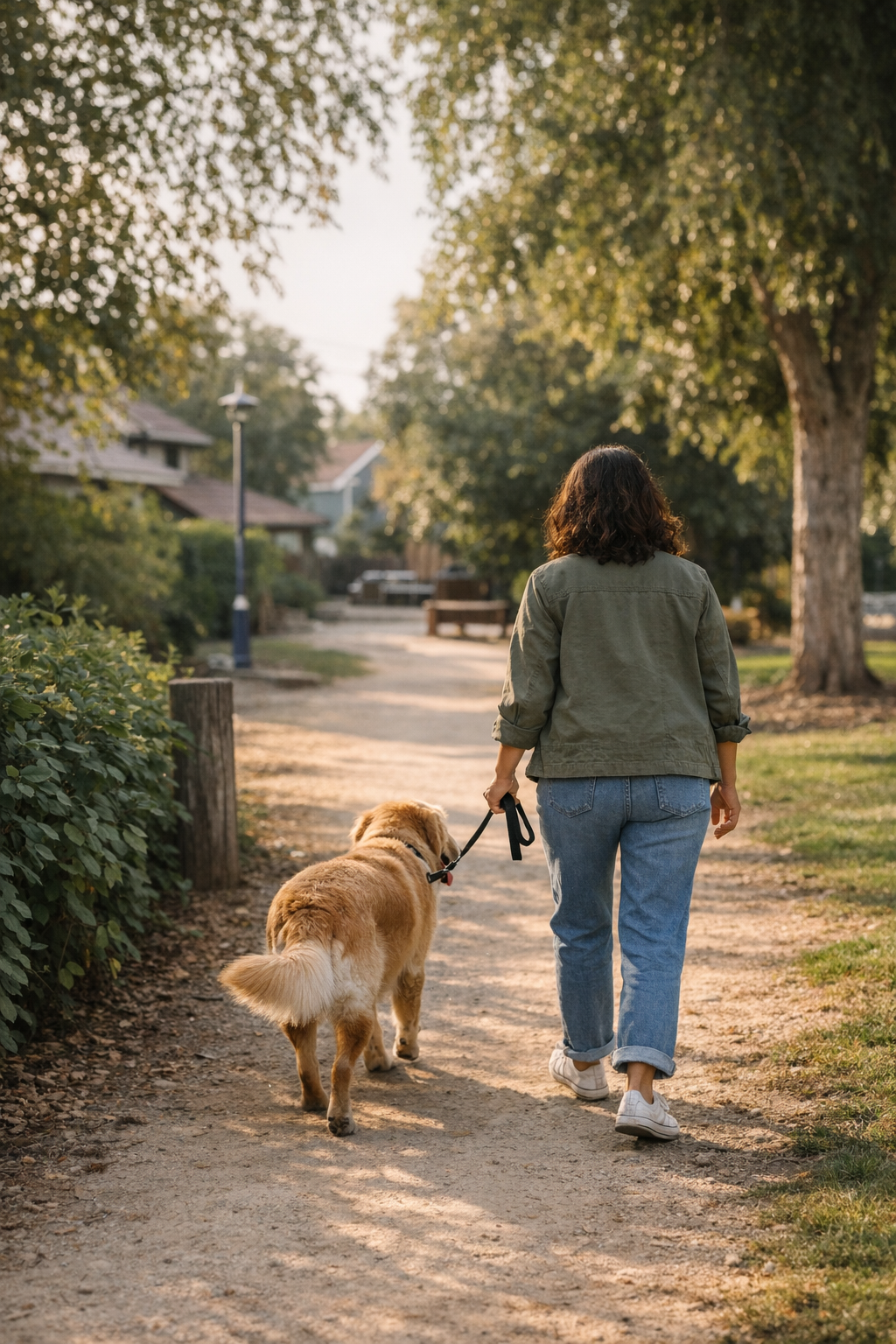
Every dog owner has fought with the front door. You reach for the leash, but a stray toy blocks your step. You try to move quickly, but a dish catches your ankle or the wipes are just out of reach. The morning walk isn’t ruined by the leash or your dog’s excitement—the trouble usually starts inside, in the smallest routines right before you ever make it out. These friction points don’t roar—they creep in, slowing you down, stacking low-level stress until it becomes just another part of walking the dog. But almost every bit of tension you feel on the street tracks back to what happens in your home’s entry zone or routine reset point: how you set up, what you grab, what’s in your way, and what keeps falling through the cracks.
The Hidden Patterns Shaping Every Walk
Most owners hope for simple, calm walks—yet daily routines chip away at that hope. It’s never just the dog’s energy or the chaos outside. It’s the detail: where the leash is stashed, whether you have to nudge past a water bowl to reach a hook, and how the keys, bags, and extras stack up at the threshold. These details quietly break up the flow.
Typically, it goes wrong before you even leave. One hand reaches for the leash, the other bumps a food bowl. You shuffle boots to clear space, your dog winds up at your feet, tense and watching. The leash is tangled. The door jam is cluttered. By the time you open the door, the tug has already started, your body is twisted, and you’re already running behind—even before your shoes hit pavement. That pattern—scramble, delay, leash tight, handler tense—starts at home and echoes down the block.
Why the Early Moments Set the Day’s Tone
The dog’s excitement at the door looks obvious. But those frantic circles, quick barks, and impatient stretches aren’t just raw energy—they’re signals of friction that began with your own routine. If the leash is tucked too far, if the bowl sits right where you need to stand, if you pause and hesitate, your dog’s anticipation spikes. With each snag, the walk tips from a chance to reset into a cycle of tugging and correction—one that’s nearly impossible to fix once it’s already begun.
Many dog owners dismiss this as their pet “just being eager.” But repeated minor delays or awkward leash setups quietly set up the walk to fail. That tension won’t burn off with a longer route. It follows, minute by minute, because the routine keeps rebuilding the same problems.
Morning Scramble: When Setup Fights Back
Picture running late: the leash is looped on a random hook, but a squeaky ball blocks your reach. The bowl is somewhere underfoot, and by the time you clear space, your dog’s spinning in circles, primed to bolt. The leash snags. In one minute, your calm is spent and the rhythm is shot. You blame the walk, but the setup tripped you from the start—and tomorrow, this slows you down again.
How Familiar Routes Can Help—If You Notice the Shift
Swapping to new routes or aiming for “more stimulation” won’t fix a pattern of pulling if the entry into each walk is already off. In reality, many dogs settle more quickly on familiar paths—the hedge after one block, the same lamppost, the usual turn. It isn’t just about the dog’s memory; it’s about how the routine gives both human and dog cues to settle, glance, or slow down.
But it’s only effective if you notice it. If you start at the front door tangled and tense, even a familiar path can’t undo a bad launch. The leash that slackens after the hedge does so only if the first steps out didn’t fall apart. Most walks show you where the setup is failing—but if your attention is only on the dog’s “bad behavior,” the routine never really adapts.
Cues Owners Miss: The Slow Shift
You might miss your dog starting to check in more or slowing for corners. These changes only stick if you let them—by pausing, resetting your grip, or catching those calmer steps. If not, it’s easy to repeat the same tug-of-war for weeks, never realizing that the walk could shift if the home setup stopped forcing the scramble. The gains add up only if you see them, not just fix what’s broken.
Small Setup Tweaks, Big Routine Payoff
Many frictions dissolve with one quiet change: move the water bowl back by half a meter, or keep wipes within reach near the door but out of tripping range. This grants you a buffer—room for both you and the dog to get set without elbowing through clutter. That pause, that gap, stops the leash from snapping tight before you leave and prevents your patience from running out before the sidewalk.
Over time, these micro-adjustments turn jerky tension into small check-ins—your dog hesitates, looks to you, waits for the next move. Walks aren’t transformed, but stretch into something less brittle, more workable, even when conditions or timing are messy.
After the Walk: Reset or Rewind
Coming home can stall out, too. Towels for muddy paws disappear, wipes are buried under boots, and toy piles block your step as you try to clean up. You want to drop the leash and handle cleanup quickly but end up tripping through the reset. Now the delay that started at the door bookends the walk in a fresh bout of annoyance.
The fix isn’t about making the area “perfect”—it’s making cleanup gear actually accessible at the right moment, not just parked where it looks tidy or hidden from sight. If wipes, towels, or disposal bins can be reached without a search, coming back inside stops feeling like just another struggle.
Why “Tidy” Isn’t the Same as “Usable”
A neat entry, sorted baskets, stacked toys—on the surface, the space seems calmer. But if you have to dig through bins for a leash or leave wet gear two rooms away, you’ve only traded one kind of mess for another. Many setups look organized but demand extra steps when you’re in a rush, arms full, or handling a muddy dog. That extra friction isn’t visible, but it wears down every routine moment and makes good habits fade as soon as the real day starts.
Readiness beats prettiness. If the leash is always buried or the towels never where you need, your “organized” system quietly fails at exactly the wrong moment. The irritation repeats—sometimes as a stumble, sometimes just as a delay—chipping away at what could have been a smoother, more usable routine.
The Quiet Accumulation of Small Setup Frictions
It doesn’t take a disaster for these weak points to change the feel of your dog life—just a few mornings of awkward reach, or a handful of walks with the wrong bowl placement. Each tiny snag repeats, building habits of tension for both you and your dog. What seemed like a solved problem—swapping baskets, clearing a bit of extra space, adding another mat—can bring new slowdowns if it blocks access or demands too many steps at any key moment. Mess can be hidden, but friction remains if setup logic isn’t built for real, repeated use.
Practical dog setups are about shrinking the moments where the routine gets stuck, not erasing every challenge. A little space for movement, slack to re-leash, and easy-grab cleanup supplies all add up to less repeated drag—and that, over days and weeks, makes more difference than any one-off fix.
Tuning In: How Owners Can Catch and Shift the Routine
The “leash fight” is mostly mechanical—a chain reaction of small delays, bad placement, or blocked access that keeps repeating when ignored. Watch where your dog’s anticipation turns to pacing. Track which corners trigger leash tension. Test what changes when you shift a bowl or move the wipes a foot closer to the door. Improvement isn’t glamorous—it’s barely visible: a pause that solves a tug, a split-second faster cleanup, a setup that no longer interrupts your stride.
Across dozens of walks, the routine shifts. No single trick replaces the steady payoff of setups that follow the real arc of your day rather than just looking good for half an hour.
Making Everyday Walks Smoother, Not Perfect
No setup removes every pull. But a space that lets you reach the leash without reshuffling gear, that keeps towels and wipes close but not in the way, and that shortens the time between coming or going—that’s workable. Over time, these solutions chip away at the friction. Mornings move smoother, cleanup takes less recovery, and fewer routines stall out after a good walk. You won’t notice it in magazine-ready photos, but you will—quietly—in fewer bad starts and less repeat stress. That’s dog life made easier, not perfect. Just a setup that works as hard as your routine demands, walk after walk.
Explore smarter setups at DogPile