
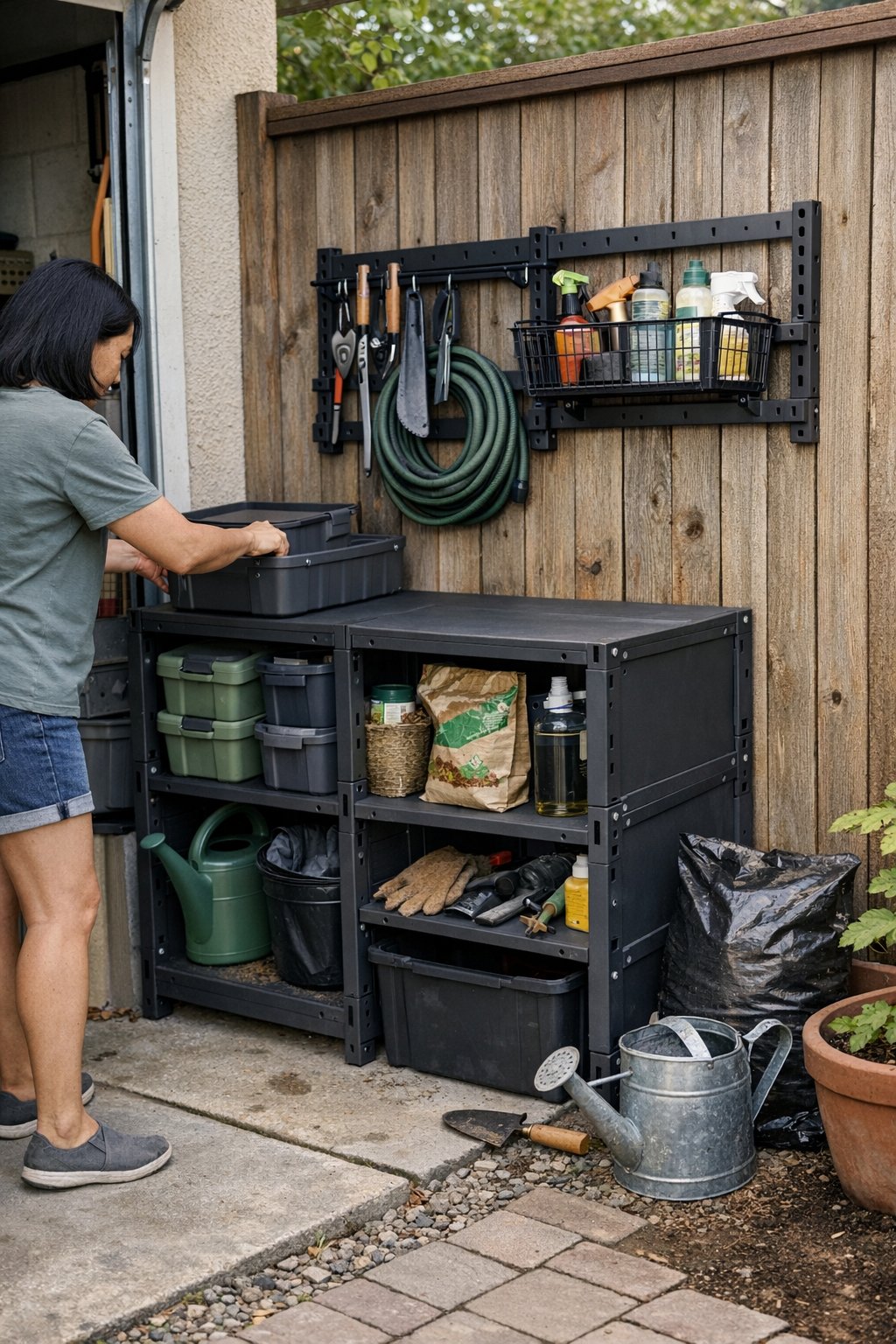
Outdoor storage in real backyards always reveals its flaws fast. One week after a “tidy” setup, garden gloves are left behind bins, sports gear blocks the walkway, and someone else is dragging a heavy bench just to reach their tools. Almost every system looks right until you actually start using it—and the gap between “organized” and “usable” comes down to one thing: where the storage actually lives when the routine hits full speed.
Why Setup Placement Decides the Fate of Your Space
The difference between a setup that works and one that unravels isn’t about how many bins you buy. It’s whether storage lands where people actually move and reset. A deck box that blocks the steps, a wall rack hidden around the corner, or a floor chest wedged near the gate: all it takes is one misplaced piece, and suddenly returns slow, items stack in the wrong spots, and you’re the only one fixing the mess at day’s end.
Watch how quickly a misplaced storage unit forces friction. A few rushed drop-offs—balls dumped on the patio edge, muddy shoes left in front of an overstuffed bin—and your careful system is already losing flow. With each awkward return, someone else blocks a walkway or leaves “for now” piles that become tomorrow’s reset headache. The burden keeps growing for whoever ends up being the “organizer” in the family.
Real-Life Jams: When Resets Don’t Match the Drawing
Spend a Saturday in an active yard. Tools, toys, and bikes all head out early, but the returns never hit the same path in reverse. Someone grabs a broom from a distant wall rack—then leaves it by the mudroom door instead of trudging back. Garden tools start off stacked in a chest at the patio edge. By noon, those tools have migrated to a bench, taking over just as someone else needs that seat. Suddenly, you’re moving gloves, moving baskets, shifting everything just to clear a spot that was “organized” this morning.
Bins fill up past the brim. Pegs collect gloves and hats above the bins, but the overflow slides off, lost behind. One basket gets jammed against a chest lid, so toys end up across the path—blocking the next person coming in. These aren’t just one-offs. Each awkward deposit multiplies. A quick reset becomes a full-on cleanout, every night or every weekend, just to get back to zero.
Hidden Choke Points Quietly Take Over
When you look at a setup in photos—empty, staged, clean—it always appears to work. The reality is messier: people run late, cut corners, or just avoid awkward movements. Put a shelf too high and no one wants to reach; put a storage box at the entry and soon you can’t open the gate without stubbing your shins. Items that “don’t fit” land on the floor, in footpaths, on top of the nearest flat surface—slowly turning your order into overflow.
The Fix Starts With Watching, Not Buying
If your system keeps coming undone, it’s rarely the product’s fault—it’s where you put it, and whether the pathway back actually makes sense. Try a single, sharp move: shift the heavy box off the walkway, pull the main rack one step closer to the real entry path, or swap a bench off the traffic lane. The smallest change can totally alter the flow.
One swap that worked overnight: moving a fast-use rack inside the entry instead of across the patio. Suddenly, everyone returned shoes and hats in one motion, instead of stacking them in a tired pile at the back step. Leave open space beside a deck box, not in front of it, and nobody has to shuffle things just to walk through. Treat the pattern you see—not the idea you planned for—as the blueprint.
Ground-Test Placement Before You Commit
Before drilling in racks or anchoring a big storage unit, mark out where things naturally land during a normal weekend. Use painter’s tape on the patio, or chalk in the side yard. You’ll spot instantly that your “smart corner” is really too far out of the way, or the new floor chest cuts the path in half. The gap between imagined use and real use can be just a two-step detour—but that’s enough to stop resets from ever taking hold.
The Repeat Offenders: Clutter Magnets and Blocked Corners
- Bulky bins in walkways: Put a storage box by the gate or the steps and it will quickly get surrounded by shoes, yard tools, and forgotten gear, turning movement lanes into gridlock.
- Wall racks set for looks, not reach: If a rack is blocked by the grill or sits just out of normal reach, it turns into dead space. High shelves lead to things left on the ground. Low racks behind furniture just get skipped.
- Overflow corners that never reset: Every outdoor space has a zone where “for now” becomes “for always”—that one blind spot by the fence where abandoned items quietly multiply. Let that corner dominate, and the rest of your system quickly falls behind.
- Footprints that trip the return: A setup with good symmetry can still split the path in awkward ways. If you have to step around, shift other items, or bend in odd directions just to return something, shortcuts become the new routine—and stacks reappear fast.
Flexible Beats Finished: Adjustability Saves Setups
The only setups that last through seasons, new habits, and growing kids are ones that actually shift with you. Movable racks, stackable bins, and benches on casters aren’t just upgrades—they let you tune the space as patterns change. Summer brings water toys to the front? Slide a rack over. In fall, move bins nearer the garden zone. Nothing’s sacred except keeping flow easy and bottlenecks obvious.
This isn’t about chasing the “perfect” blueprint. It’s about recognizing where resets start breaking down—and making stitching adjustments before the mess takes over. Each small move saves hours of deep cleaning and keeps everyone returning items with less prodding.
The Signs of a Setup That Finally Works
- Returns happen in one or two minutes, not after a full cleanup.
- Each person knows by habit where things go—nobody has to ask or second-guess.
- Walkways stay open, not jammed with “will return later” piles or bins blocking the route.
- Returning one item doesn’t mean moving five others first.
- The overflow corner stays quiet all season instead of turning into the default dump zone.
Durable setups don’t obsess over order—they build in forgiveness for real messes and are built to shift when habits change. When you spot movement slowing, items collecting in odd places, or routines slipping, don’t start over—just move the sticking point. The best systems work for your life outside, not just for a quick photo.
Find more practical outdoor setup solutions at TidyYard.