
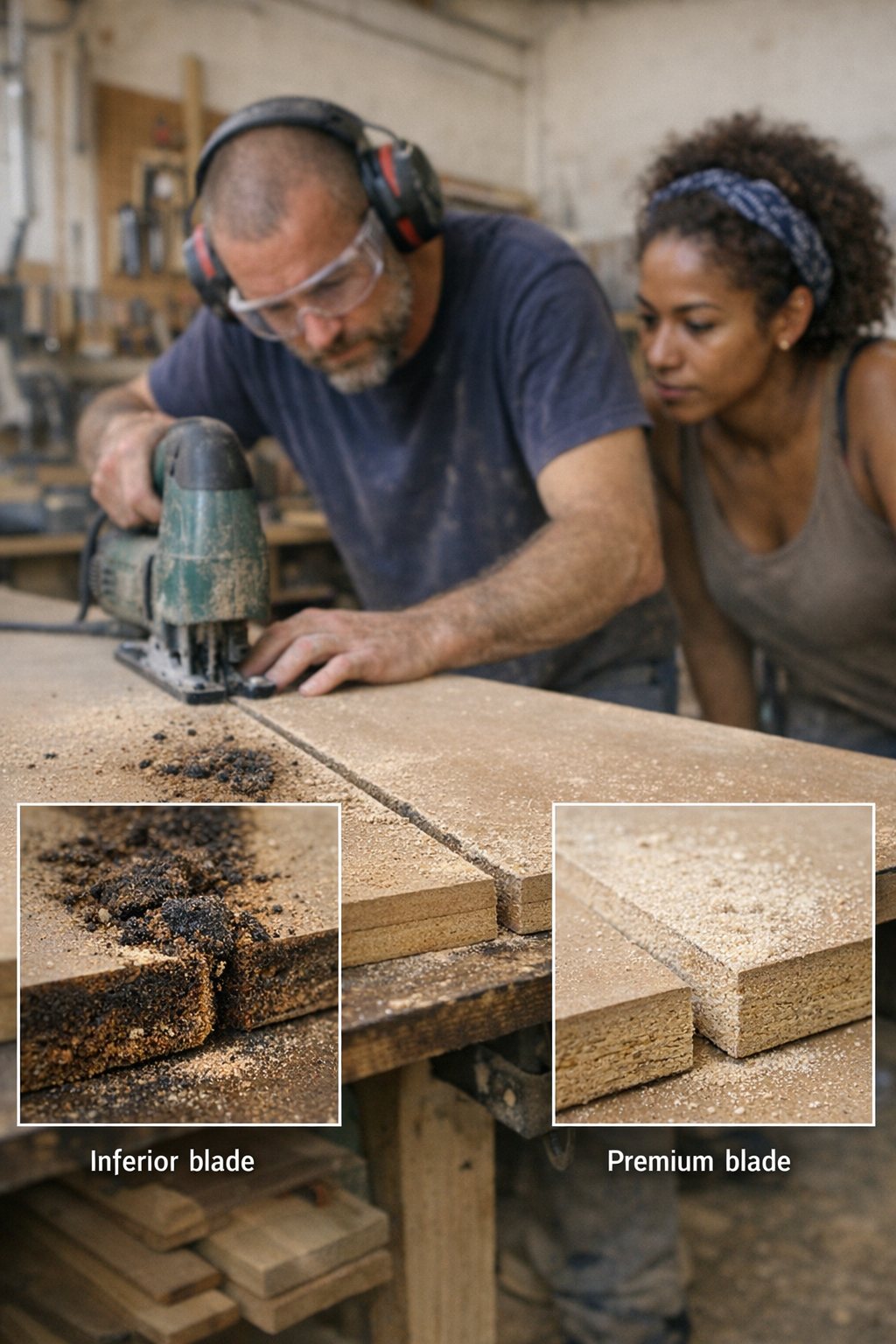
The drag hits fast. One minute your jig saw is gliding through MDF, plywood, or laminate—then suddenly every inch feels slow, rough, and heavier in the hand. It’s the classic shop scenario: What started as easy work through soft pine turns into a grind as soon as you hit denser stock or start racking up more cuts. Clean lines and quick progress slip away, replaced by burning edges, wandering blades, and the extra passes that steal your afternoon.
When Standard Blades Rapidly Fall Behind
On light cuts or soft scrap, most jig saw blades seem fine. For small projects or occasional use, standard blades follow the line and get through the job. Nothing feels off—at first. But get into a real build, where the cut list stretches and every board seems to get thicker, and the limits snap into focus. Routine work exposes “good enough” blades for what they are—the weak link that slows you down and chews up your finish.
Heat creeps in. Edges splinter. Each fresh pass demands more muscle and attention, while the saw bucks harder and your accuracy suffers. You end up wasting energy reworking mistakes, replacing cheap blades, and sanding out messes you didn’t expect to make. The hit isn’t only to your speed—it’s the cramped grip, the burned scrap pile, and the creeping frustration when your tools can’t keep up with real workflow.
How Trouble Builds, One Cut at a Time
Picture a workbench strewn with sheet goods, afternoon sun bleeding heat through a garage door. The first few runs are crisp, no problem. By strip number four, the story changes: The blade lags, you grip tighter, the saw protests with a harsher sound, and that distinct scent—hot glue and charred wood—rises from the cutline. Now, every board feels like you’re working uphill.
- Overheated edges: That telltale shine along the cut, or scorch marks that resist even firm sanding.
- Gummed-up teeth: Sawdust clinging in sticky lumps, stalling your blade partway through a rip.
- More effort, worse cuts: Needing two hands to keep straight, and still sanding out ragged lines later.
- Wandering and chip-out: The blade flexes out of line, leaving uneven laminate or chewed MDF edges.
Every fresh board, the fight grows. By the time a pro or serious hobbyist is halfway through their stack, the cost of “convenient” blades is fully obvious. What’s meant to save a buck ends up costing time, energy, and results.
What Actually Sets Premium Blades Apart
Marketing promises “fast, clean” cuts, but real difference comes down to the details: sharper geometry, friction-cutting coatings, and tougher alloys built to survive more than a couple of passes. A premium blade bites cleaner, ejects dust instead of melting it, and resists the clog-and-drag that torpedoes jobsite efficiency. You’ll hear it in steadier motor tone, see it in dust that stays pale—signs of a blade that’s staying cool under pressure.
The improvement isn’t just the first cut. A genuinely high-quality blade stays sharp after a dozen sheets, not just a couple. It holds its precision, resists buildup, and won’t punish your forearms or finishing time. Less mid-job stress, less blade fiddling, and fewer touch-ups—those savings add up fast in a real shop workflow.
Real-World Example: Cabinet Cuts Without the Stall-Out
Let’s say you’re busting down a full 18mm MDF sheet for cabinets. Standard blade? The first cuts are fine. Then you’re using more pressure to stay on line, blade wobble creeps in, and you’re grinding through awkward heat-blued edges. Now you’re scraping off char or recutting splintered sides—a recipe for lost momentum and wasted stock.
Swap to a quality, coated blade with smart tooth design and suddenly the feed rate stays constant, the saw feels lighter, and the blade runs cooler. Cuts track straight, and you’re not fighting flex or trying to sand out char. After a while, you realize you’re not tensing your wrist or stopping to yank out stuck debris. That’s what premium actually looks like: smoother workflow you can feel, not just see.
How to Spot Blade Problems Before You Lose Quality
The real warning signs aren’t on the packaging. They show up when you’ve been working over and over, especially on denser materials in real heat:
- Cutting produces smoke, not just dust, midway into the sheet.
- The saw edges off the line or jumps hard enough to make you slow way down.
- Hand fatigue climbs fast and cuts start to look rushed or jagged after just a few passes.
Catch these before your project unravels. These aren’t small annoyances—they’re your cue to put down the bargain blade before you double back for fixes or even need to recut finished panels.
Quick Tactics That Save Finishes (and Strain)
A tip you won’t see on the label: If the cut starts feeling tougher or you see burnt debris, stop. Clear dust from the teeth, let the blade cool off, and resist “muscling through”—it rarely ends well. If it keeps giving off heat or binds again, switch out to a quality blade. The extra few bucks you spend will show up as smoother edges, less sanding, and a lot less strain on you and your tools.
Choosing Blades That Keep the Work Moving
Real shop flow—especially when you’re bouncing between the garage, jobsite, and home—depends on tools that can last more than a handful of cuts. A good blade means you maintain control, cut fatigue, and keep your focus on progress, not frustration. Smoother cuts. Less cleanup. Fewer “redo” moments when everything feels like it’s sticking or burning out early.
If you’re running panels back-to-back or just sick of fighting slow-tool syndrome, check the blade you’re using before that first line. The true value of a premium blade doesn’t always show up until the tenth (or twentieth) pass—but by then, every extra bit of smoothness, straight tracking, and saved effort pays real dividends on your time and results.
Shop power tools, blades, and real performance accessories at Gumboll