
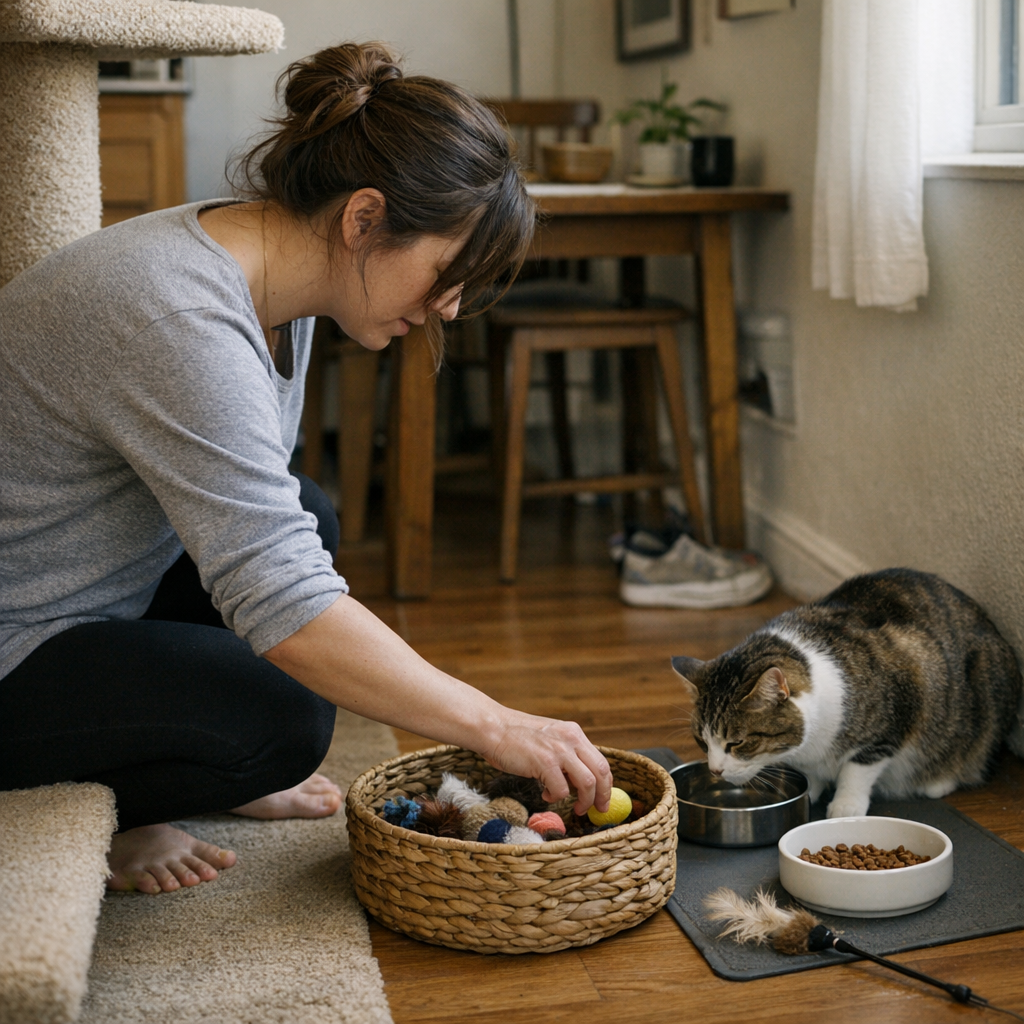
Scattered cat toys don’t just clutter the living room—they block the next thing you need to do. It starts small: a few toys make the space feel lived-in, maybe even cozy. But within a week, the shuffle builds. What looked like harmless comfort on day one—crinkle balls between couch and scratching post—quickly turns into tripping over a wand during breakfast, nudging a felt mouse aside just to reset the feeding mat, or bending down, again, to yank a toy from under the table before you can vacuum. The difference shows up not in how the room looks after a once-over, but in how much those scattered toys slow down everything: water refills, feeding, cleanup, or even just getting across the room. This is where “cat enrichment” crosses into daily obstacle, and where the right StillWhisker setup moves from nice-to-have to non-negotiable.
When Toy Scatter Turns Into Real Friction
It doesn’t hit all at once. Leaving toys out after play nearly always seems reasonable—until you realize how fast they start drifting into the spots you use most. Today it’s a single ball at the bowl’s edge; three days later, the feeding mat is half-buried and the water station is tangled in plush tails. These interruptions change simple chores into layered routines:
- Every bowl refill becomes two steps—clear toys first, then handle the water.
- Vacuuming requires hunting down loose toys before the floor can be cleaned.
- Main walkways turn into a maze, for you and for your cat.
- You think the reset is done, then spot another toy jammed under a cabinet—one more detour before “finished.”
In small spaces or multipurpose rooms, every square foot matters. Feeding, cleaning, and play overlap—so even a few runaway balls can multiply the effort, turning what should be a quick sweep into an ongoing, never-quite-done routine.
Why “Leave Them Out” Doesn’t Work for Most Homes
Letting cat toys linger looks harmless on day one. By day five, they pile into every pathway. Feeding mats drift, water bowls slide, crumbs gather and hide under felt mice. What started as a little extra “enrichment” mutates into a real, repeat inconvenience by week’s end.
The overlooked problem: Each time you handle a toy—step around it, pause to move it, fish it from behind a chair—the seconds stack up. You want a quick food top-off, but instead you’re tracking down kitties’ loot, kneeling again, wondering why keeping up still feels like a chore even when the room isn’t visibly messy.
Small Apartments, Tall Order: How Tight Spaces Expose Weak Spots
In a studio, the impact is instant. It doesn’t take much—just two days of casual play, and your route to the water bowl is a dotted obstacle course. Mealtime for the cat or yourself becomes a stop-and-clear routine instead of a one-motion scoop and pour. Every lost inch adds up, and toys seem to drift straight toward the worst pinch points—door frames, bowl edges, the one clear space you need for yourself.
Layers of Reset: How Toy Collection Shapes Your Daily Rhythm
Home routines show which habits lower the mess and which ones keep backfiring. Toy collection is an invisible fault line: let them sprawl and every refill or meal becomes a mini search party. Round them up after play, and suddenly the mat sits flat, the bowl is steady, the sweep is actually quick instead of punctuated by crouching and reach-arounds.
- Letting toys scatter means more micro-interruptions, more time lost to searching and rescuing.
- Collecting right after play means fewer delays, and other chores don’t get hijacked by stray distractions.
This reset isn’t about an Instagram-clean shot—it’s about coming through your evening without redoing last night’s cleanup, and about being able to handle quick, real resets when the rest of your day piles up.
The Difference Between “Looks Under Control” and “Feels Under Control”
A space can look settled at a glance—baskets full, surfaces clear, toys tucked out of sight. But if you’re knee-bending for lost mice daily, or dodging plastic balls with a coffee mug in hand, it’s not actually working. Surface-level tidiness often collapses at the first sign of real use:
- Toys stashed out of the way just creep back underfoot if the setup doesn’t make returning them fast and almost automatic.
- The room resets itself—right up until the next burst of play, when toys rocket back to the main intersections of your routine.
- When storage isn’t near your hands at the end of play, cleanup becomes an all-over chore. Instead of finishing in a minute, you’re circling the room again.
Order that lasts isn’t about display. It’s about a workflow that holds up when you’re tired, rushed, or distracted—so your routines don’t get derailed by small, repeating interruptions.
Scenes From Real Home Use: How Toy Drift Interferes With Everyday Routines
Spot #1: Feeding and Water Trouble
The cat chirps for breakfast just as you’re about to refill. You nudge a crinkle ball from the edge, scatter kibbles, and fish a toy fish from under the water bowl—plus mop up a fresh sprinkle, all before coffee. The real problem is speed: what should take seconds drags out, again, one toy at a time.
Spot #2: Cleaning Sidetracked by Stray Toys
You pull out the vacuum and immediately spot three fuzzy mice lurking under the sofa. Now it’s a round of crouch, stretch, and rescue—sometimes realizing a favorite toy’s been missing for days. If this overlaps with the litter area, everything picks up an extra layer of dust you didn’t ask for.
Spot #3: Human Traffic and Cat Pathways
Shared spaces get the worst of it. Balancing groceries or laundry, you hit a plastic ball, sending it skittering into the walkway—or trip into a miniature explosion of toys. It’s more than distraction: little by little, the space feels less yours and more like constant maintenance mode.
Why a Simple Storage Basket Makes a Real Difference
The answer isn’t complicated: put a low, open basket right beside the main cat zone. Now, play ends with a quick toss-in—no hunting across the room, no forgotten corners. Over time, the routine builds itself. Feeding and cleaning speed up, the kneel-and-grab cycle fades, and playtime doesn’t leave a residue that sneaks into the rest of your tasks.
Skip the elaborate bins. The best basket is the one that sits close, feels obvious to use, and lets your hand—and your cat—drop things in without leaving the space. The simpler and closer, the smoother the reset. If you don’t have to cross the room to store toys, you actually will put them away.
Shared Spaces, Stable Routines: What Actually Changes?
- Resets get smaller and faster: The whole chore condenses into a quick sweep, not a room-wide search.
- Feeding and cleaning stop stalling: No more shifting toys every time you reach the bowls.
- Walkways stay clear: You and the cat both move freely, not around clutter.
- Daily friction drops: What was an endless battle shifts to a routine that takes about as long as you wish it did in the first place.
This isn’t about perfection. It’s about less second-guessing, fewer mini-resets, and regaining a little bit of control without adding to your mental load—even after a particularly wild play session or messy day.
When Toy Scatter Signals a Setup Weakness
If you find yourself always scooting toys away before every refill—or are spending your evenings on your knees fishing balls from random hiding spots—the setup is showing its real weak point. That pattern, if ignored, becomes an invisible tax on every feeding, every cleanup, every movement through the room. Noticing it early means you can break the cycle fast with one visible structural change, sparing yourself hours of repeat work over the next month.
The takeaway: Don’t let a surface “clean look” cover up a slow, steady drain on your time. The best indoor-cat setups solve for the next use—not just the next photo or the first impression.