
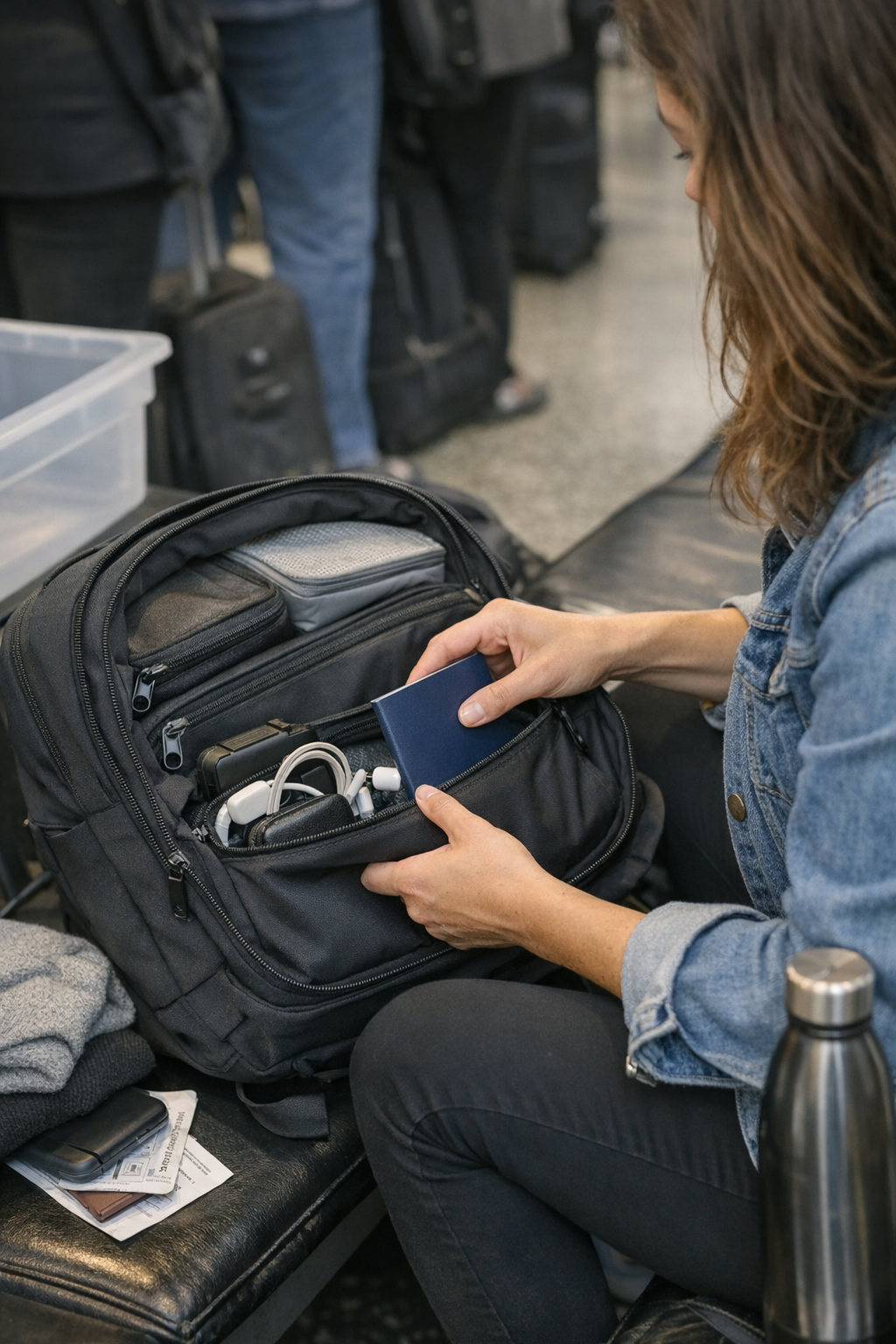
Every traveler knows this frustration: your carry-on looks perfectly organized on your hotel floor, but collapses into chaos the moment you hit the airport flow. What passes as “order” in your room falls apart the second TSA says “laptop out,” the boarding agent requests your ID, or a sudden gate change sends you sprinting. One neat packing cube on top, two zipped pouches lined up, everything in its place. Then—standing in a moving security line—your passport has vanished under toiletries, your charger is buried somewhere, and retrieving one document drags out into a full-bag exposure. The more you repeat each access—checkpoint, boarding, seat entry—the more you feel the drag of a setup built for looks, not movement. Each extra unzip, each awkward tray transfer, and every slow repacking cycle adds seconds and tension you can’t spare in real transit.
The Real Test: When Organization Isn’t Enough
There’s a sharp difference between a bag that looks organized and one built to move quickly through airports. The calm of a crisp layout disappears as soon as the routine breaks—passport control, security bins, or gate announcements. You find yourself kneeling by a bench because your headphones, charging cable, and ID have merged in a pouch, or your most-used items are layered under things you barely need. By the second checkpoint, the “tidy” setup starts working against you. You become the person holding up the line—not because you’re disorganized, but because your structure hides essentials behind the wrong sequence.
The Cost of Layered Packing
This is where real consequences show: packing for presentation—main zipper zipped, cubes aligned, cables tucked—creates a snapshot of order, but not usable order. The first real use exposes the trap. Need a charger? Suddenly, you’re digging under a grid of less-used cubes. Want your passport mid-boarding? It’s vanished beneath toiletries or stacked off-sequence in a deep organizer. Each time you reach for a “frequent” item, you have to unstack or re-sort—multiplying small delays into major slowdowns during boarding or security. The more you build for surface neatness, the more likely high-frequency gear ends up hidden under the least-used stuff, turning basic access into repeated, awkward stops.
Real-World Friction Points (and Why They Repeat)
Travel exposes design faults quickly—and some friction points become impossible to ignore after only a few routines:
- Security tray handoff: You pause, hold up traffic, and have to unzip two sections because your laptop or passport sits under “tidy” pouches, not within single-motion reach.
- Boarding pass check: The line moves forward, but your document is wedged with tangled headphones or sealed behind a cable organizer—making you double-check every pocket just to find one slip.
- Seat entry: The aisle is crowded, and your charger for in-seat use is three layers deep. You’re blocking the row, apologizing, and repacking on the fly.
- Gate changes: Your quick-access pocket has become a mixed jumble after one rushed search. Now, to retrieve a ticket, you set the whole bag down and reshuffle—breaking your own sequence again.
- Repeat repacking: Important pouches move farther from reach with each use; repeated retrieval leaves your bag less ordered—and more stressful—every segment of the trip.
How Setup Choices Shape Your Experience
Choices about zipper paths, pouch stacking, and “grab zones” decide if your airport routine is smooth or slowed. When high-use items—passports, chargers, pens—end up layered beneath “nice-to-have” gear, the result is reach confusion: the same item gets lost, even after you repack. Overlapping “essentials” in one deep organizer turns urgent grabs into disassembly jobs. What looks streamlined at rest generates friction when the trip is in motion.
One Bag, Many Cycles
Most carry-on structures seem efficient until you run through them three or four times in a real trip. The initial order unravels as soon as you use the bag in sequence: first checkpoint, then gate, then seat access. Each new use means everything “perfectly” stacked gets jumbled in the search for essentials. By the second layover, your main compartment feels like a stopgap, forcing repeated unzips and mini-resets. A bag that looks controlled can still fragment your flow, as every retrieval adds more interruption.
Building for Movement, Not Presentation
The fix isn’t decorative—it’s functional. Sacrifice surface neatness for top-layer access. Prioritize outer, single-zip pockets or shallow pouches for highest-frequency items: passport, primary charger, headphones. Allow visible grab zones, even if it means the bag’s surface looks less “curated” when zipped. This adjustment puts what matters right on top—no stacking, no guessing where you need to reach next.
Make reaching for your passport a single-motion move. Stop digging through nested layers just to charge a device. Seat entry, checkpoint bins, and quick repacking begin to feel natural—even with unexpected interruptions. Instead of returning to the old stress of holding up a luggage queue or kneeling to reset your cables, you move forward without apology or excess motion.
Tested Tweaks Pay Off Over Time
After several airport stretches, this shift makes itself clear: repeated use stops feeling like erosion, and starts feeling lighter. The difference isn’t dramatic in one cycle, but across check-ins, gate switches, and seat drops, the “relief” builds. Fewer stops. Less flustered rummaging. Your bag starts behaving as a fast-access tool, not a slow puzzle—especially as the routine pressures build up on a multi-leg day.
Practical Packing: What to Change for Easier Access
Don’t just organize for looks. Implement these structure shifts based on repeated-use value:
- Dedicate outer or shallow pockets only to essentials used in-transit—boarding pass, primary charger, travel documents—nothing else.
- Push seldom-needed items to deeper areas, avoiding overlap that leads to blocked quick access in line or at your seat.
- Quit prioritizing “first glance” order. Function trumps appearance: smooth unzip, grab, and close beats a tidy grid every time.
- Watch for repacking signal. If you’re reorganizing the bag mid-segment, your access flow is off—reset your pouch logic where the drag is worst.
The goal is a setup that matches your actual travel movement: fast retrieval for repeated checks, no matter how many flights or gate changes stack up. Tune your carry-on’s layout not for an Instagram shot, but for fewer slowdowns in the real, repeat-heavy rhythm of transit.
Appearance vs. Usability: Closing the Gap
Repeated travel will show you: visual order hides nothing from an airport’s real pressures. The structure that works isn’t the one that stays zipped and pretty—it’s the layout that stops you from searching, re-sorting, or apologizing for yet another slow retrieval. A carry-on isn’t “right” if you’re still replaying the same hunting-and-repacking cycle each trip.
Rethink your setup: trust it not for its appearance, but for its ability to move, flex, and keep you ready through the interruptions that define real travel. The solution isn’t theoretical—it’s tested in the patterns of actual transit, gate after gate, segment after segment.
Find tools and organizers truly built for in-motion travel at CarryOnSupply.