
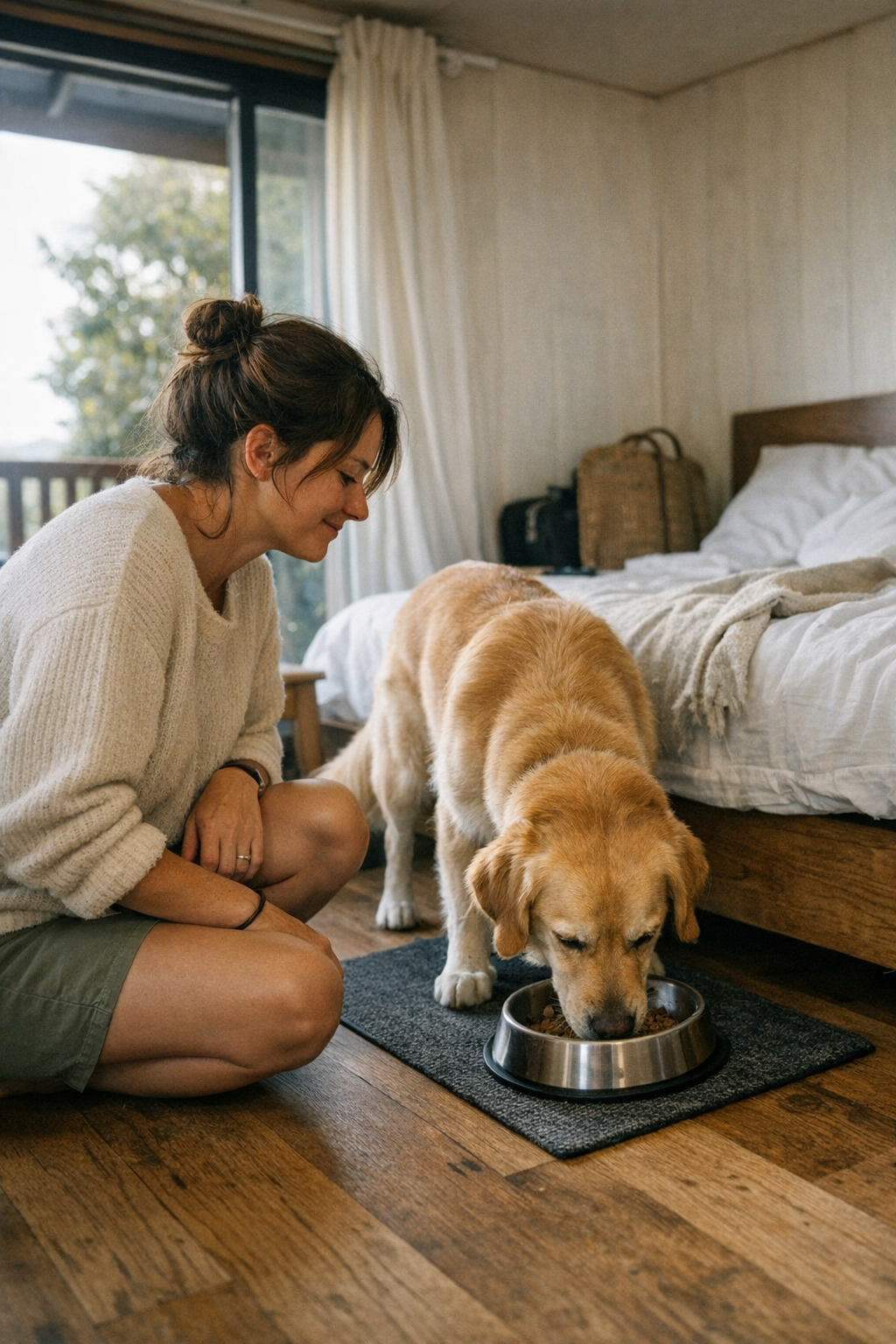
If you’ve watched your dog nudge a food bowl across the floor, leave a trail of kibble, or pause with uncertainty before eating, you know feeding routines often unravel in small, frustrating ways. A bowl that slips every meal, crumbs collecting just out of reach, a mat shifting underfoot—these are not big messes, but their repetition turns a simple process into a daily drag. Instead of a smooth cycle, you catch yourself constantly drifting back: re-centering a bowl between bites, sweeping up the same scattered food, or guiding your distracted dog back to the spot that never quite stays steady. These minor daily flaws don’t just interrupt—they add hidden effort to every morning and evening, making you work harder for a routine that still won’t run cleanly on autopilot.
Small Interruptions, Stubborn Patterns: Where Feeding Friction Hides
It’s easy to ignore the micro-annoyances hiding in plain sight. The bowl sits on a mat, near the wall, food gets eaten—so the surface looks under control. But the pattern is always there: another mid-meal slide, another quick fix, another stray piece of kibble wedged in the routine cleanup zone. Over time, these little interventions become the norm. You spend every meal on standby, one hand always reaching, making silent corrections that never really solve the baseline problem.
Each repeated workaround slowly erodes your momentum. Resetting for the next meal takes longer, and while the outside looks managed, your routine demands more of your attention for less payoff. What should be frictionless instead asks for constant monitoring and patchwork.
When “It Works” Silently Stops Working
Every dog owner can point to a time when their feeding setup felt good enough—until it slipped out of sync without warning. Suddenly, the bowl’s scuffed edge marks where it keeps drifting back to the wall, your dog hesitates or nudges for help, and you can’t locate that smear of kibble until after the next meal. The quick fix (move the bowl, add a mat, sweep again) only uncovers a fresh snag: now the mat slides on the floor, or the bowl bunches in the corner, blocking a smooth reach for either you or your dog. The visual order lulls you into thinking things function, but every meal starts with one chore you hoped you’d solved last week.
Serving food, straightening, cleaning, straightening again while your dog stalls or searches for a settled spot—the visible neatness does not equal workable flow. The routine becomes a loop of minor setbacks, never regaining real smoothness.
Every Meal, a Little Less Flow: How Friction Multiplies
The cost is rarely dramatic. You won’t see disaster—just a steady creep of extra hassle that multiplies in silence:
- Meals drag out, especially during already packed weekday mornings.
- Crumbs and spilled food drift into corners, building up into deeper cleanups by week’s end.
- You finish each evening by recentering bowls and mats instead of closing down the kitchen on time.
- Your dog’s distracted eating means more leftovers or waiting for you to fix the same setup.
The real shift is invisible at first. Let the same small friction linger, and your “routine” slowly becomes a series of quick, forgettable annoyances that add up to a persistently inconvenient feeding cycle.
Setup Friction Beyond Feeding: Where Routines Keep Stalling
Small, repeating snags don’t just live at the bowl. Any dog routine can clog in these same ways when the setup fails quiet tests of reach, timing, or ease.
The Walk Stalls at the Start
Every morning, you grab the leash—except your hand collides with plastic bags, tangled keys, last night’s damp jacket. The leash might always hang by the door, but a shifting pile of gear jams your exit. That one misplaced item stops your dog from transitioning calmly, and turns the walk into a scramble instead of a steady start.
Cleanup Supplies: Always Almost Handy
After walks or feeding, wipes and towels sit “close by”—but never actually within reach when the muddy paw lands. By the time you fetch one, the stain has migrated across a carpet, or your dog is already halfway into another room. Over just a few days, this not-quite-accessible setup keeps you permanently one step behind the mess.
Comfort That Delays the Next Step
Sometimes comfort trades off for cleanup flow. A plush mat corrals the eating area visually, but crumbs wedge deeper, doubling reset time. High-sided water bowls minimize spills but slow down quick rinses. You manage one hassle, but another emerges—neat appearances don’t translate to a smoother day if every tweak quietly drags on the next routine reset.
The Repeated-Reset Trap: Spotting Patterns That Need Tweaking
The clearest sign of a weak routine? Needing the same small workaround, every single time. If you always nudge the same bowl back, double-check for wipes, or take a detour to deal with one corner that never stays clear, your system isn’t supporting you—it’s quietly draining your time and patience.
When every transition calls for a manual fix, the routine’s not working for you—you’re working for it.
Especially on rushed days, these micro-stalls stack up. Dishes look in place but aren’t in reach. Cleanup “stations” reduce visible mess but don’t speed up handling. The setup passes a glance test, but the day-to-day friction builds restlessness and delays on both sides—dog and human. Neither of you gets to the next step cleanly, and the middle of your day keeps dragging two minutes at a time.
The Power of One Small Adjustment
The routines that shift the most aren’t overhauls—they’re clear, targeted fixes at the most stubborn recurring snag. Anchoring a bowl with a real grippy mat, moving wipes to genuine arm’s reach, streamlining storage so nothing blocks the leash—these quiet changes turn “looks fine” into “actually easier,” sometimes overnight.
- The bowl doesn’t wander; your dog can focus, eat, and move on without extra help.
- Stray food is more contained, and cleanup stops being a hunt for rogue crumbs.
- You reach for wipes and actually grab them, not shuffle around mid-mess.
- Both of you transition out of feeding or cleaning, feeling less interrupted and more in control of the next routine window.
Instead of layering on fixes, the right adjustment removes the hidden edge from the day. Repeated friction gives way to repeatable ease.
Notice the Patterns: Are You Living with a Quiet Weak Point?
Every setup wears thin in its own way: a bowl drifting more as the week goes on; wipes moving out of reach as routines get messier; dog items crowding human spaces again six days after a reset. The surface may look tidy, but if you keep pausing to fix the same zone, your system is quietly stalling.
If you spot these signs, your structure needs adjustment, not just more effort:
- Dog gear, bowls, or mats inching further out of position with every meal or return.
- Cleanup tools visible, but never where your hand naturally goes mid-mess.
- Spaces that become clumsier the more you use them during a busy spell.
- Repeated points of hesitation or redirection at the same time each routine.
Surface order fades fast if the real-life transitions never catch up.
The Difference Between Organized and Effortless
It’s tempting to call a setup “done” once everything looks contained, bowls stacked, gear tucked into a corner. But organization can still mask systems that quietly slow you down. What truly works isn’t just tidy—it brings the routine as close to zero-reset as possible: bowls that stay in place, wipes you grab without searching, leashes you hook without shuffling aside clutter. Every repeated step either supports the next move or quietly jams it. The routines worth trusting are the ones that, meal by meal and walk by walk, actually reduce effort—not just hide the friction under neater lines.
See which setups hold up when life speeds up, not just when everything is freshly arranged. Because in the thick of everyday dog-life—a bowl that stays put or wipes in reach can mean the difference between another slow, fragmented day and a routine you can almost forget about. Explore setups built for real daily flow at DogPile.