
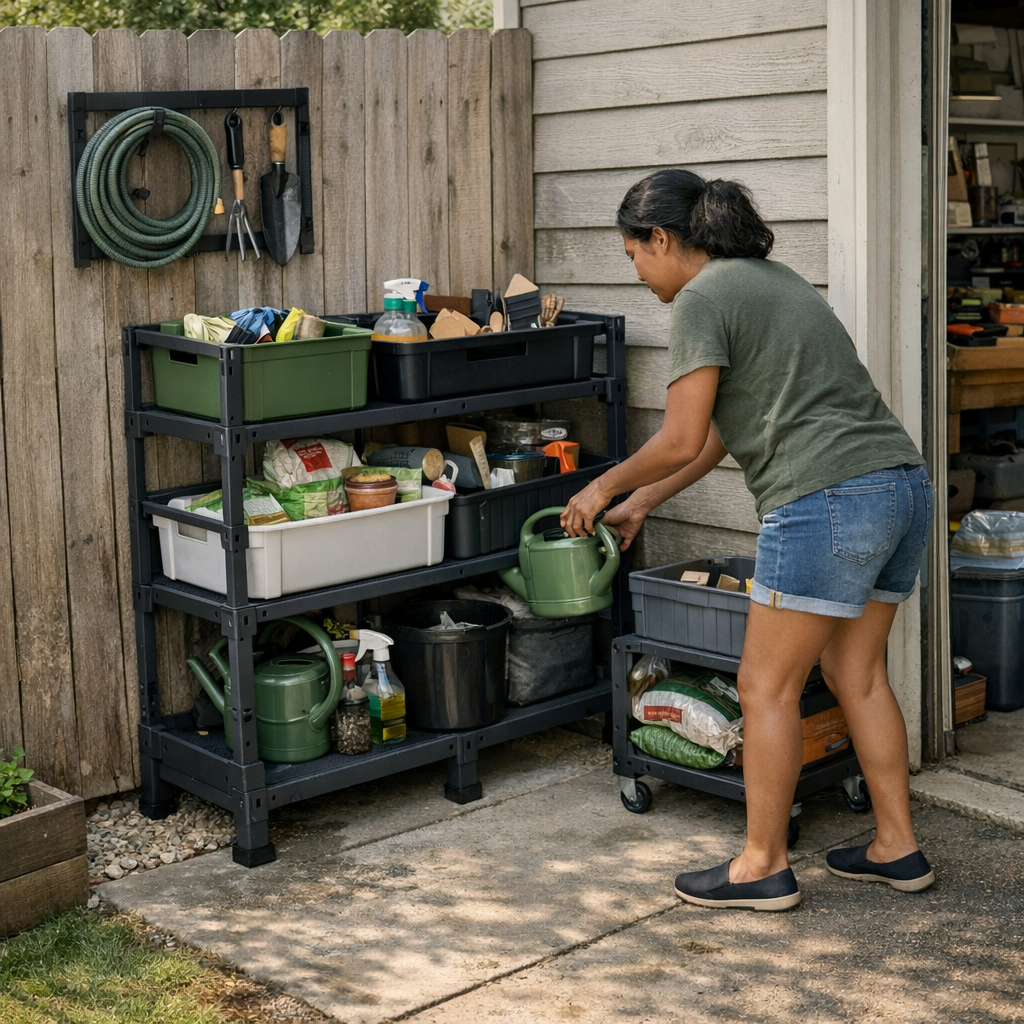
Why does backyard storage collapse so quickly, even when there’s space? The headache usually isn’t what the box or shed can hold. It’s the low-grade hassle of putting things back in a real outdoor zone—a side-yard you cross every morning, a cramped fence line where gear always seems scattered, a narrow backyard corner that starts tidy and ends up buried. The trouble builds slowly: clunky lids, awkward stacks, storage that needs two hands when you’re coming back with muddy gloves. One missed return becomes two, then four, and by midweek, the whole setup feels like a pile of catch-up tasks waiting for “some other time.” On the surface, nothing’s missing—but that invisible resistance turns setup “organization” into one more reset you’ll put off.
Return Flow Drags, and Clutter Takes Over
Imagine a side-yard storage area that looked fine when you set it up: shed against the fence, hooks for shovels, a bin for gloves. The first few days, sure, things end up where they’re supposed to. But midweek, you’re just trying to get inside before dark, so the hose ends up looped over the bin and the rake stays propped out to dry. That “organized” look falls apart not from design but from the fact that each step—unhook, unclasp, restack—feels like just enough work to skip. Return flow gums up, and little piles fill the edges. Suddenly, that clear Monday pathway is another zig-zag race through stuff you’re too tired to shuffle back.
Why “Organized” Rarely Means “Usable” Outside
Nobody’s storage stays show-ready past the first rain or the third hasty gardening session. On-paper capacity is meaningless if the system’s always a step slower than you are. Which tool leaves the setup most often? That’s the one that will break the routine first. Wall rails overflow, “temporarily” parked items fill a bin, and small gear—trowels, hand pruners—becomes nomadic. It doesn’t matter how many containers you own: if the return path is awkward, you’ll start bypassing the system, and the backlog starts. What looks organized today hides the slow breakdown that comes from return routines that never actually match how—under real weather, with real schedules—you use your space.
Reset Tasks Accumulate Fast
One pair of gloves left by the steps isn’t a crisis. But let a couple of returns slip, and soon the boundary of the shed is edged with earmarked piles—stuff “for later” that only gets re-shelved when you can’t stand it anymore. The effort to fully reset grows into a single big project you just keep postponing. That’s why people dread their own storage. Not because tools are homeless, but because putting them away is clumsy, cramped, or plain irritating.
How Setup Friction Creeps In
Walk through any lived-in outdoor zone and you’ll see the real issue isn’t lack of products—it’s the choke points: bins stacked so high you stop bothering with the bottom, overfilled wall railings that make every return a puzzle, narrow paths shrunk by a wheelbarrow left askew. Each tiny decision (“Do I open this lid with muddy hands or just drop the tool on top?”) piles up, eroding what started as a clear, easy routine.
Typical return blockages:
- Placing a trowel away means first moving a planter that’s in the way.
- Bins with heavy or awkward lids get skipped, so gloves end up tossed wherever’s open.
- Wall hooks jammed with odd-shaped gear push everything else further from reach, slowly exiling lesser-used tools behind the regulars.
- Each new “temporary” pile tightens the walk-through, leaving less room—and less incentive—to actually put things back.
The Gravity of Dead Corners and Overflow Patches
Almost every setup has a spot that quietly turns into a landfill. An unused corner behind the shed, a fence patch where stray items accumulate, the shadowed ground nobody bothers with until you trip on a pile of spare pots. Those dead zones don’t get fixed by better labeling. They exist because putting things away there is never the fastest, easiest move in the moment—so overflow sticks and multiplies, cementing these spots as permanent “come back to later” zones that never actually get reset during regular use.
Open Storage Changes the Real Routine
What keeps order isn’t how sleek or compact the hardware looks on move-in day. It’s whether you can restore order without stopping to fuss, even after a rainstorm, even when you’re juggling muddy tools. Subbing out awkward bins for an open-front shelf or a rail at arm height, suddenly the most-used gear slides back in, single motion—no lids, no awkward stacking, no shuffling required. That’s the difference between a storage area that stays functional and one that’s always halfway to chaos.
One-Move Returns Shorten the Reset
After a weekend mowing rush, the trimmer lands on its shelf, not draped over a growing pile by the gate. Overflow bins don’t choke up because the reset path is so clear you actually use it—even if a stray tool lingers, the majority of returns stick, and the catch-up workload never balloons. When most gear finds its way home on the first try, the friction to “reset everything” shifts from overwhelming to background noise.
Organization That Survives Real Use Patterns
There’s no such thing as a flawless outdoor setup—power tools, weather, and shifting projects make sure of that. But a system that absorbs hasty returns—one that’s forgiving when the day gets away from you—is what separates clean, usable space from a zone that always looks halfway abandoned. Over time, these setups shrink the time you spend moving the same rake twice, restacking bins, or bracing for the big Sunday sweep. Instead of order that fades by midweek, you get regularly usable space, even if “perfection” never really happens.
Quick Wins to Reduce Return Friction
- Create a visible, open drop spot at utility entries for dirties and frequent-use gear. It intercepts overflow and keeps relentless backup from spreading into the main storage footprint.
- If “scattered” items keep popping up in the same locations, rethink that dense row of bins or tight corner shelf—maybe those spots are fighting your real cleanup routine, not helping it.
The line between a setup that actually works and one that always needs fixing is simple: if it’s easy to return gear—even with dirty hands, even in a rush—you keep up. If it’s a hassle, disorder creeps in and sticks. Frictionless storage isn’t magic, but over time, it turns resets from sprawling projects to an afterthought, and that’s the difference you feel week after week.
Find practical outdoor storage setups at TidyYard.