
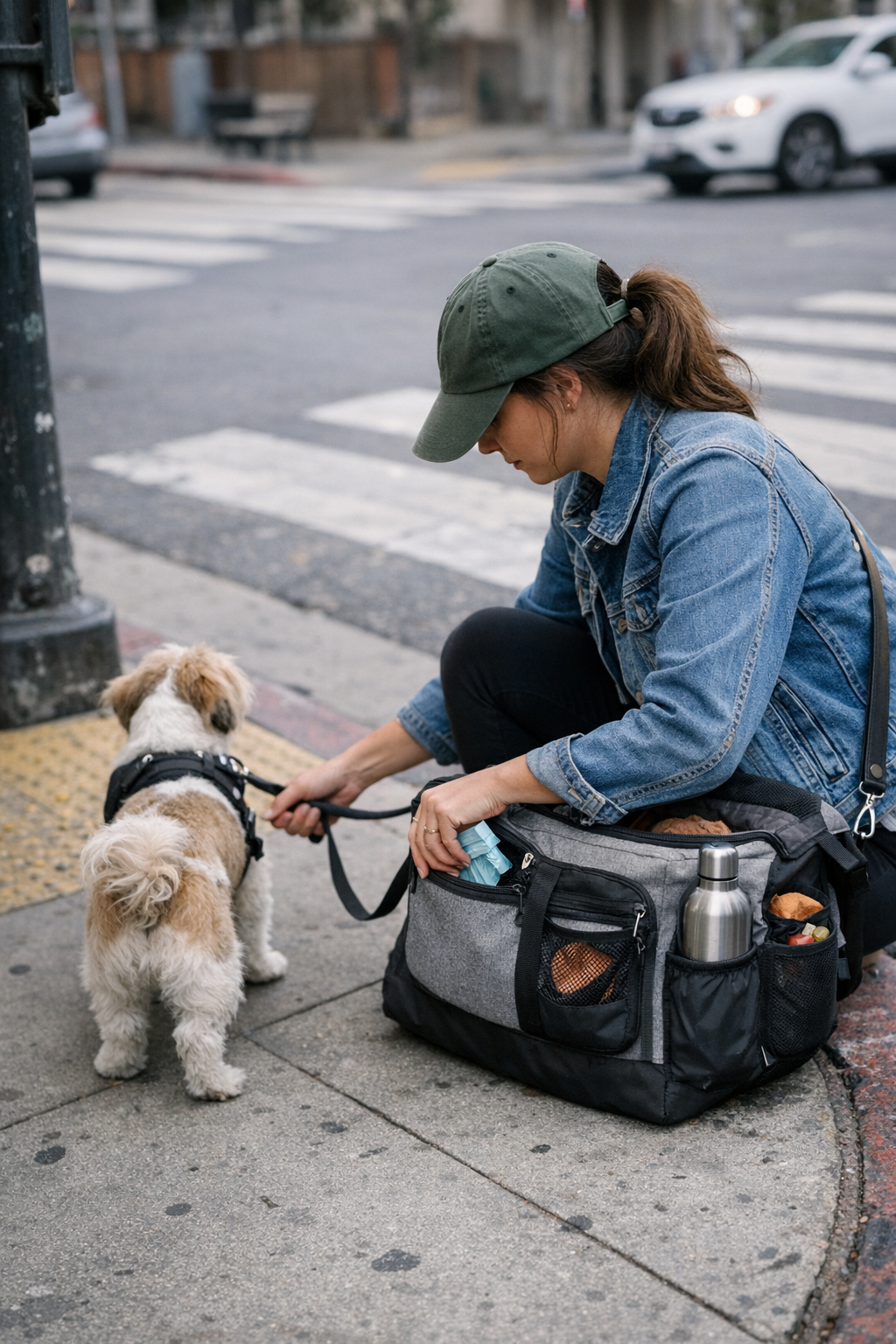
The real blockages in pet travel aren’t dramatic—they’re the small jams and delays that pile up precisely when steady movement matters most. A pet bag that looks “ready” can still turn on you in the real world: you pack treats, wipes, the water bottle, the leash—all in their “place.” But by the third curb, that organization turns into a trap. You’re stopped at a crosswalk, leash taut, one hand steadying your dog. The other dives into a bag that resists: wipes buried behind a bottle, waste bags wedged awkwardly under a rarely-used blanket, compartments stacked so you have to reshuffle three things to reach the one you actually need. What ought to be a seamless motion becomes stop-and-go chaos—proof that real pet travel isn’t slowed by lack of gear, but by setups that turn quick access into their own obstacle course. This is the world PawGoTravel’s routines are built to recognize—and quietly correct.
When “Looking Organized” Isn’t Enough
There’s a quiet pitfall in pet-travel gear: a bag can look precise and composed but break down with every real-life pause. Structured pockets and crisp lines hold together until you’re perched seat-side, your dog tugging to get moving, and just grabbing a single snack demands unzipping, shifting, and half-emptying a pocket. Quick access becomes a shuffle. One zipper hides what another claims to hold. Overlapping pouches and blocked compartments mean a leash clip gets pressed inside, bowls wedge against snacks, and what once felt efficient becomes frustrating at the precise moment you need to move smoothly. If “organization” only works when everything is motionless, it’s not built for actual pet travel’s pulse and pause.
Real-World Example: Curbs and Crosswalks
Think of a typical stop at a crosswalk. Dog waiting, leash slightly tense, you try to grab a cleanup bag—only to discover it’s trapped behind a snack pouch last used at the previous stop. The bag looks organized, but nothing is at hand when it counts. What should be a one-handed grab becomes an awkward juggling act: pet in one hand, zipper in the other, balancing a treat pouch, hoping nothing spills, finally reaching the wipes that were supposed to be “right there.” One missed pocket becomes a delay. Multiply that by five or six stops, and you’re running out of patience in public, performing resets that pull your attention from the outing to your bag. These aren’t minor glitches—they’re the pain points that make even the best-packed pet routine start to unravel by midday.
The Invisible Build-Up: How Friction Accumulates with Repeated Use
Disorder rarely starts obvious. The longer your outing, the more every small interference weighs on the routine. The most common sign isn’t visible mess; it’s the cumulative drag of blocked access. Drying muddy paws? The water bottle’s in the way. Need a waste bag? The collapsible bowl blocks the way. Unclipping the leash? Now it’s tangled around a blanket edge intended for calm, but now it’s the latest stopgap. Each shuffle is quick—until halfway through the trip, when stopping means resetting the whole setup. Every restart is slower, each pause less seamless, and the bag’s structure turns into the friction you were trying to avoid in the first place.
Comfort Versus Speed: When One Solution Creates Another Problem
Add a comfort layer, favorite toy, or extra mat, and the setup feels cozy—until you need speed. That plush blanket meant for calm now shields the leash clip or buries the waste bags. “Comfort” items solve one problem and quietly create another. Over time, these tradeoffs stack: your pet rides calmer, but you’re distracted by reaching, searching, juggling. The hesitation slows both of you down. The bag stays neat to look at but grows clumsy in use—proving that good intentions in setup can get messy once the stop-and-go rhythm starts adding pressure.
Access That Matches Movement: Where Dedicated Pockets Make the Day Easier
Function wins when access points are truly direct—and not shared across items. Redesigning your setup even slightly—like assigning a side pocket strictly for wipes and bags, right next to the leash clip, leaving it clear—immediately shrinks routine friction. In action, this means at any curb, one hand always lands on exactly the right item while the other keeps your pet steady. No blocked zippers, no collision with bowls or blankets, no balancing act. The bag might look less symmetrical, but in repeated use, it feels designed for the pulse of restarts, not just the photo at home.
What Actually Changes When You Rework One Weak Point
The difference is instant and accumulates with each stop: clean, repeatable reach, no multi-stage item shuffling, and no pocket resets in public. Crosswalks become brief, not drawn-out. Cleanup moments are handled with one move. Focus comes back to the pet—not the bag. Instead of inventing tricks each time you pause, structure lets you flow through restarts without improvisation. Stability grows. That gain is almost invisible—until you realize you’re not fighting your own bag anymore. Only repeated movement shows how large the small improvements really are.
Recognizing Signs Your Setup Needs a Change
The simplest self-check: count the hands and moves it takes to get to one essential item at every stop. If you’re putting things down, shifting two or three pockets, or doubling back for cleanup tools, your setup is leaking time and calm. Drag by drag, the wrong layout costs you more than annoyance: tired hands, restless pet, and that creeping sense your gear is quietly working against you. Pet travel shouldn’t be a test of multi-task endurance.
Telltale Moments of Friction
- You reach for wipes or bags, but they’re nested behind other items, triggering fidgeting or straining from your pet.
- The leash clips or gets snagged around a bowl or under a blanket, dragging out the restart while you backtrack for a missing clip.
- Each pause leaves your bag’s inside more tangled, despite repeated straightening—evidence that “fixing” it isn’t solving the root problem.
These are not dealbreakers, but they build up and undercut every walk that should feel smooth—especially on trips with stops and restarts.
Easier Stops, Smoother Restarts: Why Setup Details Matter
No setup makes friction vanish. A zipper will still catch, a treat will go missing. But what separates a “packed” bag from a practical one? Structure that supports you after repeated cycles, not just in the first calm ten minutes. Dedicated quick-access, zero-overlap for high-use items, a flow that lets each hand land where it needs—these shrink the exhaustion and awkwardness that builds with use. The point isn’t achieving perfection. It’s a layout that gets simpler as the outing continues, not harder.
The difference is clear in movement: every stop, every crosswalk, each unplanned seat-edge pause, gets easier to manage, not heavier with baggage. The right pet-travel setup doesn’t just look sorted on your doorstep—it stays functional in motion, converting “wait, where is it?” into “ready, let’s go.”
Discover practical pet-travel setups and essentials at PawGoTravel.