
Why “Organized” Entryways Don’t Stay That Way
Day one, your entryway looks under control: shoes slotted under a bench, bags tucked inside neat storage, maybe a new liner or two. But by day three, the gap between organized appearance and actual routine blows wide open. Shoes multiply and drift into the walking path, bags teeter and spread at the bench, and that “easy-clean” setup now hides tracked-in grit, pet hair, and muddy streaks just below the surface. What looked manageable at first—especially in a high-traffic or family entry—gets quickly undermined by the logistics of real daily use. Resetting order isn’t just about tidiness but about friction: how much work it actually takes to reclaim usable space while traffic keeps flowing in and out.
How Fixed Liners Create Hidden Cleaning Headaches
On install day, a fixed liner in your bench or storage zone feels like a game changer: everything crisply in place, covering exposed edges, ready for real life. But give it a week of shoes coming and going—soccer cleats after rain, lunch bags that leak, dropped coats, the pattern of a dog’s fur swirl underfoot—and a hidden mess builds up fast. Fixed liners don’t move; neither does the dirt they absorb. Every time you stretch to vacuum under a bin or try to catch crumbs stuck deep in the seam, you realize there’s no straightforward way to reset the area. Cleaning turns into a contortion routine around obstacles, not a simple refresh. The bench edge becomes a collection zone for damp socks, shoes edge outward, and each pass worsens the embedded mess under your so-called “clean line.”
The struggle isn’t laziness—it’s structural. Fixed liners block full access. You wipe and vacuum what you can reach, but dust and grit pool at the seams, just beyond your stretch. After a weekend with bad weather, hitting “reset” means emptying the whole setup just to address a mess that’s hidden by default. Most postpone it, and the cycle of ignored dirt and clutter gets locked in.
When Daily Drops Turn a Reset Into a Project
Look closer after a busy week: kids’ shoes angle wider until the row blocks the path, backpacks slide halfway off the bench, umbrellas drip by the cabinet. Fixed liners absorb the fallout, holding onto every granule and darkening into a layer of residue just out of sight. The visual order is lost at the edges: you start stepping around piles instead of through a clear zone. Each time you mean to “fix it later,” the mess compounds, requiring a full disassembly when you finally run out of runway. The threshold zone is no longer a reset point—it’s a semi-permanent traffic jam.
Removable Liners: The Fast Track to Clean Slates
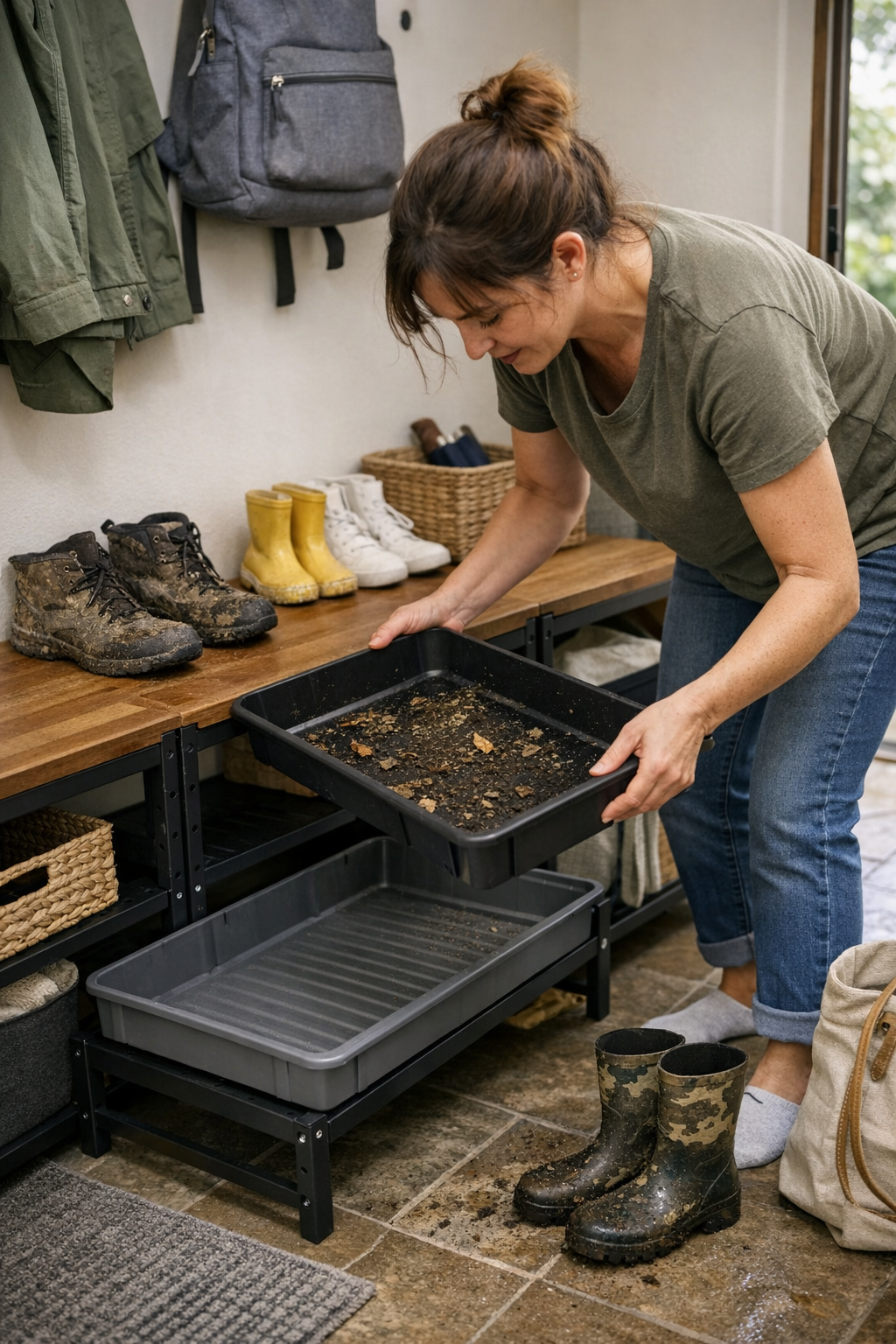
The moment you swap in a removable tray or bin, you notice the difference isn’t about looks but speed of reset. Now, when soil or fur builds up, instead of wrestling with corners, you lift the tray or liner straight out, shake it off outside, and—if needed—quick rinse, back in. Suddenly, returning the entry to baseline becomes a two-minute break, not a looming project. Shoes can spread, traffic can spike, but the real bottleneck—awkward access—vanishes. Even one well-placed removable underlayer blocks the buildup cycle a fixed liner traps, keeping maintenance a reflex, not a chore.
Repeated Use Beats Perfect Setups
Display models and picture-perfect entry setups sell a promise: every shoe lined up, baskets flush, edges sharp. But once your routine kicks in—kids, pets, work gear, weekend mud—it’s the ease of reset that decides whether the area works. Removable liners match the churn of actual life. Shoe rows snake wider day by day, but cleanup doesn’t stall: snap out, shake, slot it back. No tools, no tilting heavy bins just to chase after one pebble. Restoring order becomes part of moving through the door, not an extra job left lurking until you can dedicate a whole afternoon. Reset speed and surface access become your real defense against permanent mess.
Maintenance Gaps: Why the Wrong Setup Slows Everything Down
Every threshold zone has a weak link—usually the spots you avoid cleaning because the setup gets in the way. Fixed liners form pockets where crumbs, leaves, and hair drift just out of reach, left to collect until the inevitable heavy reset. As shoes splay into the doorway and dropped gear claims the bench, surface cleaning barely touches what’s buried below or behind. Small inefficiencies—shuffling bags, stepping around blockers—mount up. With every skipped reset, the line between “transition space” and “overflow pile” gets harder to redraw. Real order isn’t about a one-time display but about how little effort it takes to return things to functional.
The tell is what happens on week two: after a few storms, a couple rounds of visitors, and routine gear flow, does cleaning take seconds—or does it require moving everything and fighting the built-in barriers? Removable underlayers adapt; fixed liners make every reset harder.
Making Fast Resets Part of the Routine
The reality of a busy entryway is relentless: the surface cleans rarely keep up, and complicated setups just encourage delays. The only reset that actually happens regularly is the one built for shortest path—grab, lift, dump, return. Placing an extra removable tray under the outdoor boot row means you can catch heavy mud days without breaking your stride. Keeping a spare liner lets you swap when the first gets soaked—no waiting or scrubbing, just a quick exchange that keeps the space usable. With pets, a ribbed tray makes the bulk of fur a one-shake task. These aren’t tech upgrades; they’re structural concessions to how transition spaces are bombarded daily. The difference: reset doesn’t stall, and the zone stays part of the working routine instead of becoming background clutter.
Choosing What Holds Up to Real Traffic
If your entry sees steady flow—weather, gear, paws, and backpacks mixing at all hours—the choice between fixed and removable is really about reset friction, not just storage volume. Fixed liners deliver surface order on day one, then shift baseline maintenance into a spiral of delays and avoided chores. Removable bases break the buildup loop, restoring quick, full access so your home’s entry never has to become a permanent work zone.
Ultimately, transition-space storage isn’t about perfection—it’s about whether you can return to clean in two steps, not ten. When reset is easy, order survives rain, soccer cleats, pet hair, and weekday rushes—making the threshold a passage, not a pileup point.