
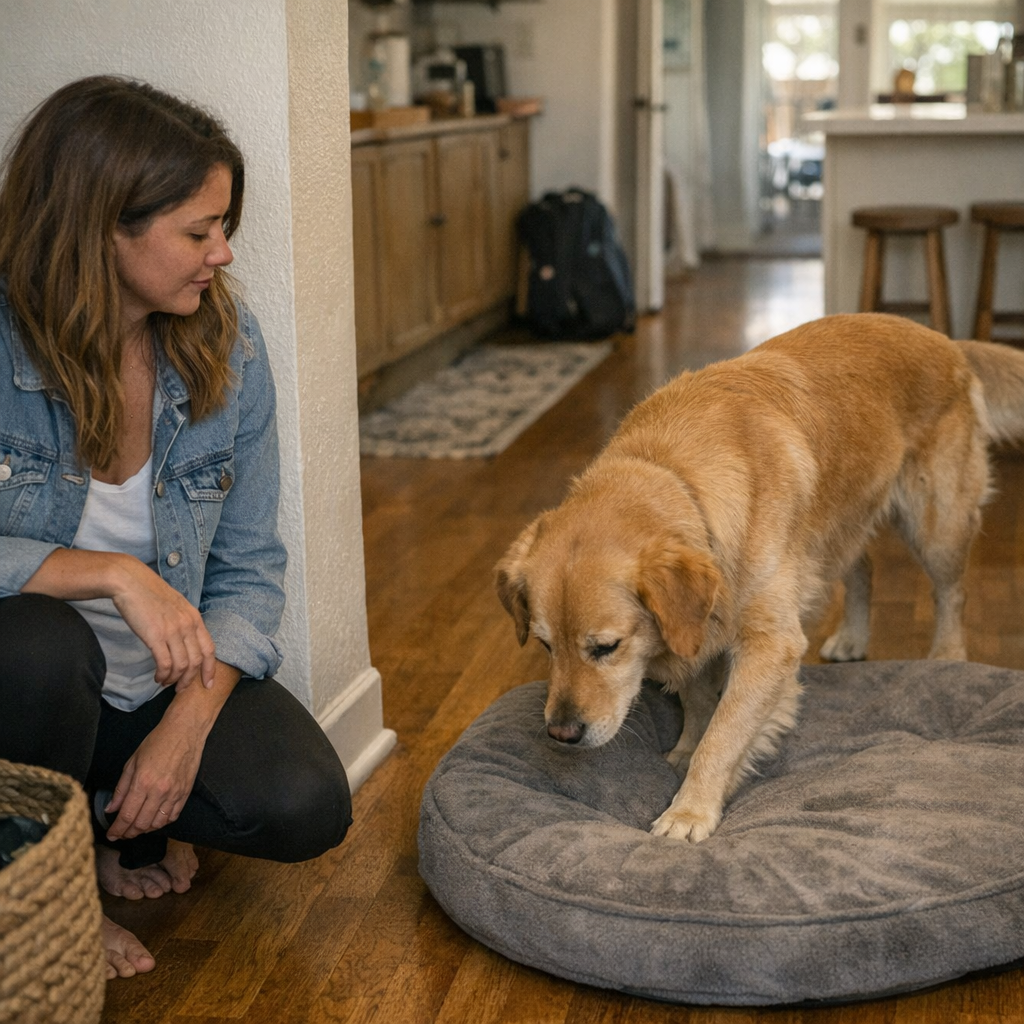
You set up a dog’s rest corner thinking it’s finished: bed fluffed, blankets in place, corner claimed from daily clutter. But then comes the repeat: your dog approaches, circles, eases down half, then pauses—ears catching hallway footsteps, head lifting at every family pass. The rest area looks right, yet your dog never fully commits to the spot. Instead, you get sidelong glances, uneven weight shifts, and naps broken by every noise. This isn’t rare; over time, those small hesitations—one paw on, two eyes tracking movement—build up. The real drain? Daily routines start stalling; rest isn’t restorative; and all the tidying in the world can’t hide a setup that actually disrupts instead of resets.
The Rest Zone Looks Fine—So Why the Hesitation?
Patterns appear in the friction: the midday nap that never quite starts, the end-of-day curl-up interrupted by footsteps, the repeated circling at a bed your dog once rushed to claim. Watch closely and you’ll see it in the moments between intention and settling—your dog pausing, half-reclined, attention split between bed and hallway. It’s not just a personality quirk; it’s a signal that the space isn’t working under real routine pressure.
This micro-pause is the start of bigger trouble. Instead of deep sleep, you get half-dozing: every muffled voice in the hall means a lifted head. Naps get shorter. Peaceful lounging turns into restless watch duty. The clues always surface in the approach—when your dog lingers at the edge, waiting or tracking movement instead of collapsing with trust. The rest setup that looked great loses ground as the routine exposes its weak spot.
Recognizing the Quiet Cost of Half-Rested Dogs
You feel it before you name it. The dog is needier, the evening tighter, and the day’s small interruptions multiply. Your dog paces in, surveys the space, but won’t drop cold; instead, you get sideways glances, light sleep, a shoulder always lifted against the next noise. This tension creeps into play, feeding, and downtime—rest isn’t a true break, just another checkpoint in a too-busy flow.
It’s easy to write off as “just how they settle.” But repetition tells you otherwise. Approaches drag out, resting becomes fragmented, and your own flow gets pulled off course by constant low-level resets—closed door here, drop of a backpack there, repeated trips for a missing towel or misplaced toy. The routine is quietly broken by environmental friction the eye misses and the dog can’t ignore.
Example: The Crowded Rest Window
Picture after-work chaos: dog heads for her bed as you finish a call, only to freeze as kids shoot past with school bags. The pause is visible. She waits, half-hoping for quiet. Ten minutes later, when things calm, she finally settles, but stays alert—body twisted, eyes on the main drag. Her nap window closes while you untangle leashes and clear the hallway. By dinner, her energy’s frayed—and yours is too. What looked like strategic placement in the morning now traps both of you in a pattern where rest is never uninterrupted, and cleanup starts bleeding into living space.
Traffic, Noise, and the Sneaky Power of Place
It’s almost always about the path. Even a well-padded bed, if set next to a main walkway or near the kitchen, puts your dog in the crossroads of noise and scent. Each trip to the fridge, each backpack drop, each snack tossed, keeps your dog half-waiting—ears primed, not relaxed.
This design flaw slips past initial setup. The “quiet” corner at breakfast is a highway after lunch. Placement that looks clever one week silently undercuts downtime the next as movement patterns change. What shows up on repeat use?
- Your dog flinches at each door open or hallway echo.
- Naps last minutes, cut short by footsteps or voices.
- Energy never resets—playtime fizzles, crate time gets jumpy, and the dog follows you, not because she’s attached, but because her rest zone is always in flux.
It isn’t about cushion comfort alone. Without a physical or visual buffer, rest collapses into alert monitoring. Change the angle, block a path, or create a sheltered side, and the pattern shifts from pausing to deep downtime. Fail to, and you’re left troubleshooting the same restless behaviors no matter how well-meaning your setup.
Real-World Friction: When Rest and Routine Collide
The most telling moments happen after walks or muddy-yard trips. You return with the leash in one hand, a distracted dog in the other, and discover the bed is in the spill zone for shoes and gear. The wipes or towels—if not buried under piles—require a hallway dash to fetch, while your dog drips, shakes, and delays settling. Instead of a quick reset, every transition turns slow: you’re mopping paw prints out of traffic lanes, the bed edge gets damp, and the rest area starts leeching mess into daily flow. Organized? Maybe. Efficient? Not even close.
The difference is stark: a space that looks tidy can actually slow everything down if you’re always circling back to fix what the setup keeps breaking. The real test isn’t visual order, but whether you can flow from walk to cleanup to rest—without detouring for missing gear or nudging your dog off high-traffic real estate.
From Minor Adjustments to Major Difference
If you’ve lived this, you know: even small misalignments compound. That midday pause at the bed isn’t just hesitation—it’s your whole routine forced to adjust, again, to a rest area that makes sense only on paper. Every family pass or kitchen sound draws your dog’s body higher, splits focus, erodes downtime. Instead of closing the loop with a true nap, your day becomes one of micromanaged transitions: fast shuffling from leash to towel, barking at every entry, reworking the space that should simplify, not complicate, the flow.
But few fixes are as quick—or as ignored—as relocating the bed by even a stride. This isn’t theory; it’s what improves routines from ‘almost fine’ to seamless. Shifting the bed just a step off the main walkway, giving it one more wall for psychological cover, transforms the approach. The dog that used to hover now commits: forward motion, quick curl, chin down, full exhale—a measurable retreat from the main drag back into real rest. The earlier friction—pausing, scanning, resisting calm—lessens in a matter of days. New gear is rarely needed; the win comes from structural adjustment, not accumulation.
The One-and-a-Half-Step Solution
Case in point: after watching my own dog stall at her old bed site, I moved the setup roughly one and a half strides off the heaviest traffic line, pressing it to a side wall with no direct hallway view. First day: some doubt, same pause. By the third try, the change kicked in—fast entry, one circle, stretched-out sprawl, and, finally, head away from the commotion. Gone was the old pattern of staying on watch; instead, she settled, and real downtime returned. It wasn’t overnight, but it was undeniable—less frequent interference, less retracing steps, a visible shift in the day’s flow.
The real difference isn’t in how clean the bed looks, but in how the dog—and owner—move through the steps after each routine event. Placement starts doing work, not creating more of it. Fewer reminders, fewer resets, downtime that means something again.
Spotting Signs Your Rest Setup Needs a Tweak
Watch for the giveaway patterns—these aren’t quirks but warning signs:
- Dog hesitates at bed’s edge, waits before lying down
- Excessive circling with eyes trained on entry points or footpaths
- Half-settling, raised shoulders, head always pivoting toward routine noise or movement
- Light, interrupted sleep—constant ear-flicks or quick lifts at everyday sounds
- Restlessness that migrates: play fizzles, meals get messy, evening routines stall
If the same friction persists days in a row—despite a freshly organized, cleaned rest zone—you’re not facing a neatness problem, but a structural one.
Quick Wins for Resetting the Routine
You don’t have to stage a remodel. Instead, try:
- Sliding the bed one step off the direct path or door line
- Angling for a partial wall or visual barrier, blocking direct sightlines from high-traffic spaces
- Placing towels, wipes, or cleanup supplies at arm’s reach, not buried in another room—so resets after walks, outdoor play, or muddy paws don’t require detours
- Positioning just enough gear for transitions, but not so much it