
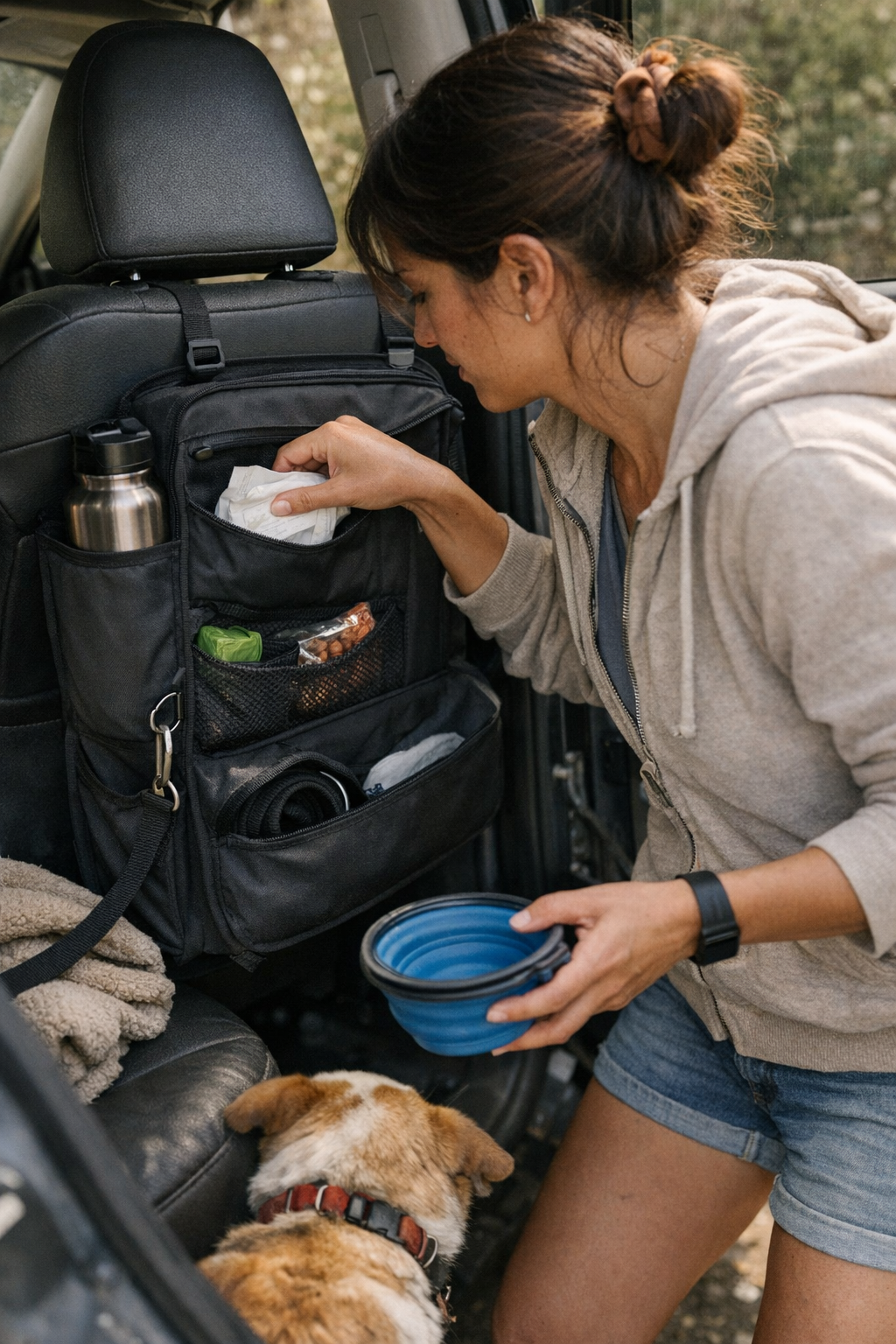
A pet travel bag never fails you on the very first trip—it’s the slow unravel that gets you. The “organized” kit promises calm, but within a week’s worth of errands, the cracks show: wipes that slip behind water bowls, a leash looped through three pockets, treats lurking with the clean-up gear. In theory, it’s all there and ready, but when you’re juggling a fidgety dog and a car door, every extra reach or mis-timed grab is another second lost—and another reminder that a packed bag isn’t the same as a practical one.
Why Pet Travel Bags Lose Their “Ready” Feeling So Quickly
The initial confidence from a freshly packed kit—pockets zipped, pouches assigned—fades fast once real routines take over. What promises order at home often delivers friction at the curb. By the third day of errands, you notice it: the travel bowl isn’t where you thought; wipes slide beneath a comfort toy; the leash, meant to be at the top, now knots around the bottom. Suddenly, cleanup and comfort compete for the same space, and your “efficient” setup blocks you at each stop. Looking prepared is easy. Staying functional, again and again, is the real test.
The drag on pet travel comes less from missing supplies than from slow, awkward access. Essentials overlap, snag, or bury each other by accident—pockets meant for speed instead become traffic jams. The week starts strong, but by midweek, every delayed grab chips away at smooth movement, and your patience starts to follow.
Real-World Interruptions: Where Smooth Setups Start to Stumble
Bring your pet on a round of errands and patterns surface fast. At your first stop, wipes are easy to spot and grab. By the third stop, they’ve vanished under a half-folded blanket, and the collapsible bowl has slipped behind cleanup pouches you never meant to rearrange. Repeated use turns one-handed access into a clumsy shuffle—one hand holding your pet back, the other fishing for a missing item. Those tiny timing slips add up: your dog shifts anxiously, you lose rhythm, and the “quick stop” drags on.
Blocked quick-access isn’t just an annoyance; it disrupts the flow for you and your pet. Cleanup bags tangle with leashes, pouches wedge into seat cracks, compartments that seemed smart in the kitchen slow you down at the curb. The calm, streamlined promise of your setup dissolves the moment you need something and can’t grab it without a hunt.
Why Most Carriers Start Strong But Lose Steam Midweek
It doesn’t take a “bad” design, just repeated motion. Wipes wander between sections; treats drift next to harnesses. Leash holders meant for speedy clipping catch your fingers every time you reach around them. The more perfectly you packed, the more your setup drifts off-spec as reality smears everything together. You’re not losing items—you’re losing rhythm, repeatedly forced to reshuffle or repack in the middle of a routine you thought would be easy.
The hidden cost isn’t a single forgotten item, but the pileup of two-second delays and forced workarounds. Need a comfort blanket fast? Out comes half the bag. Search for wipes? Now you’re balancing gear between footwell, seat, and a squirming pet. Over a week, the stress of repeated micro-adjustments wears you down far more than the occasional missing treat.
Seat-Side Reach: The Difference Between “Looks Ready” and “Works Fast”
The breakthrough isn’t more compartments—it’s a better flow: a shift from a deep catch-all carrier to a seat-side kit where high-use essentials claim space near your dominant hand. If you always need wipes and a water bowl at stops, having them in an outer pouch means real one-handed grabs—no rooting, no shifting, no breaking focus mid-move. A simple sleeve for the bowl, wipes at the edge, leash clipped openly: you stop wrestling with your bag and start handling the trip itself.
With a setup like this, the visible “ready” is replaced by true ready: after five errands, wipes are still reachable, water stays at hand, and the worst midweek tangle fades out. It doesn’t look as picture-perfect as a catalog shot, but every move is faster, every return to the seat less interrupted. It’s a structure that favors real flow over artificial neatness.
Knowing When It’s Time to Rethink Your Setup
If you keep hitting the same snag—digging through stacked pouches for wipes, or emptying a bag just to uncover the bowl—it’s not a bad day, it’s a sign your setup isn’t matching your routine. Overpacking makes the overlap inevitable: too many small things layered together guarantee blocked access. What “looks organized” at home becomes a slow, cumbersome shuffle by Wednesday, and every unnecessary delay signals time for a simpler fix.
Watch for repeated friction points. Do you need both hands just to fish out a leash while also steadying your pet? Are comfort items mixed deep with essentials you actually need every stop? When the same obstacle comes up again and again, swap out the rigid, compartmentalized kit for one that favors open pouches, quick reach, and single-motion grabs. The difference is immediate by the second or third run.
Practical Fixes for Repeated Movement
The true wear of pet travel isn’t mess—it’s friction across dozens of small moves. Fixes that last aren’t about impressive packing; they’re about layout. Keep bowls in sleeves, wipes outside deep pockets, and comfort gear from sinking beneath everything else. Each reduction in overlap translates into a faster reset, a cleaner handoff at the door, and one less reason to stop and reshuffle.
Neatness matters, but it only helps if you can return to movement fast, with one hand free and no digging. Travel setups that survive a full week of stops do so because their structure still works—not just because their contents were sorted right on day one.