
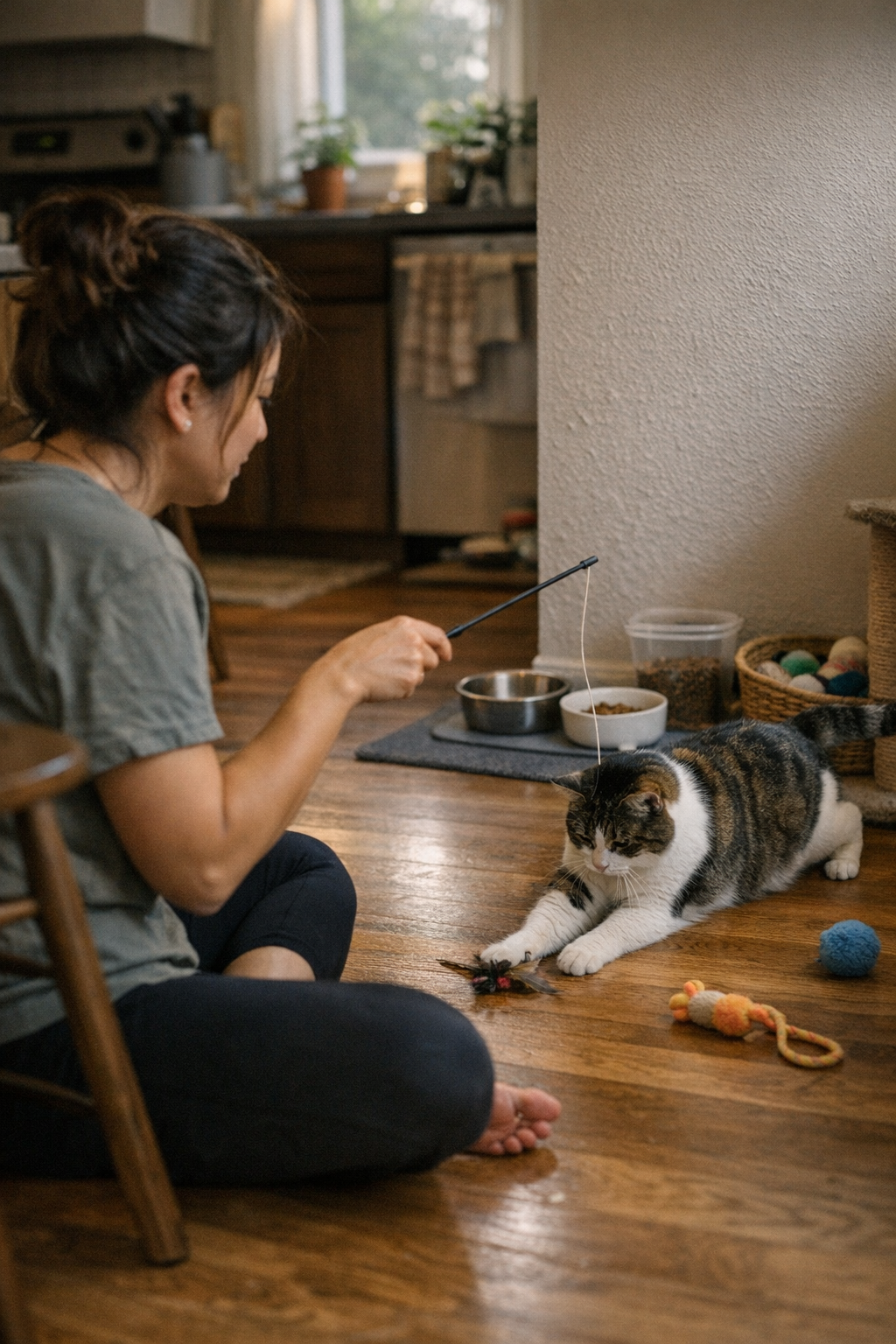
Indoor cat life promises order—until late afternoon proves otherwise. You’ve stacked the food bowls, lined up water dishes, and corralled the toys into a basket, but one off-schedule refill or an early dinner whine and it all unravels. Suddenly, you’re stepping over a plush mouse blocking the pantry door, wiping up water before you can even reach the mat, and realizing the “tidy” setup just forces you to repeat the same cycle: clear, reset, repeat, while your cat surges through the feeding corner with more energy than the setup can actually handle. The real frustration isn’t a messy look—it’s that your carefully organized space rarely survives the overlap of playtime, mealtime, and evening cleanup as the hours stack up.
When Setup Doesn’t Survive the Rush: Overlapping Cat Routines Exposed
Most home systems don’t collapse all at once—they slip under the pressure of timing. In theory, mats fit, bins nestle under shelves, and toys have a basket. But every evening, friction builds where routines collide.
- Your hand goes for the scoop but finds a rubber ball blocking it behind the food container.
- Counters meant to be clear for a quick wipe are crowded again, with the cat zigzagging underfoot before you even finish one pass.
- Lunch wipe-downs, once delayed, pile into the busy end of the day—paw prints layered with yesterday’s crumbs and stray litter showing up just in time for dinner.
Feeding, play, and reset no longer line up—they tangle. Cat pacing and meows fill the kitchen, toys resurface in the high-traffic walkway, and your “neat” arrangement demands new attention just as you’re ready to relax.
How Play Timing Can Spill Mess Beyond the Setup
A space that looks under control at noon falls apart once dinner energy crests. When playtime gets pushed to the end—after feeding or as a bedtime afterthought—cats build up energy that explodes into the feeding area and surrounding rooms. The visible pattern: circling in front of bowls, pawing at mat edges, loud calls for attention, and toys migrated dangerously into walking paths right as you prep food or try to move cleanup supplies.
Control fades fast: meowing ramps up, feeding corners clutter, and midnight “order” dissolves as cats push for attention the setup never actually contains.
It’s not just mess—it’s friction: dinner routines stall as you shuffle bins, re-capture toys, and watch the kitchen morph from a cleared zone to a source of nightly interruptions, all before you even reach the finish line of bedtime.
Late-Day Pressure Points: The Setup’s Real Test
The difference between an organized look and a manageable system becomes obvious after 5 p.m. By midday: bowls full, litter brushed, toys in their spot. By early evening, flaws show instantly.
- A cat stationing itself near the bowl—meowing, pawing, or bumping the mat just as the kitchen sees the most through-traffic.
- Water splashed well beyond the mat’s edge, forcing a full kitchen wipe instead of a quick one-spot fix.
- Toys escaping their “zone,” showing up under dining chairs or in walkways once the evening surge arrives.
- Cleanup gear is visible, but never quite within arm’s reach when a sudden spill hits—turning minor resets into stop-and-start routines.
By bedtime, you’re not just picking up stray toys—you’re backtracking to catch crumbs and water trails, sidestepping cleanup tools you left out earlier, and realizing the “reset” is never really final. The organization collapses at the busiest stretch, demanding one more round of fixes every single night.
Rewiring the Routine: The Case for Moving Play Before Meals
One real shift—moving interactive play before the evening meal—breaks this cycle. When cats burn off energy in a set block of play, chaos doesn’t explode just as you’re preparing food. The science is simple: play channels nervous energy, leaving cats less primed to race through the feeding zone, call out for attention, or turn every mat and bowl into their own post-dinner playground.
What stands out after 15–20 minutes of pre-meal play isn’t just a calmer cat. It’s immediate, visible change:
- Persistent pacing and meal-time meowing shrinks—the kitchen transforms from a pressure spot into a quieter prep area.
- Toys stay closer to their play mat, rather than scattering into every open space as soon as the bowl hits the floor.
- Cleanup is streamlined: a quick mat wipe is usually enough, replacing the full sweep or frantic toy hunt that once closed every day.
Instead of a rush at the bowl, you notice a smoother handoff: play ends, feeding happens without crowding, and the rest area actually signals “wind-down” instead of “let’s do it all again.” The room can finally move through meal, play, and rest without each stage permanently undoing the one before it.
Containing Play—and The Cleanup That Follows
Timing isn’t enough if play spreads through the whole house. Deliberately anchoring play to a mat, one corner, or a single room keeps the mess—and the reset—tight. Instead of springing toys across multiple rooms, play objects land where play happens. When mealtime arrives, rounding up those toys is part of a single loop: clear the mat, prep bowls, wipe down. No extended search, no scoop wedged under a chair, no extra cleanup gear dragged from another room.
When both the energy and the objects are contained, the after-dinner transition goes from a drawn-out process to a practical reset you can rely on—without layering in interruptions or drift from feeding area to shared living space.
What Actually Changes: Real Adjustments That Matter
Feeding Setups That Hold Up Under Real Pressure
Mats and bins look like solutions, but they only deliver if the pattern behind them works. Making play part of the pre-dinner routine flips the usual order: water’s less likely to spill because cats approach the station less keyed-up, bowls stay where they’re set instead of launching into the corner, and toys stop trailing into meal prep paths. Resets that once meant repeat scrubbing or chasing loose pieces shrink to one quick swipe and refill—because energy and mess don’t peak at the same time.
Cleanup Supplies Actually Within Reach
Organization rarely breaks down because of what you own—it fails when reach and timing don’t match real use. With routines tightened, cleanup cloths or the right brush stay in their intended spot, not shuffled away by crowding or a spill outside the feeding area. The fix: a single reset round, with tools that are where your hands actually need them, when you need them—ending the constant scavenger hunt for what should be right there.
Shared Spaces That Stay Open Instead of Clogged
When the overflow between play and feeding is controlled, walkways and communal corners clear up. Instead of dodging a wired cat that’s rushing between food and forgotten toys—or tripping on a ball nestled beside the fridge—human spaces stay passable. Even the visual difference is real: the room may look only slightly different, but functions more easily when tasks don’t leak into each other’s zones.
Why Timing Changes More Than Bins or Mats Ever Could
Better storage helps, but alone it rarely solves the actual stress point: repeated friction during resets. Routines that match the real arc of the day do more. When cats expend energy before mealtime, the feeding station isn’t a magnet for pent-up energy and chaos, and your reset finishes in targeted minutes—not endless second passes.
The improvement isn’t instantly dramatic, but two days in, the trouble becomes obvious in its absence. Evening resets need less effort, cleanup stays localized, and items return to their spots instead of floating into hallways or turning up at bedtime. Setup supports the day’s actual flow—instead of holding out for a final “fix” that rarely stays fixed.
Summary: Small Shifts, Tangible Relief in the Everyday
A home that feels truly livable with cats isn’t won by organizing alone—it’s built on minor but powerful tweaks that show up in repeated use. Playing with your cat before dinner catches energy before it spills into stress, keeps feeding and shared zones calmer, and reduces repetitive mess that turns end-of-day into a restart. With faster resets and fewer aftershocks, your setup finally starts working for you—especially in the moments most setups quietly fall apart.
Explore more tools for practical, real-life indoor cat setups at StillWhisker.