
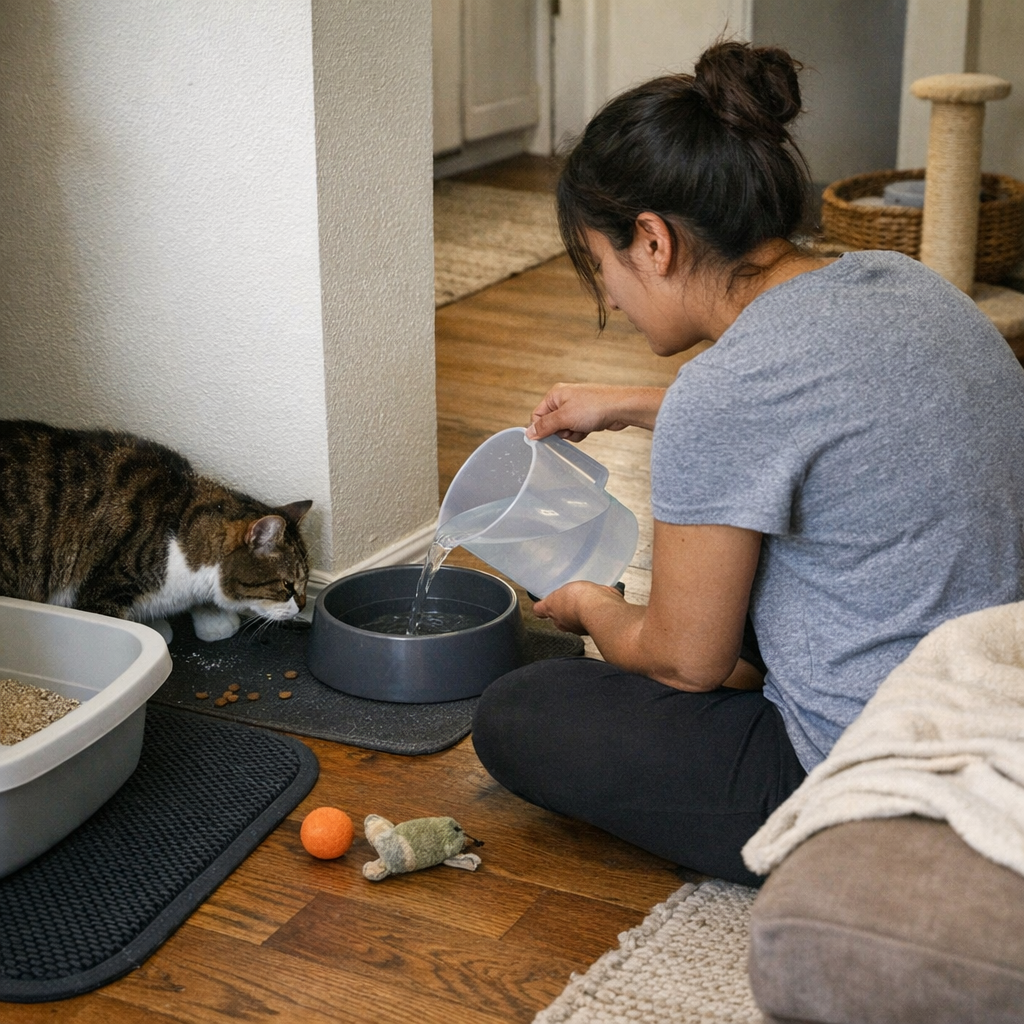
The real difference between a tidy cat corner and a livable one isn’t visible until your routine breaks down. The bowls look set, the water’s filled, and toys are tucked away—until you actually use the space for a day or two. Suddenly, that “organized” feeding area blocks your kitchen rush, the mat meant to catch litter only redirects it, and last night’s stashed toys spill out into your walking path by noon. Most setups look finished until you’re forced to dodge, reset, or wipe down the same weak point for the third time before lunch. The StillWhisker world lives in that gap: the space between nice-once and tolerable-every-day.
When “Neat Enough” Starts Demanding Too Much
A surface-level tidy setup gives a false sense of simplicity. Bowls have their place, your cat finds their spot, and the space looks ready—but real friction shows up once your schedule tightens. Try refilling water during a late morning or grabbing breakfast alongside the food bowls, and the order collapses. You nudge the bowl to get around it. You move the mat just so you can open a cabinet. You slide a toy but know it’s headed back underfoot within the hour.
The frustration isn’t about chaos; it’s about maintenance that creeps into your day. Mats slow—but don’t stop—litter trails. Water dishes against the wall turn into minor hazards when you’re rushing. Blankets nestled in cat corners never quite stay flat, so each nap cycle means another crease or trip back to smooth things out. “Tidy” loses its edge when you realize you’re cleaning or adjusting more than resting.
Routine vs. Variety: What Actually Holds Up?
Advice often splits cat setups into two camps: keep everything constant for comfort, or mix things up to keep your cat interested. But when you’re the one cleaning, refilling, and resetting under time pressure, aesthetics and novelty fade. What matters is a setup that doesn’t turn every meal, water refill, or cleanup into a fresh opportunity for interruption.
Routine is supposed to settle stress, for everyone in the home. But if the only thing consistent about your setup is how quickly it slides out of order, it’s not working. Micro-adjustments—pushing bowls back, drying spill spots, re-placing a mat—signal a flawed system, not just normal pet care. If you’re redoing yesterday’s cleanup before you’ve finished breakfast, friction has replaced function.
The tipping point: When you’re doubling cleanup, running out of water between refills, or fixing the same mess every day, your “routine” has become your burden.
Real-Life Examples: Where Friction Creeps In
A Feeding Area That Spreads Too Far
The classic corner setup: two bowls, one mat, food and water side by side. It only works until crumbs start sticking outside the mat, and morning spills push the bowls into your path to the fridge. If you routinely step around or over the setup, or have to shift it to use your own kitchen, that compact corner has outgrown itself. You’re now living around the cat zone, not with it.
The Rest Corner That Never Sits Still
You make a nest with a mat, a blanket, and a couple of toys. But daily reality: blankets bunched from every nap, toys roll under the couch, and you’re tasked with a reset each time you pass by. The supposed comfort zone starts to feel like another chore, not a stable spot for either of you.
Litter-Adjacent Trails That Don’t Stay Contained
A mat by the box is supposed to contain mess, but the trail of granules always stretches further by the weekend. Litter sneaks past the edge into the hallway. By the time you see dull tracks on your floor, the “quick” brush-up has multiplied into an unplanned clean.
Toy Sprawl in Shared Spaces
Baskets hold toys at the start, but by afternoon, two or three have migrated to main walkways, under chairs, or between couch cushions. You scoop them up, only to repeat the same circuit later. Each stray toy is a small interruption—a reminder that shared spaces never truly stay clear unless the structure is built for return, not just appearance.
Small Adjustments That Quietly Cut Down the Work
The fixes that actually work don’t overhaul your entire space. It’s about making the high-friction points less constant:
Moving the Mat Out of the Path
Even a six-inch nudge away from a busy walkway cuts out the daily ritual of bumping or stepping over bowls. The relief isn’t dramatic—it’s that you stop thinking about the inconvenience entirely.
Upgrading to a Deeper, Sturdier Bowl
Shallow bowls vanish fast, especially for multi-cat homes or warm rooms. A deeper, heavier bowl reduces urgency around refills and means it stays in place when you’re rushing around it. Every “fix” saved is a minute kept for yourself.
Heavier Mats at the Litter Box
The leap from a basic mat to a denser, edge-weighted one is what finally stops granules mid-escape. Suddenly you’re not vacuuming trails between the box and the hallway—you’re wiping up an actual defined area. More mat isn’t the answer; the right mat in the right place is.
Easy-Grab Cleanup Supplies Nearby
A dustpan or pack of wipes within reach—not hidden under a sink—means you can tackle little messes as they happen. A 20-second swipe beats a weekly hour hunt for every last granule or streak.
What to Shift—and What to Leave Consistent
Consistency builds comfort—but only if it stays friction-free. Move feeding, water, or rest zones only when persistent problems appear: blocked walkways, spilled water, litter trails, or comfort setups that turn into daily maintenance chores. Changing locations for fun usually unsettles your cat; most just want things to feel predictable.
Instead, tweak what hurts most: sub in denser mats, swap for heavier bowls, and pull everything off the main thoroughfare. Don’t create change for novelty—adjust to fix patterns that keep stealing time or energy from your routine. If your cat’s environment anchors them, your upgrade goal is to anchor yourself, too.
How to Spot a Structure That’s Slowly Failing
Look for these signs: the same crumbs build up before noon, you’re topping off water more often, you have to nudge items just to cook or clean, or the mess repeats in the exact same spots even after redesign. These are proof that your setup is fighting the daily cycle, not flowing with it. Each interruption costs attention, time, or both—and the “solution” shouldn’t add another layer of work.
If your every routine—kitchen, cleaning, or cat care—stalls at the same obstacle, you’re living with a structure that’s quietly failing in the background. It’s a signal you should stop resetting and start rethinking.
When Looks Don’t Equal Long-Term Ease
A neat-looking area is only a win if it holds up by midday—most don’t. Feeding zones may look perfect at dawn but demand a mop and re-arrange before lunch. Water bowls “fit” under the window but dry early or get kicked out of place by afternoon. Each visual calm hides the true test: can you handle the space on autopilot, or does it cost you two cleanups for every one your cat enjoys?
The setups that work aren’t just easy on the eyes—they ask less from you, reset in seconds, and don’t spill into your main living area with every cycle. Real improvements land in places you stop thinking about—not because you don’t care, but because you finally don’t have to.
Real Setup Changes That Stand Up to Daily Cycles
Over time, you learn quickly which setups disappear into the background, and which ones keep yelling for attention. These differences are rarely huge at first—but they show up every single day:
- A litter mat that stops scatter means hallway floors stay clean without constant sweeping.
- A bowl that resists toppling or straying doesn’t need twice-a-day repositioning.
- A feeding station nudged out of foot traffic ends bowl-bumping battles every time you pass through.
The setups that hold up aren’t the ones that look the most finished at first—they’re the ones that stop costing you minutes, energy, and attention as days go by. For practical, repeatable indoor-cat arrangements that actually reduce your cleanup, block less of your shared space, and rarely ask for a reset mid-routine, see what StillWhisker has ready for the real-life pattern you’re already living through: StillWhisker.