
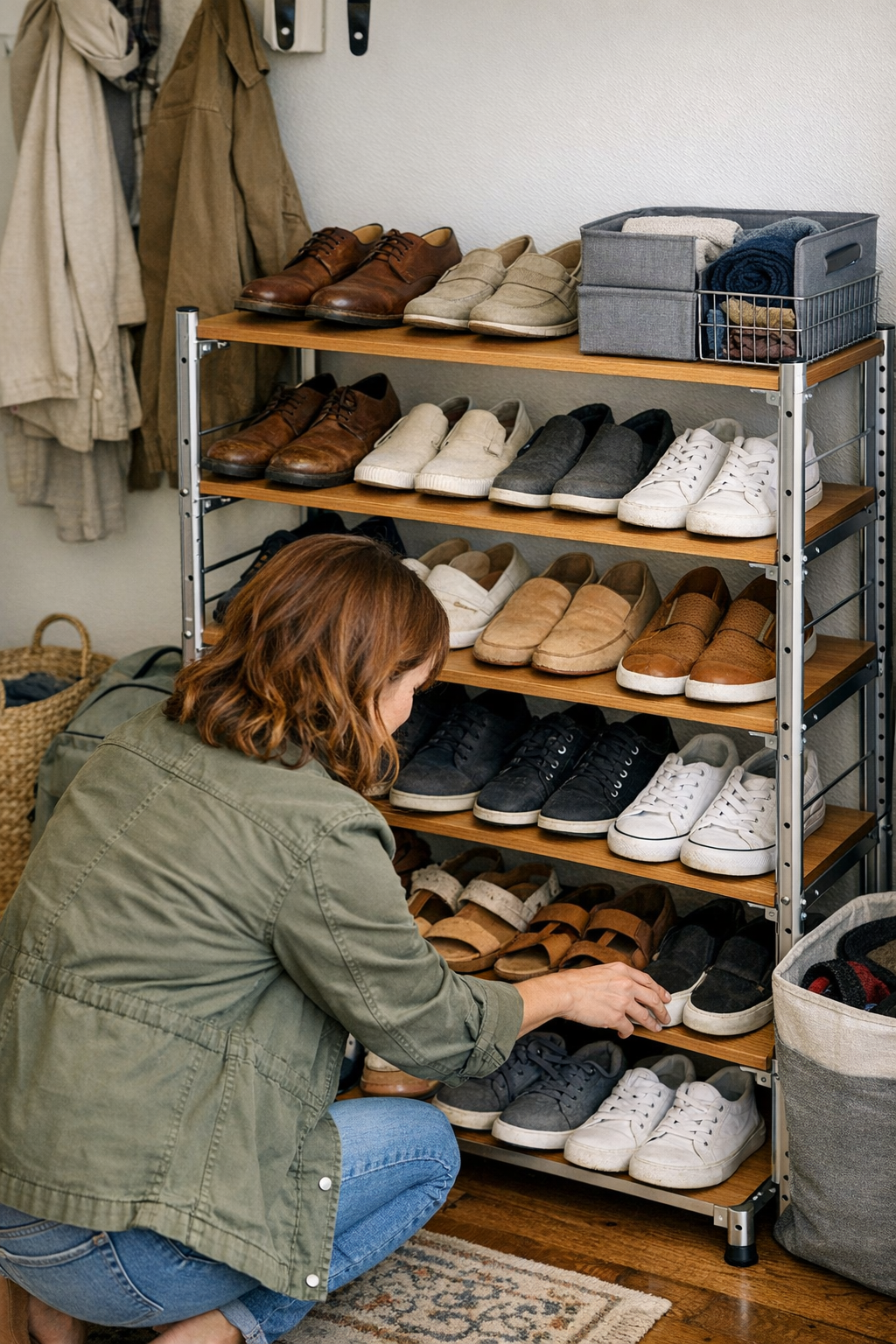
The real verdict on a storage setup isn’t the photo you snap when everything’s freshly arranged—it’s how your space stands up to the next seven days of life. Shoes once sorted end up mixed in the bin again. Sweatshirts slide into piles at the back of an overcrowded shelf. You start every morning rooting through baskets for that one missing glove, or rebalance lurching stacks before you can hang up your coat. The daily friction is rarely about how things look; it’s about whether your closet or entryway actually keeps pace with your real routines—or quietly fuels the clutter cycle behind a facade of organization.
When “Sorted” Turns Into Work
Baskets, dividers, branded bins—they should be shortcuts, but too often, they become the reason your routine stalls out. Maybe shoes fall into one big container and, within days, your neat rows dissolve into a single mess of mismatched pairs. Folded shirts start as sharp stacks but soon sag sideways, and you’re forced to remake the pile whenever you need something from the bottom. Every “organized” system adds its own small toll: move three things to get to one, smooth out a shelf after grabbing a tee, untangle a scarf from behind your bags.
Each micro-disruption stacks up: digging, restacking, shifting, sighing at the heap sneaking out from behind closet doors. These aren’t background chores—they’re speed bumps embedded in your morning, turning a tidy look into hidden labor no one wants to repeat.
What Really Matters: Fast Access or Crisp Appearance?
When you strip away the styling, real storage decisions hinge on one question: Can you grab what you need without unraveling the entire system? On day one, nearly any setup works. By day four, cracks appear—the “all shoes here” bin transforms from contained to crammed, and stealth piles of boots and stray sneakers migrate out onto the floor. The minute putting away a scarf requires balancing a leaning stack or finding your sneakers means digging under winter boots, you can feel the system failing in real time.
Take, for example, that deep basket at the front door. It’s pristine at first. By the next week—sandals wedge under heavy boots, one sock is missing, and you’re kicking shoes aside to get through the door. The bin isn’t a storage solution; it’s a high-walled pile-up.
The Disappearing Act (and the Overflow)
Bins and baskets hide mess, but they’re just as good at hiding your go-to stuff. If you need to rummage, your storage is making things harder, not easier. This is most obvious with high-traffic items—kid shoes, everyday tees, beloved hats. Meanwhile, open shelves hand you visibility—but not boundaries: jeans avalanche into tee-shirt territory, smaller items migrate, stacks tip closer and closer to collapse. Before long, the neat divisions you set up blur out of habit; shirts pile over pants, socks spill across cubbies, and putting things back becomes an act of willpower rather than a routine step.
Entryway Ground Truth: Why the Shoe Bin Fails
Let’s be concrete. In a shared front closet, one big shoe bin seems like a fix. For a week you enjoy a clear floor—then shoes start accumulating outside the bin, heavier boots flatten everything below, and nobody can find their sneakers without a full excavation. The mess isn’t anyone’s fault. The system demands too many steps just to get in or out the door. Hiding clutter doesn’t help if it comes at the price of daily hassle—and soon the bin becomes a waiting room for overflow, not an organizer for what you actually wear.
The Game-Changer: Storage You Can Reset Instantly
A swap—two tiered racks instead of a bin, sorted by type or family member—transforms the entryway rhythm. Now shoes are in the open, paired, grab-and-go. You return them with one motion. No digging, no balancing, no silent buildup of stray pairs. Resetting after school or coming home is so easy you hardly notice doing it—and that’s the upgrade most people only realize in retrospect: clutter doesn’t circle back, and the pile never reforms.
Spotting Hidden Storage Friction
Not sure whether your setup is pulling its weight? These are the telltale signs:
- You usually have to move something to get the thing you actually want.
- Piles start to lean or spread sideways after a couple uses.
- Categories slip—bags nest with sweaters, gym shoes end up beneath snow boots.
- What started “organized” always spills onto the floor, or you start leaving things out because putting them away feels like a project.
These warning signs aren’t background noise. They’re evidence your system is slowing you down, quietly turning daily life into a scavenger hunt and making every “reset” longer than it should be.
Matching Storage to How You Actually Use It
There’s no perfect, permanent solution—but certain setups make daily life noticeably smoother:
- Open shelves win for daily items—think shoes, jeans, sweatshirts—where speed trumps the risk of a little visual mess (as long as shelves aren’t overflowing).
- Bins and baskets are best for backup or seasonal stuff, not your rotating favorites—anything buried is destined to get skipped or stir up stress.
- Dividers, cubbies, and multi-tier racks hold the line where categories blur or small items scatter. These nudge routines to stick, reducing the urge to pile and reshuffle.
If you’re constantly resetting the same shelf or basket, try splitting the space vertically (add a short rack or small divider) or narrowing what lives there (one spot, one purpose). Don’t wait for the next closet cleanout—swift tweaks beat total overhauls and make it easier to keep pace with changing seasons and shifting schedules.
When Your Space Quietly Supports You
The mark of storage that truly works isn’t pristine shelves—it’s forgetting about them entirely. When you stop thinking about where things go, and your morning routines flow without stops or grumbles, that’s the system earning its keep. No more rebalancing fallen stacks or playing hide-and-seek for the missing mitten. Your space flexes with you, instead of demanding resets every few days.
No system is bulletproof. Sometimes baskets fill up, shelves grow crowded, categories slip. But when fixes are simple—a new divider here, a taller rack there—clutter never gains a foothold, and the work of “staying organized” dissolves into your daily rhythm. In the end, the payoff is more time actually living in your space—and less time managing it.
Discover more storage options for everyday spaces at ClosetWorks.