
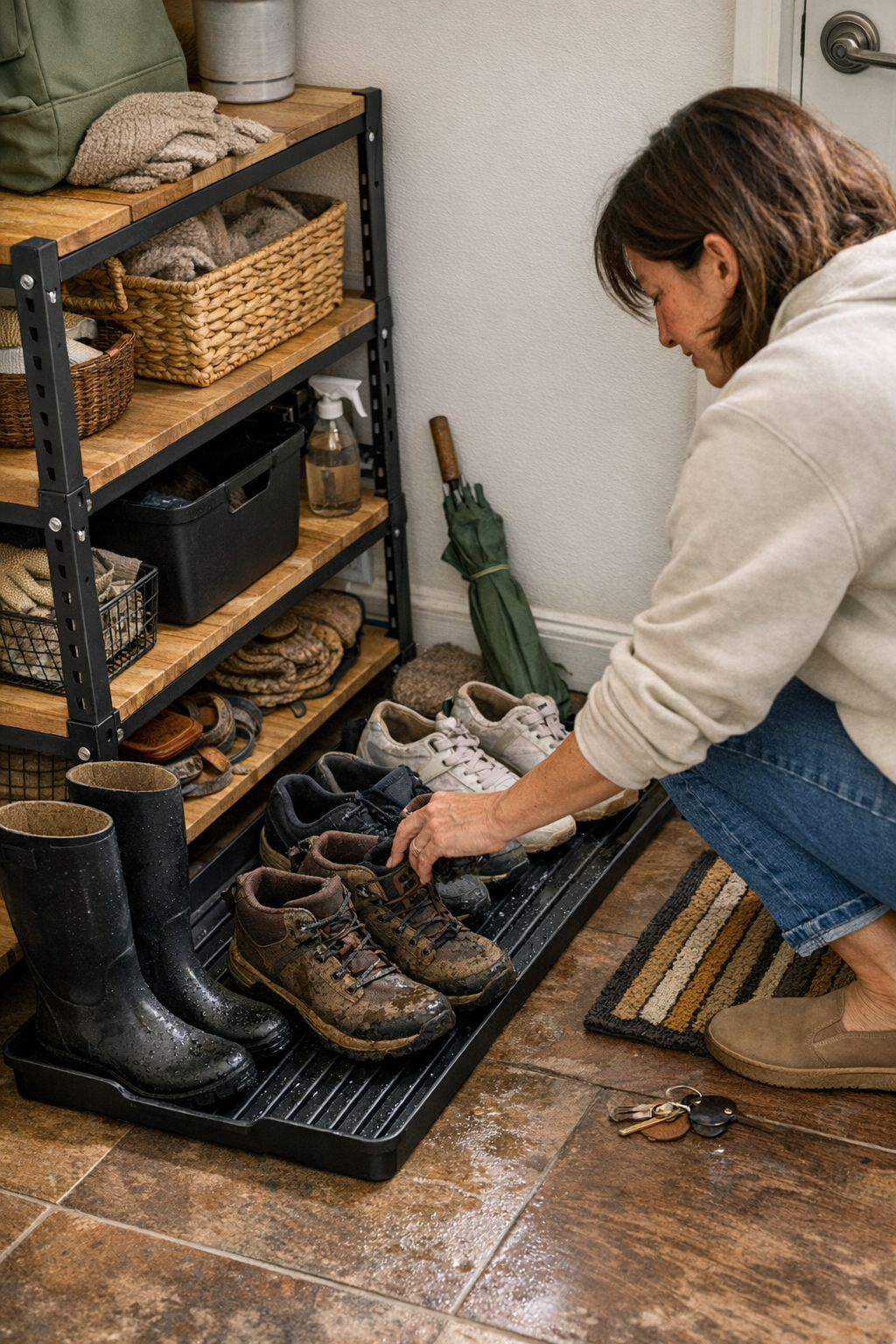
No one really notices their boot tray—until a week of rain turns your entryway into a soaked obstacle course. By day two, that shallow rectangle by the door stops looking like “containment” and starts acting like a bottleneck: shoes stay damp, water pools, and every new arrival means mangling the lineup just to find your own pair. It’s less about “looks” and more about blockage: wet clutter creeps beyond the tray, mud drags further inside, and reset gets slower every round. If the tray doesn’t handle moisture, everything else in the threshold gets harder—cleaning, moving, even just getting out the door without stepping in yesterday’s puddle.
When a Neat Entryway Breaks Down—Fast
Step inside with wet boots and the idea seems tidy: shoes corralled, moisture caught. But that order snaps under repeated real use. Most flat trays work for a single drop, but after a real-weather week, they stall: shoes never actually dry, you’re sidestepping pooled water to reach the back of the row, and just pulling one pair free can slide the entire lineup off-center. Reset feels less like a quick fix and more like wrestling damp, sticky mess into shape before anyone gets frustrated and leaves muddy prints mid-hallway. Even with careful placement, the wet zone works its way past the tray: edge grime forms hard lines against walls, water finds the seams, and every reset feels overdue by the time you even think to start.
Ribbed vs Flat Trays—The Actual Difference
The design looks minor until you live with it. Ribbed trays lift soles up so water runs off instead of up, which means shoes can actually air-dry even as the tray keeps containing the runoff. Flat trays turn each pair into its own puddle; by end of the week, every grip tread is soaked, and mud bakes in underfoot no matter how many times you wipe. Cleaning isn’t just extra—flat trays make it feel endless, as stagnant water makes quick resets impossible. With ribs, the grime lines up along the channels—a single wipe clears most of what flat trays trap for days. This isn’t just preference; it’s the root cause for why some entryways clog and others stay on pace.
How Too Much Moisture Blocks the Routine
Here’s how bottlenecks stack up over a week of real use:
- Three pairs squeezed onto a tray after back-to-back rainy arrivals; each one leaves more water pooled beneath the last.
- Next morning, someone grabs shoes in a rush—shifting the line, leaving wet tracks, sometimes catching a loose edge and spraying slush beyond the tray.
- Later, another round—damp shoes overlap, the runoff spreads, and what was one clean path becomes a dense line of obstacles.
- Midweek, a dropped bag or backpack claims a corner, turning “temporary” overflow into a semi-permanent roadblock and narrowing the passage down to a single awkward step.
With a flat tray, neatness collapses: the water lingers, air stays humid under shoes, and any attempt at a reset fights uphill. Odors and outlines creep out. Wipe once and you’re just smearing damp grime around; wait, and it hardens into an edge that’s always visible against the floor. After enough cycles, even small entries start feeling claustrophobic—everyone is stepping around each other just to cross the threshold.
Why Ribbed Boot Trays Shift the Routine
Swap in a ribbed tray and the friction drops. Water drains into the channels, not back up to shoe level. Even when pairs crowd together, the tray surface dries out faster, so shoes aren’t pressed into lingering moisture. The magic isn’t in appearances—it’s that grime collects as narrow bands, whole messes stay contained, and cleaning switches from a dreaded event to a one-motion job: one swipe, one tilt, and either the tray or your routine resets without the wait. Over time, busy entries survive the onslaught: rotation becomes possible, shoes come and go without dragging last week’s grit or humidity into the house. You’re not wrestling with the floor—just moving shoes in and out as intended, with resets becoming part of the flow instead of a block to it.
Invisible Reset Pressure—Where Flat Trays Fail
Not all mess is visible. If a transition zone feels “off,” it’s often because the reset isn’t really reset—standing water, unmoving grime, pairs taking longer to dry (and so piling up longer), and a half-wet edge you start walking around instead of using. Flat trays amplify this: cleanup gets put off, then grows into a task big enough to avoid. The routine sags—shoes stack deeper, clutter works its way outside the tray, and small delays turn into a full threshold block by the end of each week.
Ribbed trays quietly defuse that loop: runoff escapes to the channels, soles dry faster, and messes don’t dig in. The difference registers less in how “neat” the area looks than in how easy it is to recover—resets become small, steady, and mostly self-sustaining, not postponed chores that snowball into problem zones.
Real-Use Adjustments That Matter
The shift doesn’t require a new mudroom—just swapping to a ribbed tray, and leaving even a small (half-centimeter) gap to let you drain water or clear mess without disrupting the rest. This one tweak turns cleaning from a multi-step scramble into a non-event. Instead of scrubbing pooled residue from stubborn corners, grime collects in lines you can wipe or rinse out almost automatically. A weekly reset drops to two minutes—drain, towel, done. The entry stays functional, never quite perfect, but always clear of those slow, mood-killing backlogs that accumulate any time you let a flat tray “do its job” for too long.
When Frictions Multiply
If your entry handles more than shoes—backpacks, gear, coats, umbrellas—all sharing one tight spot, these “small” differences turn into real blockages. Flat trays don’t just slow you down—they turn the threshold into a sticky pause point, forcing you to stack or sidestep more often. The ribs in a better tray let air circulate, keep the mess contained, and make it possible to re-use the same patch over and over without the usual drag or buildup.
Other Use Cases—Not Just for Wet Footwear
The ribbed vs flat divide isn’t limited to muddy boots. Pet bowls that spill, tools caked in wet leaves, even sports gear or rain jackets—anything that needs to drop, dry, and move again gets a better shot when there’s airflow and drainage. The air gap lets moisture escape instead of stagnating all week, and the structured channeling means pet mess or gardening residue doesn’t cement itself to the entry floor. The real test isn’t what the tray looks like at rest—it’s how well it handles repeated “in, out, and back again” cycles with minimal reset in between.
Quick Tips for Ongoing Entryway Resets
- Leave a small gap behind the tray: You’ll drain water and wipe grime more easily when you aren’t wedging the tray at wall’s edge.
- Swipe along the ribs for fast cleaning: A towel, brush, or even just your hand clears buildup from the channels without a full lift and wash.
- Keep temporary drops to one side: When bags, sports gear, or extras need a place to land, cluster them—don’t scatter—so the main route stays open during high-traffic days.
Why Setup Details Matter More Than First Impressions
Most entry storage promises order, but order fades unless the setup fits the traffic. Flat trays hide the first mess, then lag behind the pace of daily use—moisture lingers, routines drift, and eventually the entire entry slows to a crawl. Ribbed trays solve at the flow level: letting airflow and simple movement keep cleaning light, thresholds usable, and resets part of the natural routine, not a mounting effort you keep putting off.
See practical transition-space setups at Betweenry.