
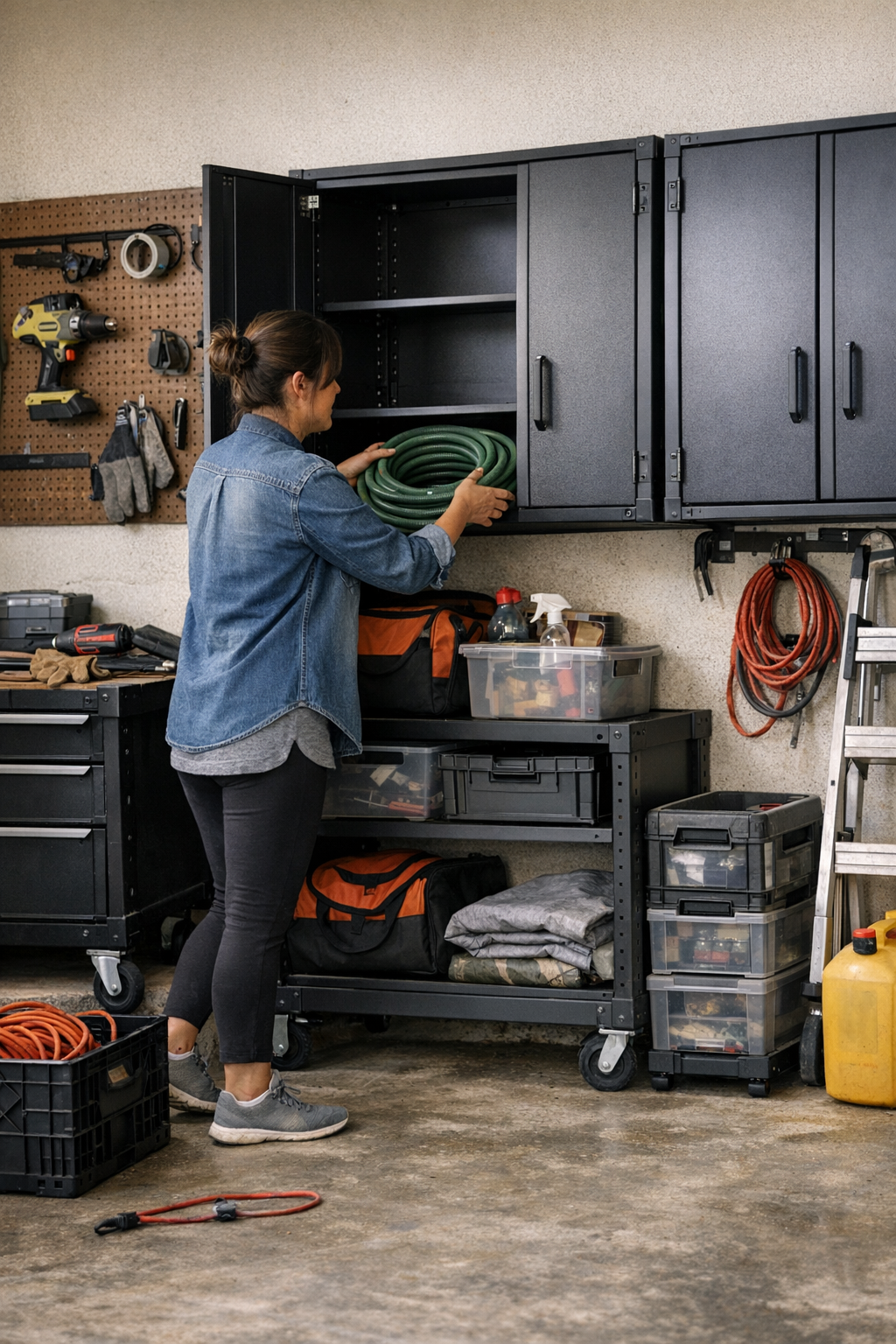
There’s nothing like the brief high of finishing a garage or workshop overhaul—tools racked, bins labeled, every shelf filled, the whole floor wide open. For a week or two, it looks and feels like a well-oiled machine. But in real, daily use, those picture-perfect setups rarely last. By week three, small frustrations creep in, and the bright promise of a “fit-everything” system starts to dull.
When “Fits Perfectly” Becomes a Daily Obstacle
At first, “packed full” feels efficient: cabinets loaded edge-to-edge, wall sections covered in racks, bins nested to squeeze out every bit of air. On move-in day, the logic is clear. But as soon as routines return—hauling out the toolbox mid-week, tucking muddy gear away after a rushed yard clean-up, hunting for a power drill buried behind a season’s worth of other supplies—the tight fit demands a penalty every time.
Suddenly, each interaction is clumsier. That cabinet you filled to the brim? Now you have to pull out an entire bin just to slide one wrench back in. You find yourself nudging the rolling cart two feet sideways just to swing a cabinet door wide. The spot behind the cart—the one you swore would keep walkways clear—now requires a lurch and a sideways reach to access what you actually need. Corners fill with items that technically “have a place,” but rarely make it all the way back in without a multi-step shuffle.
Overflow Piles: Where Good Organization Goes to Die
It’s rarely mess at first—just overflow. Without built-in give, things with no ready slot take over new territory. Last used hose sits coiled by the door, waiting for someone who’ll actually deal with the cramped utility shelf. Extension cords drape across the rolling cart’s handle because there’s no buffer spot left inside. A pair of bypass pruners balance on top of the garden bin “for now” but end up living there all week. None of it is a crisis, but the supposed control is leaking away with every improvisation.
The toll is slow. Every time you put something away, you have to move something else first. Extra bins, too fat for their cubby, wait permanently in front of closed cabinet doors. The easy path from the workbench to the yard starts collecting gear that doesn’t fit anywhere but also can’t be left outside. The floor is supposed to stay clear, but now it’s a landing strip for whatever didn’t make it back home without a fight.
Why Backing Off 100% Full Actually Improves Flow
This is the underappreciated fix that only shows itself with real use: leaving 10–20% of your shelves or cabinet space intentionally empty keeps the rest running smoothly. On paper, it looks like wasted capacity. In reality, it’s what protects your routine.
That extra gap means you can always return something fast, with no puzzle-solving or back-and-forth. You don’t have to reshuffle three bins just to park one stray mallet. Odd-shaped gear drops right into the cabinet, not onto whatever spot in the garage is convenient and unclaimed. Instead of rate-limiting yourself with brutal efficiency, you give every regular return a place to breathe, keeping overflow bottled up inside the system where it belongs, instead of on your floor or stacked in dead corners.
Example: The Garage Reset That Actually Worked
Start with a real scene: a suburban family’s garage, neatly equipped—wall-mount cabinets, tiled flooring, a rolling cart for weekend gardening. The first month? Pristine. But after two weekends of outdoor projects, the cabinet space vanished. Tools and hoses returned but found nowhere open, so they sprawled at the cabinet’s foot; bikes detoured around the clutter. The rolling cart became a junk tray “until we have time to reorganize.” It never looked disastrous. It just made everything—putting away, retrieving, even walking—slightly more annoying. There was no dramatic mess, only a slow drip of friction.
What really broke the flow? To return a single rake, you had to first shift bins, wedge the door open against the cart, and plan your moves like stacking blocks. The whole system was airtight, and impossible to flex. The floor was meant to be open. Instead, each “return” ended as an unscheduled drop-off on whatever surface was closest to the entrance.
The Everyday Payoff of Deliberate Underfilling
The solution wasn’t another full reset—it was carving out emptiness on purpose. By clearing just one shelf per cabinet and resisting the urge to fit every bin, the pattern changed overnight. Suddenly, overflow had a home of its own. That random garden spade? Tossed inside, no reshuffling. Bin to switch out before dinner? Parked, door shut, job done. Movement stayed clean, the floor open, and the once-persistent slowdowns—the domino effect of too-tight storage—stopped dictating how the rest of the space functioned.
This isn’t minimalism as virtue. It’s about keeping the area truly usable, preventing the daily shuffle, and letting the setup actually serve the chaos of real life—not just look good on move-in day. The difference won’t make a tour photo, but it’s the only way some corners ever stay clear, and some tools ever make it all the way home after a ten-minute rush.
How to Build the Buffer Into Your Setup
If you’re planning—or rebuilding—a garage, workbench zone, or muddy gear wall, try giving yourself the permission to keep a shelf only half-used. Accept that some bins will come and go, some days demand more space than tidy plans allow. The benefit shows up not on day one, but on day 45, after you’ve dumped, retrieved, misplaced, and rushed through every corner at least twice.
The best setups don’t just store things—they move with you, absorb surprises, and make it easy to reset weekday chaos in minutes, not hours. That deliberate buffer is the difference between a space you admire and a space you rely on every single week.
Find more practical storage solutions and systems at StackNest.