
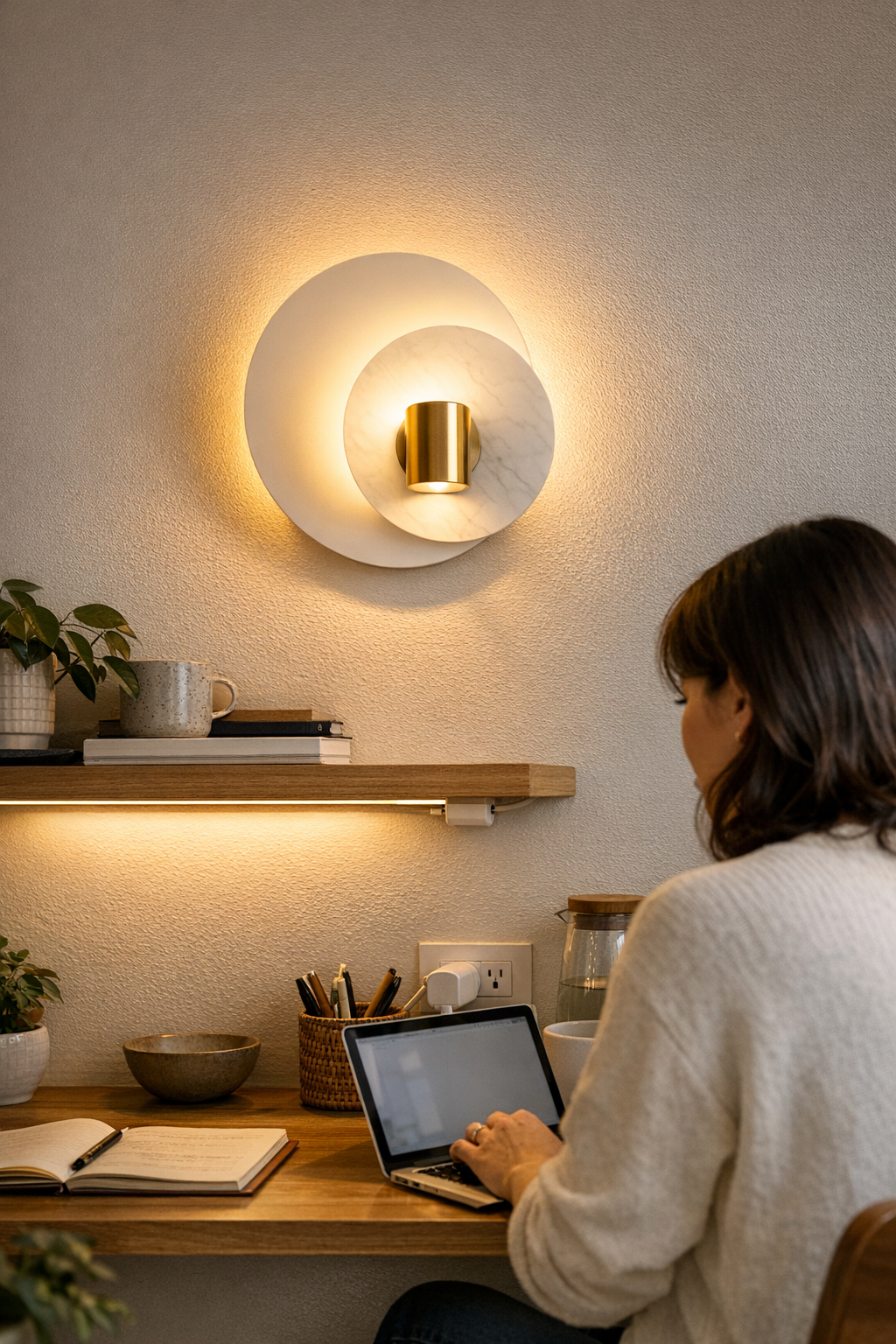
Cables stay tidy for a few days—then real life takes over. Stick-on mounts and plug-in lights promise a damage-free, markless setup, but by week two the limits show. Wires droop across desk edges, adapters dangle below shelves, and every brush with a chair leg risks yanking a cable loose. The wall might look “untouched,” but under every shared table, along compact work surfaces, or below kitchen shelves, small distractions build fast—cables sliding out of sight, plugs slipping free, surfaces harder to clean. Setup that seemed invisible at first becomes a daily interruption right where clarity, comfort, and order matter most.
Why “Clean” Installs Breed Hidden Hassle
There’s short-lived pride in an unmarked wall: no screw holes, no brackets—just floating fixtures and smooth lines. But when a lighting setup relies on adhesives or skipping hardware, friction is only delayed. The first few days are all about appearances—no hardware in sight, everything flush. Then reality sets in as cable weight tugs free, sticky pads let go, or someone moves a chair too close. What looks seamless on day one starts pulling itself apart under normal use.
Hidden hassle shows up fast. Each routine action—pulling a chair, cleaning a shelf, plugging and unplugging—sends cables arcing away from the wall, drooping at the edge, or creating a visible dip under a desk. Hands and feet snag on loose lines. What started as a “minimal” solution devolves into near-daily maintenance just to keep the space functional and clean.
The Real Cost of Bare Installations
Skipping mounts or cable management buys fake simplicity, but it quietly trades away surface usability. Exposed or drifting wires don’t just spoil the look—their movement becomes a practical problem:
- Shared work tables: Multiple users, more shifting. Each person adds stress to wires, pulling plugs or sending fixtures askew.
- Tight corners: Chair backs, bags, or even elbows easily brush up against loose adapter cords.
- Under-shelf kitchen runs: Quick passes with a broom or a grabbing hand tangle on low-hanging cables or wobble unsecured lights.
A clean wall rarely means a friction-free space. Without real support—a discreet bracket beneath a shelf, a cable guide along the edge—the lighting setup moves, and that movement becomes visible mess and repeated annoyance.
Visual Simplicity vs. Lasting Usability
It’s tempting to hide every piece of hardware in pursuit of a perfect look. But the lack of subtle support leads to visible clutter and frequent frustration, especially where rooms are small or shared:
- Cable creep: Cords flatten on install day, then arc down painted walls or across table edges as weight accumulates or adhesives fail.
- Plug strain: Plugs slip from outlets, adapters dangle half-out, or a lamp flickers off after someone shifts a cord just slightly.
- Snag points: Chair feet, cleaning rags, hands—all find the single wire out of place, pulling it further out of line with every routine movement.
- Clutter clusters: Desk corners and outlets become hotspots for tangled lines, making the cord mess impossible to ignore before you even focus on the task at hand.
The illusion holds until small misalignments stack up. Each bump or adjustment chips away at organization. The wall may be pristine, but the lived-in space feels tense and inconvenient—a setup that interrupts instead of resolves.
Repeated-Use Friction: Real Scenes, Real Interruptions
Picture the trade-off: You stick an LED strip under a floating shelf with adhesive. It disappears at install, but by day five, the cable slumps below the edge. The next chair roll snags it, feet catch, plugs inch their way out. Clearance under the shelf shrinks, making every cleaning sweep or quick grab for a charger more of an obstacle course. The “invisible” fixture is now visible as an everyday hassle—one that threatens to disconnect or tangle with each use.
This scene isn’t rare. Under-cabinet lights in tight kitchens, bookshelf fixtures along hallway paths, workstations with shared power outlets—all amplify the same gaps: a missing bracket here, an absent cable anchor there, leading to daily interruptions, workarounds, and adjustments.
Adjustment as a Red Flag
If you find yourself nudging the same cable back, retucking an adapter, or dodging dangling wires every few days, that’s a support structure failing under real-life use. When your setup demands constant minor fixes, it’s a clear sign that invisible support is missing exactly where routine movement tests the install. Over time, these fixes become reflex, sapping focus and making the room harder to enjoy—no matter how untouched it looks when still.
The Small Fixes That Quietly Change the Room
The answer isn’t heavy-duty hardware on every wall—but a few low-profile pieces, placed where actual friction happens, can transform daily life. Try:
- Finger-width under-shelf guides that keep cables taut and shielded from hands and legs, leaving surfaces clear without visible marks.
- Small brackets, tucked just out of the direct touch zone, locking adapters or fixtures in place so plugs don’t shift or slip.
- Well-placed anchors at shelf ends or along desk supports that keep cables parallel and prevent gradual drift, even if the remainder runs hidden.
These pieces don’t dominate the look—but they change the feel: fewer disconnects and untangling rituals, easier cleaning, and setups that stay neat and quiet through actual use, not just after install. The space keeps its minimal appearance and becomes easier to live in—cleaner both visually and in everyday function.
Tips for Sustainable Cable Management
Secure cables out of sight, not just out of mind. Anchor wires to the underside of shelves, backs of desks, or tucked along edges—pick spots where movement occurs or drooping starts. One or two small supports in the right places last longer and work better than a handful of stick-on clips that loosen quickly.
If adhesives are your only choice, start at stress points—test their strength where cables are most likely to pull. Reinforce before drift and sag appear. Always pair heavy plug-in adapters with a block or bracket so weight doesn’t pull down the entire setup—a detail most cord layouts alone can’t solve.
The Hidden Advantage of Subtle Support
The best indoor lighting arrangements aren’t just “clean” at first—they disappear from thought in daily life. When a bracket or guide holds fast out of sight, you don’t notice cables slipping, lose light to drift, or fight clutter beneath a minimal surface. The clean wall remains, but the space genuinely works—free of mess, continuous adjustment, and those small irritations that kill comfort over time.
Most rooms don’t need more hardware—just better use of support, where movement and mess start to show. Don’t accept daily disruption to keep walls pristine. With the right lighting supports, you get both visual calm and practical order—untouched looks that actually hold up through use, not just through the first week.