
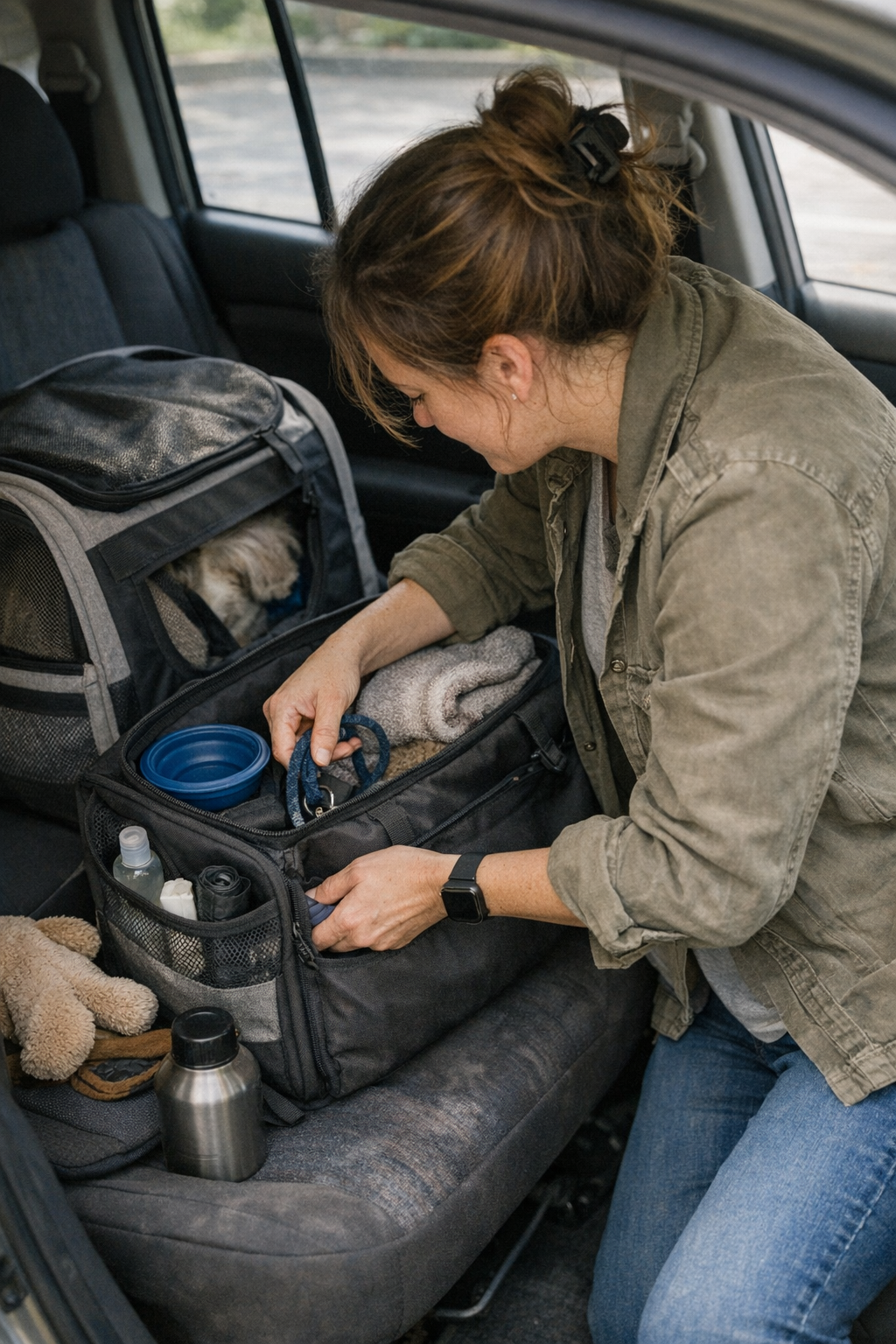
Every pet travel kit looks “set” until real movement starts. Two errands in, the polished bag turns stubborn: the leash knots under a comfort blanket, wipes slide deep beneath treats, and each quick stop means tension—not just for you, but for your pet waiting in the back. Even a carefully packed carrier gives itself away after a normal stop-and-go routine: slow, awkward reach for cleanup, blocked fast access, items overlapping until the next shuffle, all while your animal picks up on every reset or delayed move. The smooth look at departure rarely survives the first real pause—and by the second, you feel it’s more work than it should be. PawGoTravel is built for these exposed weak points, not the illusion of “ready” that fades by lunchtime.
Why “Organized” Isn’t Always Easy in Motion
Most travel setups fail at the first friction: the zipper that catches, the leash jammed beneath bulkier comfort gear, or a round of wipes buried when you need them fast. What looked sorted inside the living room unravels as soon as you hit repeat routines—multiple stops, short waits, unpredictable pauses. It’s not the gear quantity that slows you down; it’s the process breakdown as every item starts to block another.
Organized isn’t the same as accessible. The bag that lines up leashes, wipes, and treats “for later” works until your hand lands on the wrong pocket, or until a cleaning supply is stuck under a mat meant to soothe your pet. Instead of a single smooth movement, you’re pausing, untangling, and already pulling for order halfway through the trip. That extra beat—your pet notices, too—and a calm outing becomes disjointed before you get back in the car.
The Cost of Repeated Hangups
Interruptions stack—one small block at a time. Reach for a backup leash, find it buried under a folded blanket, then spare wipes jammed beneath a full water dish. Each pause costs seconds, but across three or four stops, those seconds multiply into irritation and distraction. The disguised drag is that everything looks “organized” until the structure buckles on real use: tangled items, missed timing, small cancellations of momentum. Your animal doesn’t care how neat it looked just before you left—but they’ll absolutely respond when wait time lengthens at each stall.
Picture the real run: grocery store, short leash-out at the vet, back in for the next stop. First, the folded mat wedges in the main zipper; by the third errand, treats have worked their way beneath bowls; finally, leashes are covered by comfort gear instead of separated for quick grab. The idea of “prepared” hides these little collisions—until your movement turns to mild frustration instead of fluid travel.
Where Setups Fall Short: Real-World Scenarios
That “Prepared” Feeling—Until You Need Speed
At home, a well-packed bag feels bulletproof. Out the door, the cracks form almost instantly. That leash that was “strategically stashed” takes a two-handed search if the pet starts pulling early; wipes resurface late, always after the window to clean up messes cleanly has closed. Even comfort details, like a padded seat-side mat, end up sandwiched right where you need to dig—solving one problem (pet rest) but slowing another (cleanup, fast leash-on) every time you stop.
Pet Items vs. Owner Items: The Overlap That Trips You Up
The consistent friction isn’t lack of supplies—it’s overlap. Treats hide among keys, wipes crumple under your coffee flask, backup collars spill into the slot where your phone was supposed to ride. The more pockets double-up, the more you shuffle, losing time and rhythm with each change. It’s a fight against your own setup, especially when a quick grab turns into a mini excavation every single time you switch from owner to pet tasks.
The Difference a Split-Access Setup Makes
Divide and survive—assigning clear, dedicated spaces transforms travel flow. When the outside front pocket acts as the base for wipes and leashes, and the inside holds bowls and pet comfort gear, your hands know where to go before your eyes find the zipper. Quick access is no longer random luck; it’s built in. Suddenly, no part of your handling routine relies on chance—every critical item stands ready, stops reset faster, and the “wrong pouch first” habit vanishes.
The most telling fix isn’t more compartments, but openings that never get blocked. The difference is seat-side: a zipper that’s always clear, never trapped beneath stuffed mats or heavy gear, meaning exits and returns take one clean, confident motion every time. That’s the adjustment people don’t realize they needed until the drag disappears—not on day one, but over dozens of small, repeated starts and stops where setup finally stays out of your way.
Assigning Each Section a Single Job
Real discipline is single-task pockets: cleanup here, leash and walk stuff there, comfort items separate and not competing for space. The logic is simple—overlap breeds confusion. After two or three errands, all-in-one sections collapse into a tangle, and what was once clear at home turns random when the bag lands sideways or gets restuffed on the fly. Assigning each section just one job preserves the travel structure—no matter how much shakes loose midweek.
How a Better Setup Changes Real Trips
Faster Recovery After Each Stop
When a routine’s broken by delays, travel loses its rhythm. A divided setup means you move again before your pet’s patience is tested. Instead of fumbling for the next step, the bag delivers in one reach: leash, wipes, comfort—all in place, making the shift from pause to movement silent and quick. That’s the real gain—less time stuck in the halfway zone between stops.
Visible Calm—for Pet and Owner
A pet senses every hesitation. If you’re caught digging mid-walk, their alertness rises and yours drops. When your bag structure supports movement, tension drops for both. Each mapped-out section cuts not just time, but edge, letting routines run cooler and more predictable whether at a gas station or parking lot curb.
“Looking” Ready vs. “Feeling” Ready
The real payoff is never at setup—it’s in the fourth or fifth repeated stop, when everything still unpacks and repacks in seconds, not minutes. Looks-organized bags break down under return-to-movement stress; functionally mapped gear keeps travel snags from snowballing, and lets ordinary routines run how they should: without friction, not just without clutter.
Find practical pet travel solutions that keep your movement smooth, your pet calm, and your own patience intact at PawGoTravel.