
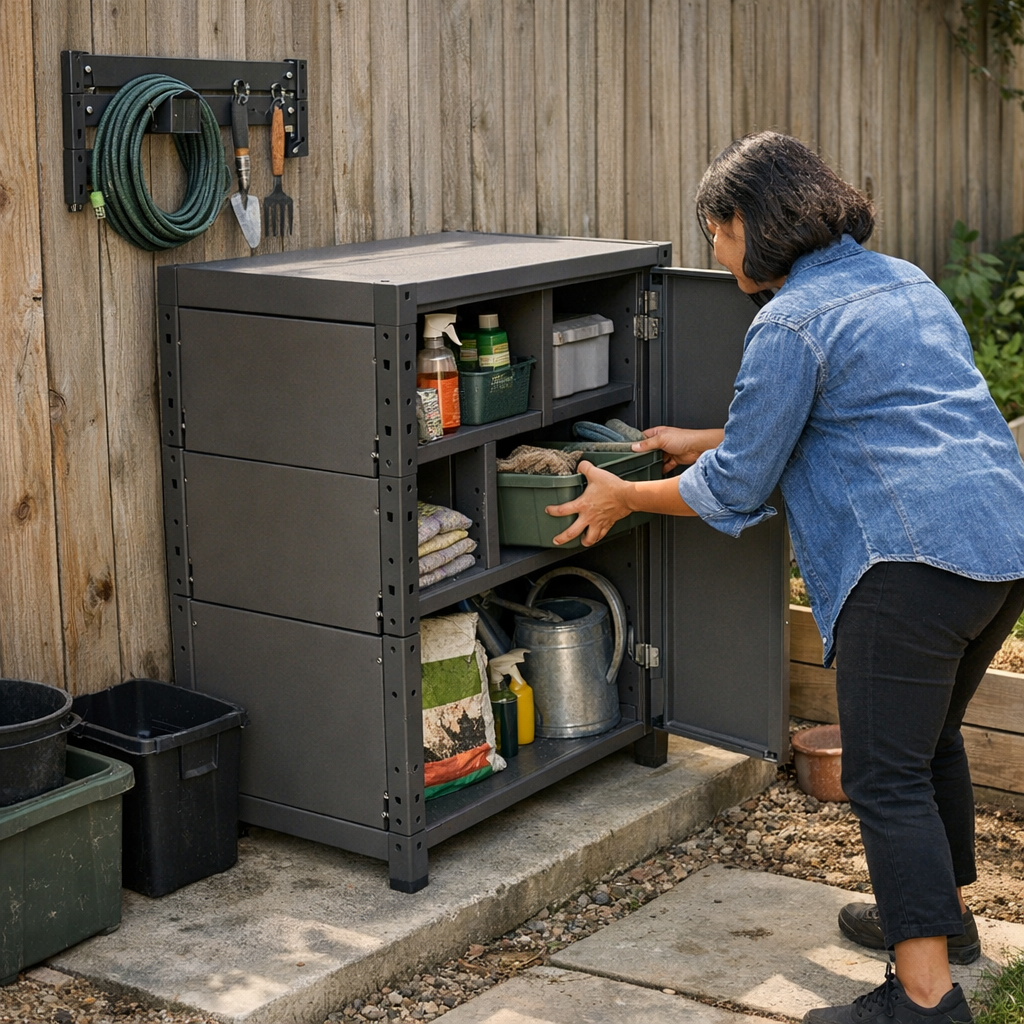
A cabinet with a closed door looks like instant calm—bedside clutter disappears, wires and unread books slide out of sight, and the room seems re-balanced. But if you’ve ever tried to live with this setup, the surface order rarely lasts a full week. The real difference between a clean look and a nightly scramble comes down to what’s between those doors: an interior that either helps or quietly sabotages your routine. Hidden storage that isn’t structured for repeat use will feel organized once but will fight back every night after that.
When Surface Order Masks Setup Friction
The first few nights, everything appears improved. Needs are close at hand, mess isn’t visible, and there’s room to walk. But the illusion breaks down as soon as you need something at midnight. You drag open the cabinet and find a jumble—headphones looped around a phone charger, pajamas slumping into the tech zone, last night’s book half-lost behind a stack of towels. Even with the cabinet closed, it becomes obvious the system isn’t working: instead of reaching once, you’re hunting twice, then returning things anywhere there’s space. Soon, nightly resets turn into a string of minor chores, and the “tidy” landing by the door becomes another place for stalled clutter. One zone—often the lowest or widest shelf—starts swallowing overflow, until you hesitate before even opening the door.
Real-Life Nightly Scenes: Where Friction Builds Up
Here’s the routine breakdown: it’s late, you open the cabinet hoping for easy access. Instead, you move a folded shirt out of the way to find your e-reader, then bend down farther to untangle a cable caught under a spare blanket. The space that was once a solution starts creating new micro-inconveniences: you forget what’s kept on which shelf, and “tech storage” quietly turns into a dumping zone for whatever needs to vanish fast. If two people are using the cabinet, organization is gone by the end of the week—socks slide into book piles, devices land on top of pajamas, and the closed cabinet becomes a container for tomorrow’s stress. Even worse, once an object blocks the door from shutting cleanly, the whole fix reverses—now the “clean” area blocks the path and invites more spillover instead of less.
More Storage—But Less Access
The promise is simple: hide clutter, clear your head. But a deep, open cabinet without the right fittings turns access into an obstacle. Books wedge under cables, small things fall to the back, and the tallest items keep bumping the front edge—making it harder to grab one item without shifting three. A single low shelf encourages piles that tilt and slide forward every time you reach in. As the days pass, the return flow breaks down; things are dropped back out of order, stacks tip, doors are left ajar because the mix keeps growing, and the storage itself becomes an interruption instead of a shortcut.
Why Hidden Storage Fails Without Internal Structure
Category drift is the quiet problem: what started as a book zone morphs into tech and towels and whatever else fits. First-day neatness means little if there’s no way to keep categories apart. Without strong dividers, trays, or bins, the entire inside becomes an anything-goes pocket. The real test isn’t how crisp it looks at setup, but whether you can reach for a charger—or put away pajamas—on a tired Thursday night without pausing to reorganize.
Shelf Sizes That Interrupt Your Flow
Try stacking a set of paperbacks upright on an over-tall shelf: they gravity-slide sideways, or catch under the shelf above. Layer towels above wires and suddenly the whole pile slumps when you tug a plug. Every mismatch—too much vertical space, not enough depth, or shelves that run the entire width—creates small moments of lost time: shifting piles, re-balancing stacks, or squeezing things back in with one hand. The more you make do, the less likely you are to find what you need when you’re already tired.
The Small Fix: Re-Working the Inside for Real Use
Change starts inside—not by hiding, but by dividing. Adding two slim, vertical shelf dividers creates lane-like sections—books on one side, devices down the center, and soft items alone. A small tray on the inner shelf for chargers puts a stop to tangled cords and lost adapters. Suddenly, you can put something back and trust it will be there tomorrow, no daily reset required.
This doesn’t require elaborate kits. Match the inside of the cabinet to actual hand habits: a cardboard sleeve for socks, a wire bin for quick-grab tech, or a slot-height shelf for overnight reading. The best changes lower effort over time. Rediscovered order is not perfect—it’s predictable. The time you save not shuffling through a heap is the real upgrade, and it sticks even when routines get messy.
Spotting When Your Cabinet Needs a Change
Here’s your signal: if you’re opening and closing the cabinet more than once looking for something, or if items are swapped between shelves just to make the door close, the setup itself is the obstacle. Order that only looks neat from outside won’t survive repeated use. A cabinet is doing its job if you can reach in and put something back—without guessing where it goes, and without knocking other things out of line. If that’s not happening, it’s time for a reset inside, not just out.
Building Reusable Calm—Not Just Hidden Clutter
Real calm comes from inside structure strong enough to withstand nightly pressure. Lasting order isn’t about the first good cleanout; it’s about those small boundaries that keep items in place, keep categories from merging, and let you run through the routine even half-awake. Strong inside setups never stay perfect, but they stop your storage from leaking mess back onto the room. Calm isn’t a closed door—it’s when closing the door means the zone behind it is actually working for you.