
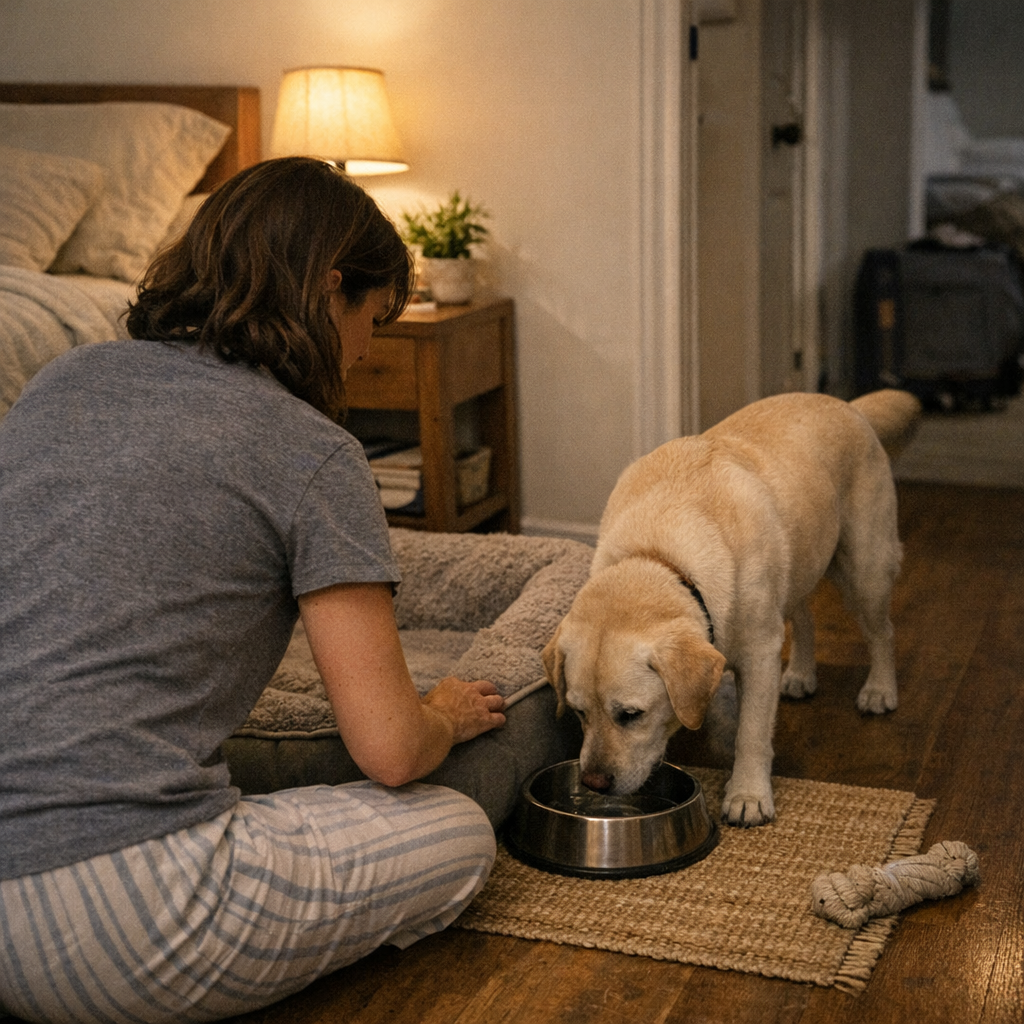
Most evening routines with a dog don’t blow up in dramatic fashion. The comfort-killers are sneakier: the water bowl just out of reach, the bed placed neatly but always a little off course, the misplaced towel that costs you a scramble after muddy paws. Your dog’s slow circles at night or that familiar pause by the bowl aren’t just minor quirks—they’re warning shots. Each repeated hitch quietly erodes the calm you’re both owed at the end of the day, turning “almost-there” setups into nightly friction points. Even after you’ve fluffed the bedding and lined up the toys, the routine keeps snagging—revealing where “done” is just out of reach.
When “Tidy” Doesn’t Mean “Easy”
A setup can look immaculate and still trip you up every night. You line the toys along the wall, set the food and water as usual, make a clean path to the bed—until your dog stands still after a drink, eyes the crate but doubles back, or plants themselves in the exact spot you needed to cross. Visual order collapses the moment your dog’s path conflicts with your own. The friction isn’t mess—it’s the subtle lag. The tidy corner snaps a photo but stalls the flow: a rest area that’s never where it needs to be, bowls that force a detour, toys just close enough to block a sleepy step.
This is where so many routines fail—a layout that hides its flaws until actual use exposes the same sticking point night after night. The longer the mismatch lingers, the less restful bedtime gets and the more the “fix” feeds daily frustration.
Recognizing the Routine’s Weak Spots
The clues show early, but they’re easy to brush off—until you can’t. Watch for:
- The same two-step hesitation at a threshold, just as the house quiets down.
- Your dog’s pattern of retreating from bed to water and back, never quite landing for the night.
- Crate entry stalls, with your dog sniffing at the bowl, then looping the hallway again.
These small but reliable delays are the real leaks—once spotted, they’re impossible to ignore.
Repeated Use Means Repeated Friction
What wears you down isn’t a surprise hiccup but a routine that’s slightly out of tune: another “seriously?” pause at the bowl, another backtrack to grab a towel, another three steps to water after settling. When you notice yourself prompting your dog through a runaround, or you cross the same patch of floor yet again to reshuffle toys or fix bedding, the setup itself is quietly creating static. That minor drag piles up, hollowing out the wind-down you meant to protect.
How Layout Choices Shape Bedtime
Most homes have every ingredient—bed, fresh water, crate, clean-up items, toys—but their placement turns the script. Only after weeks of the same missed beat does the underlying flaw reveal itself:
- The water bowl sits just far enough that your dog abandons the rest spot for one last sip, then has to settle all over again.
- The bed looks right but sits out of the usual path, so your dog circles, then flops near the door instead.
- The crate faces away from the evening flow, killing momentum and causing a stall-out before entry.
- Cleanup towels are always “available”—buried under the gear you don’t grab until it’s too late.
This isn’t about picky pets; it’s a routine whose sequence doesn’t match your dog’s actual needs, leading to small nightly face-offs.
Real-Life Example: The Stubborn Bedtime Stumble
Picture this: You finish the nightly loop—lights down, space cleared, toys lined up, and you expect your dog to glide into rest. Instead, your dog hangs by the water, pads halfway to bed, then backtracks, sniffs the hallway, stalls by the crate. The pattern never breaks, even with all your “come on, let’s go” prompts. It isn’t stubbornness—your dog is stuck working around a setup that forces zigzags instead of an easy wind-down. You’re left repeating nudges, calming yourself and your dog, until the rest feels earned but never quite simple.
It’s the placement—never the product alone. A bed or crate in the wrong lane, or a bowl just out of pattern, redraws the route into repeated frustration, no matter how sorted things look on the surface.
Why Minor Misalignments Become Major Headaches
Small layout flaws don’t stay small during real use. Here’s how they multiply:
- A water bowl a few steps away—just inconvenient enough to trigger double-backs and post-bed movement.
- A rest spot off the dog’s own “home runway” means late-night detours that break routine.
- Cleanup tools present, but poorly placed, create last-minute scrambles after a walk or muddy paws.
Each little detour or reach adds to the routine’s drag. Five extra steps every night became an easy glide lost to frustration—until simply moving one thing removed the bottleneck.
The Real-World Fix: Adjusting for the Dog’s Path
The solution doesn’t have to be dramatic. One targeted shift often makes all the difference. In the stuck routine above, moving the water bowl a bed-length closer shut down the nightly loop. Suddenly, the path ran in order: finish water, step to rest, done. That one change collapsed the pacing and hallway detours, shrinking a 10-minute wind-down to three.
- Bowl within three feet of the bed—a single smooth transition, nothing to backtrack over.
- Crate turned to open along the route from living area to bed, not blocking traffic or facing away.
- Cleanup towel hooked by the entry—not hiding with the laundry or jammed under unused gear.
- Toys set clear of main footpaths: enough for a last chew, not enough to become a midnight tripping hazard.
The change isn’t in appearance; it’s in the flow. Fewer corrections, less circling, no nightly reruns. Just a routine that finally works as quietly as you hoped.
From Friction to Flow—Spotting the Difference
The test for a better setup isn’t tidiness—it’s how much adjustment you stop needing. Signs to look for:
- Your dog heads straight to bed and settles without looking around for what’s missing.
- Walking paths are clear, your own movement is more direct, interruptions fade after the last cue.
- You need fewer reminders; both of you arrive at rest on autopilot, not through repetition or last-minute fixes.
- Resetting for the next day feels automatic—nothing to track down or replace “just out of sight.”
The real payoff is in time and headspace reclaimed: same routine, less wasted motion, fewer patience-taxing pauses.
Don’t Chase Perfection—Just Trim the Drag
No arrangement is bulletproof. Some nights, mess and interruption are inevitable, especially after long days or unpredictable detours. The goal isn’t flawless flow, but a setup that stops producing the exact same friction every time. If your dog still circles once before slumping down, that’s standard. If you aren’t forced to retrace four loops or refetch a forgotten bowl, you’re already ahead.
Common Setup Misses—And How They Show Up During Repeated Use
After enough ordinary nights, real fail-points announce themselves:
- A bowl always one step too far, so your dog crosses directly in your prep path.
- A towel meant for cleanup that’s gone missing—again—just when muddy paws return.
- Toys that fan out into nighttime traffic: tripped over now and reshuffled with a sigh the next morning.
- Bed or crate choices that barely fit your dog’s preferred sprawl, turning bedtime into negotiation instead of exhale.
If the setup forces you to keep rearranging or retracing during routines, it’s your layout, not your dog, asking for an upgrade.
Readjusting for Smoother Evenings
No need to chase invisible flaws. But if your bedtime routine breaks in the same spot every night, observation pays better than intention. Check what actually happens, not just what you meant to happen. Ask:
- Does your dog’s last-minute pause, backtrack, or path-cross repeat more than you’d expect?
- Do you find yourself bending, reaching, or second-guessing the location of supplies right when you need them?
- Is there a block in the dog’s natural route—whether it’s toy clutter, misaligned crate,