
Step into a freshly installed closet, and everything looks under control—at least for now. Shirts stack into crisp rows, socks and tees fold neatly into place, and whether it’s wire or solid shelving, everything feels visible and simple. But the first week of real use—actual laundry cycles, rushed outfit changes, the half-awake scramble for “just one more sock”—reveals which setup holds its promise. The small, daily inconveniences that sneak in after that initial sense of order are what really decide whether the closet works for you or against you.
How Tiny Storage Frustrations Multiply
In those first days, it’s almost impossible to spot the difference. Both wire and solid shelves stand empty of clutter. But the habits that follow—tugging out last-minute undershirts, grabbing a favorite top from the middle of a stack, stuffing pajamas away when you’re late—all push your shelving system beyond its showroom calm.
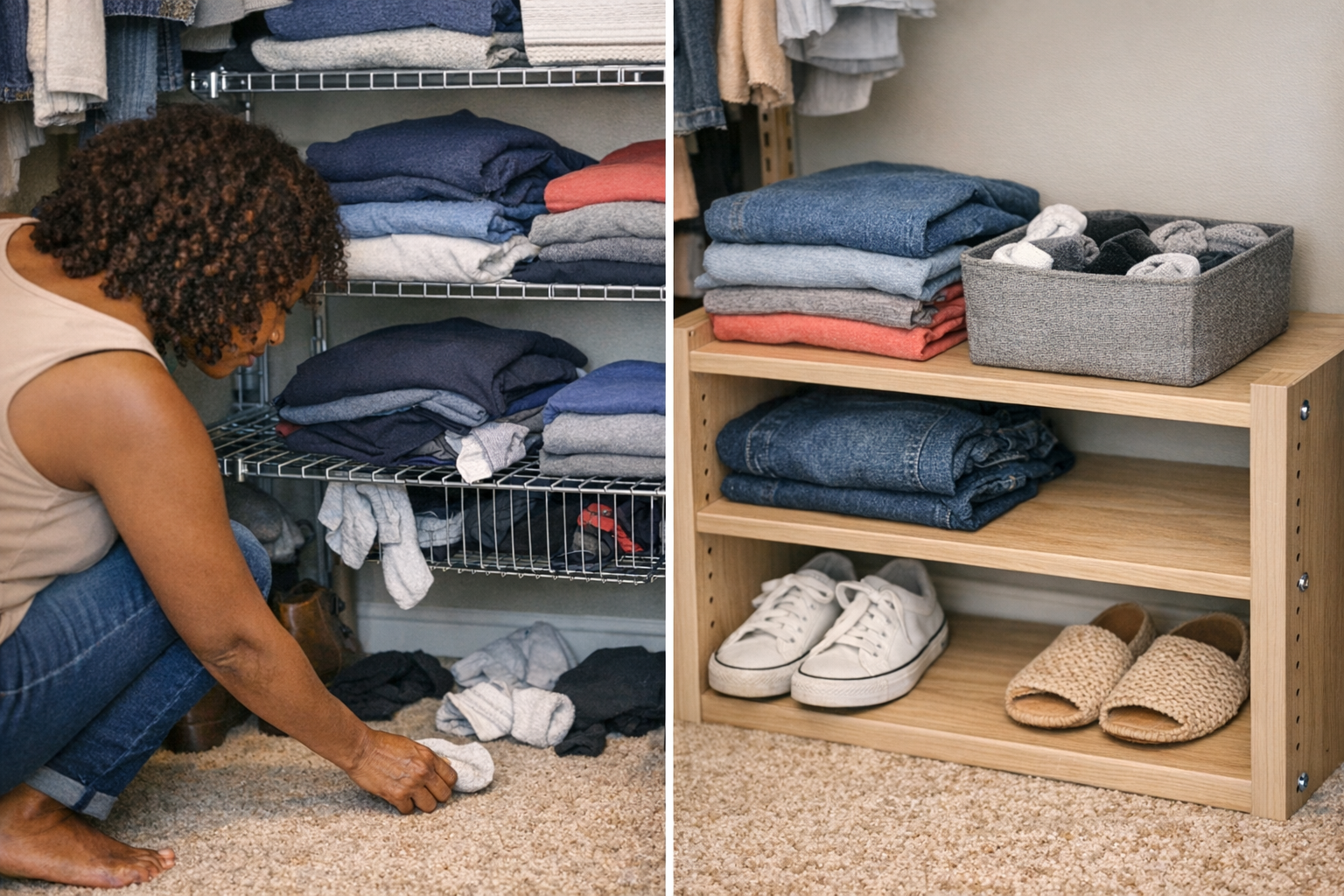
With wire shelving, these pressures show fast. Socks nudge through the grid, sliding halfway out of sight. T-shirts, especially the soft ones, settle between the wires and make the whole pile slope and sag. The closet still looks organized at a glance, but the process is messier: reaching for one shirt topples the next, while a single sock slips through to hide beneath the lowest shelf. You end up crawling on the floor almost daily—not for a deep clean, but just to recover whatever fell overnight.
Solid Shelves: Fewer Gaps, But New Trade-Offs
Switch to solid shelving, and those gaps disappear. Everything from jeans to gym shorts stacks flatter, and grabbing a piece from any part of the pile doesn’t collapse what’s left. Socks and smaller items can’t disappear through the shelf, and you’re spared the routine of fishing fallen clothes out from awkward corners.
But nobody gets a free ride. Solid shelves collect dust and lint, especially under stacks that barely move week to week. Resetting is less about tracking down wayward clothes, and more about wiping down surfaces—still a minor friction, but one that quietly accumulates if you’re a “fold and forget” type. Yet for most, this is a fair trade: it means the shelf stays reliable, even when you’re rushing through yet another Monday morning reset.
Where Closet Routines Really Slip
The test isn’t how organized your closet looks after a deep clean—it’s what happens as life gets busy. By the end of each week, even “perfect” stacks start to slide. Favorite shirts migrate to the front and the rest get buried. In a rush, you pull an item from the bottom—now every fold above slides out of place. On wire shelves, the problem is amplified: thinner socks vanish beneath the grid until you’re left with single strays and half-stacks, and that tidy line you reset on Sunday is scrappy by Friday.
The cycle repeats every time you dig for something specific: a workout top at the back, a pair of thick socks for winter, a T-shirt buried under sweatshirts. Each grab risks another cascade, another stray, another moment spent putting things back rather than getting dressed.
Real Scene: Socks and the Extraction Drama
Picture the speed round before work: you reach for socks stored on wire shelving, and the last pair clings to the grid. As you pull, the pile shifts, a sock falls, and now you’re on the floor again, scanning under the shelf, grasping for what dropped. What should have been a two-second reach becomes a three-step rescue. If your mornings already feel rushed, this minor hassle quietly chips away at your patience.
Now imagine the swap: On a solid shelf, you reach, lift, and nothing escapes. The rest remain steady, and you’re out the door in half the time. Over a week—the cumulative effect is obvious. If multiple people use the closet or if mornings are a blur, those seconds compound into real time reclaimed, less fluster, fewer rogue socks to puzzle over at night.
A Simple Fix for Everyday Friction
Some improvements take minutes to install but save hours over months. Dropping a shallow basket or bin onto a wire shelf instantly stops small items from slipping out of sight. Now socks, underwear, and delicate shirts drop into a defined space, not onto the floor. Your shelves stay visually organized, but the routine—grab and go, pile stays settled—finally matches your real-life habits. Instead of constantly resetting, you reset once, and the system quietly holds.
Quick tip: If solid shelves aren’t an option, a set of affordable liners or stacking bins can transform wire shelving. Piles stop collapsing, small things stop escaping, and your daily reset becomes quick and predictable instead of a recurring obstacle course.
Does Your Storage System Actually Work for You?
Wire and solid shelving aren’t just different materials—each shapes your daily rhythm. The right setup isn’t the one that “looks” perfect on install day. It’s the one that makes your space resilient to repeated grabs, quick reshuffles, and last-minute wardrobe changes—without piling up silent annoyances.
If you catch yourself constantly tidying, fishing for dropped items, or wondering why the space looks organized but acts like chaos, it’s a sign something needs to shift. Sometimes it’s a matter of swapping shelf types, other times it’s simply adding the right basket or liner. The real payoff: smoother mornings, less disruption, and more time doing anything but reorganizing. One small change can pull your closet back into alignment with the way you actually live.