
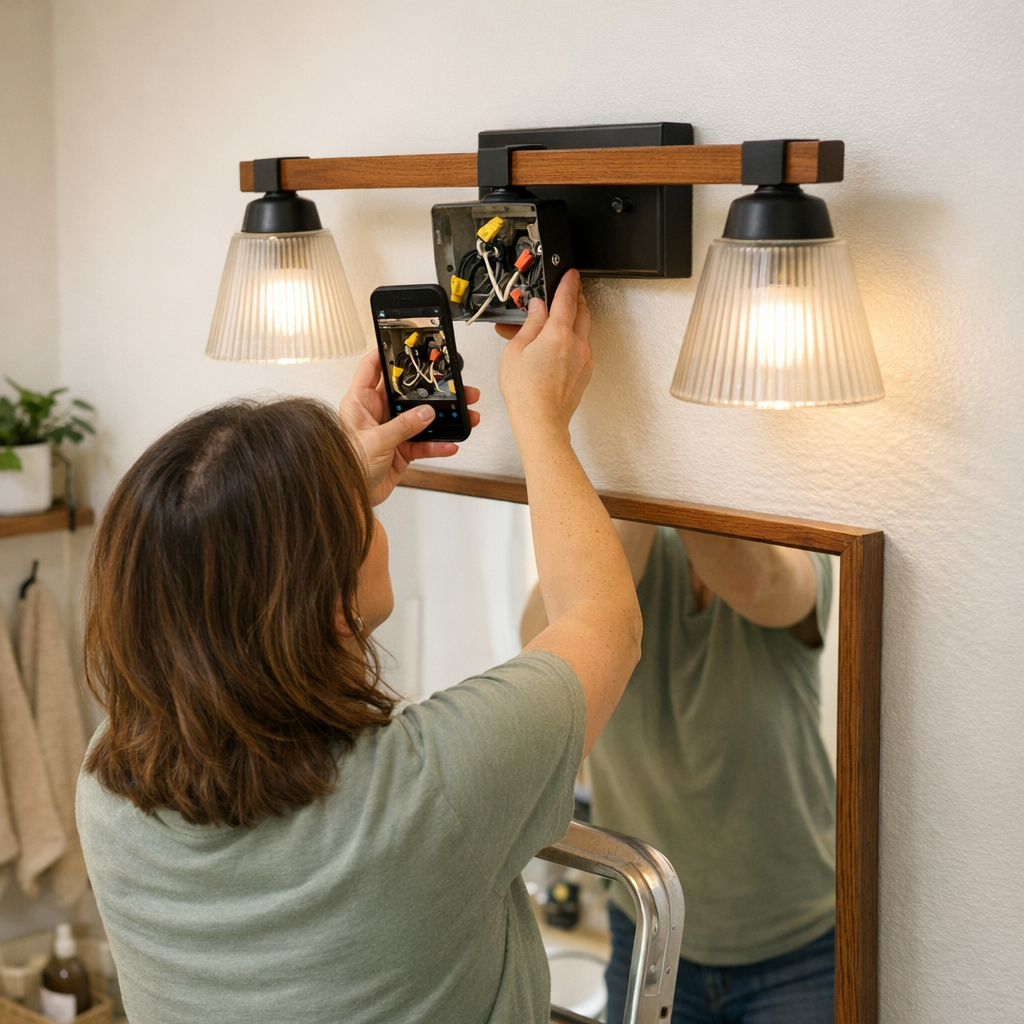
Swap out a ceiling or wall light in a hallway, stairway, laundry, or bathroom—and small mistakes follow you for weeks. One wire in the wrong place, no photo backup, and the room looks finished but works wrong: a stair switch that does nothing halfway up, hallway zones stuck lit or dark, a mirror that glares in the wrong direction. The light is on, but the routine stumbles.
Small Wiring Misses = Ongoing Lighting Friction
Lighting feels simple on the surface—flush mount in the laundry, semi-flush in the hall, a vanity bar over the mirror. But under the ceiling plate, wire positions blur together fast. Skip the photo, trust your own memory, and what seemed routine ends up with the hallway switch triggering a distant glow, or the laundry counter trapped in shadow at dusk. You flick one switch, the wrong end lights up, and everyday movement is a little more awkward. It doesn’t scream to be fixed, but it sticks around.
A missed wiring detail isn’t just a nuisance on install day. It weaves into every repeated use: missed steps at a stair landing, a well-lit room that still pulls your eyes away from the real work, or the daily glare from a mirror sidelit instead of evenly balanced. The lighting isn’t broken—but it calls for another mental note, another workaround, every single time.
Where Lighting Mismatches Hurt Most
Stairways: Switches That Drop You Into Darkness
Think of a stair landing wired for a two-way switch. It works for one trip, then night falls, and carrying laundry up, you flip the bottom switch—nothing happens above. The top switch lost its control, the landing stays half-lit, and every climb feels off-balance. For stairs, coordination matters more than raw brightness. That gap shows up most clearly when your hands are full, and you hesitate mid-step, feet feeling for an edge you can’t see.
Corridors and Laundry: Partial Illumination That Breaks Flow
Install a flush ceiling light in a hallway or laundry zone and, at first, everything looks covered. But routines expose the cracks: you pivot at the washer, hunting for the dryer’s edge in harsh shadow, or cross the hall and find one wall fading into a gloom the switch can’t reach. A miswired or misremembered setup doesn’t block use, but it adds friction—forcing a head tilt, a shuffle, or a narrowed field every time you pass through.
Bathrooms: Glare, Shadows, and Disrupted Routine
Bathroom lighting exposes wiring slips brutally. One swapped wire, and the vanity strip throws glare to the left, shadow to the right—or vice versa. Shaving, makeup, face washing: nothing is truly visible, and the mirror becomes a guessing game. The room glows but fails on clarity, turning small routines into small frustrations you can’t unsee once you’ve felt the difference.
One Sharp Photo—The Fastest Insurance Against Repeat Error
Before loosening any screws, take a clear photo of how your current fixture is wired. Most ceiling and wall setups have three or more wires crossing tight box spaces—white neutrals tucked behind black travelers, grounds twisted and wedged, sometimes extra wires from old renovations. Later, when dust falls in your eyes and a wire slips loose, that single photo turns chaos into easy order. Your future self gets one glance and knows exactly what goes where.
The payoff is not dramatic at first. But after days of normal use, the difference stands out: both stair switches control the landing every time, laundry lights the countertop—not the ceiling, mirrors stay evenly lit instead of flaring or shadowing, and hallway trips don’t need workarounds. The lighting setup disappears into the background, supporting every routine without breaking flow.
Reduced Guesswork, Reliable Movement—Lighting You Stop Thinking About
The win is quiet but constant: fewer wiring errors mean fewer daily interruptions. Stairs feel safer, hallways support movement, bathrooms keep faces visible, and the laundry fades into the background where it should. Old patterns—flipping the “wrong” switch, dodging a shadow, tilting for clearer light—fade away. The room is just usable, every time, with no extra thought.
Pro-Tip: Make the Pre-Disassembly Photo Your Habit
Ten seconds now prevents weeks of reworking, testing, or living with awkward zones and mismatched switches. Whether swapping a flush mount in the laundry, putting up new vanity sconces, or adjusting corridor lighting, that photo beats every mental plan. The habit is simple, but it protects every routine in your lighting zone from avoidable disruption.
For flush ceiling lights, wall lights, vanities, utility room fixtures, and more practical lighting solutions: LightHelper