
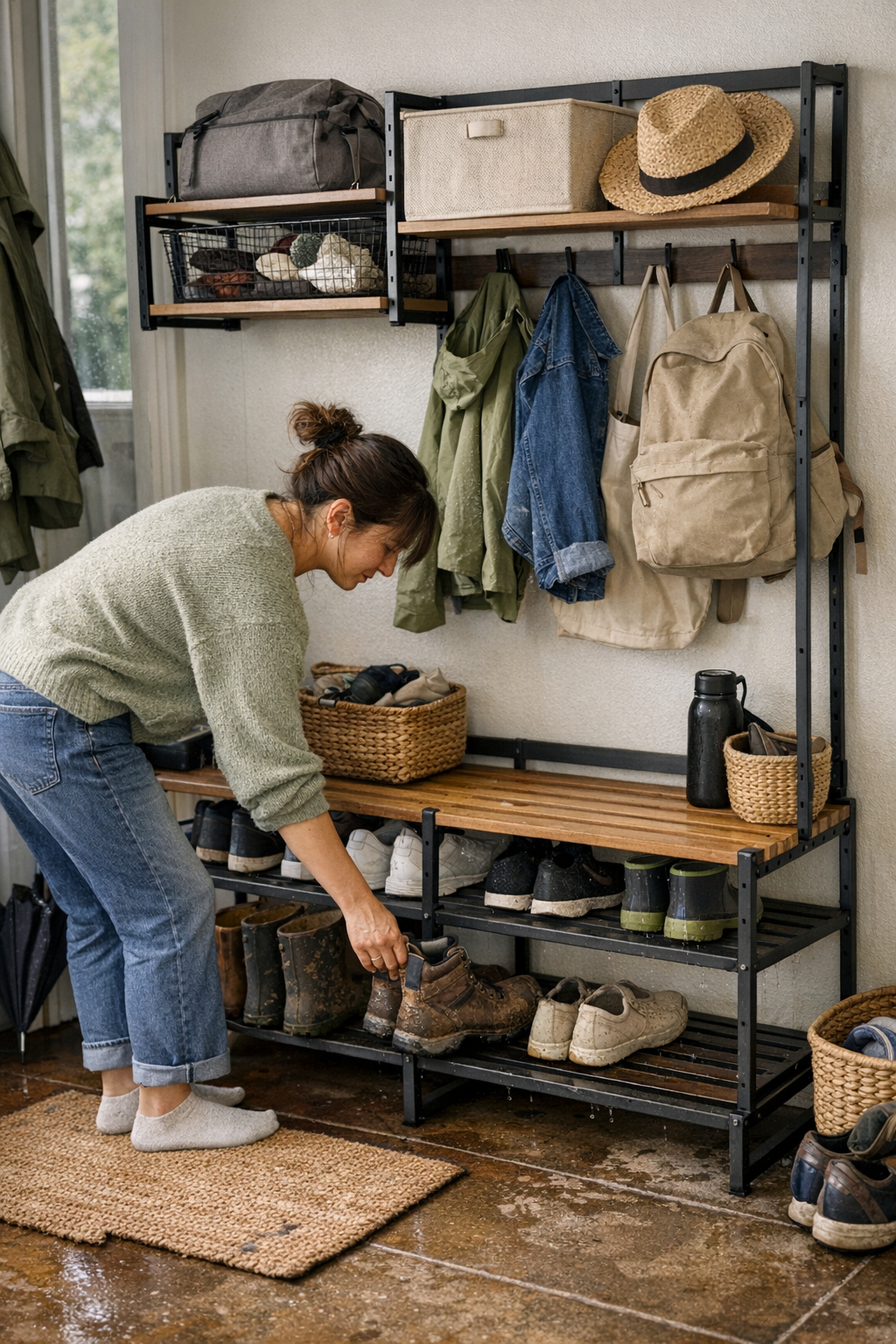
Closed shoe benches and sealed cabinets look clean—until the first slush, rain, or muddy boots hit. The real test for entryway storage isn’t how it hides mess at a glance, but how it handles moisture, overflow, and the daily repeat of feet and bags coming through. If you’ve ever popped open a bench after a wet week and caught the smell of trapped damp, or found shoes sticking instead of drying, you’ve seen how quickly the wrong setup turns “organized” into high-maintenance. A neat facade collapses fast under real entryway pressure—when one drop zone becomes the bottleneck between outside, inside, and whatever mud or motion just arrived. In most homes, it’s not the weather that wins; it’s the routine that exposes every hidden flaw in storage design.
When “Contained” Spaces Quietly Collect More Than Clutter
Closed benches and cabinets promise order—until daily use proves otherwise. After just a couple of rainy afternoons, open the lid: shoes are soft and musty, gloves still damp, and the inside smells worse than the sidewalk. The moment you shut moisture in, you break the reset routine. For households with even moderate traffic—think two quick arrivals before dinner—the so-called tidy storage becomes a slow-moving trap for sweat, rain, and forgotten gear. Items pressed together stay wet, not just unseen.
Miss a day? The pile grows. Now it’s not just one soggy pair—bags, jackets, umbrellas, and gym kits stack up, and air barely circulates. Lids and doors might hide the buildup, but inside, dampness turns into a backlog. Instead of staging the next morning’s launch, the storage becomes a graveyard until someone digs it out, wipes it down, and starts over.
The Real Signs of Storage Struggling on a Normal Day
These problems don’t just show up in storms—they creep in through everyday routines:
- The shoe line mushrooms sideways: After one muddy drop, the neat row pushes outward; clutter that used to be invisible starts spilling into walkways.
- Bags don’t make it in, they land near: The so-called bench becomes a parking lot—what was supposed to “contain” overflow now collects it on top and around, shrinking usable space each day.
- One return blocks the zone: Slide in an umbrella or backpack and you’ll find yourself reshuffling three other things, blocking the path for anyone following. The passage narrows every run.
- Reset times balloon: Even after a quick wipe or grab, things feel damp or carry a stale odor. It may look passable, but every entry feels slower and less ready for real use.
Moisture Hides Easily—But So Does Routine Friction
It’s easy to miss how quickly friction builds. A typical weekday: early risers stash wet coats and boots in a cubby; a couple more arrivals stuff in backpacks and extra shoes. By the evening, the storage is sealed and full, looking orderly from the outside but inside, everything is damp, clammy, and starting to smell. The next day, you reach for “dry” shoes—still cold and wet. Crowded setups trap humidity, so instead of drying between cycles, the whole entryway accumulates a low-level stickiness that never fully resets. The threshold, instead of flowing, starts to jam.
The harder you work to make things look neat, the slower it feels. Moisture absorbers max out. Clutter slides out as you add one new drop. The entryway swings from clear to bottleneck overnight—and the room’s “reset” only completes when someone does a hands-on rescue, pulling soggy gear out for emergency drying or a hard reset that interrupts the whole routine.
Why Airflow Is the Quiet Hero in Everyday Entry Zones
Airflow is the real difference-maker—not just for order, but for fast recovery. Storage that lets air circulate—slatted benches, open racks, vented cubbies—doesn’t just look different: it keeps shoes from stewing and gear from going stale. This matters even more in tight entryways, narrow apartment halls, or shared transitions where every inch faces repeated pressure. With the right structure, gear dries in hours—not days—and overflow can’t hide or build up off your radar.
Reset moves from chore to routine. Drop wet boots on a slatted bench: by dinnertime, they’re dry underneath and ready by morning. If more gear crowds in, you see it right away—no surprises, no invisible backlogs. Reset isn’t just an occasional rescue; it’s a quick, visible scan as you walk through, making clutter management automatic instead of reactive.
A Practical Example: Slatted vs. Sealed Bench
Swapping a solid-lid bench for one with airflow slots changed everything. No more damp stink or surprise sticky patches pooling inside. Shoes and gear actually finished drying before the next use—especially after busy weekends. It meant no last-minute rescue operations, no mental inventory checks, and one less threshold stall with arms full of bags and umbrellas. The difference wasn’t just cleaner air—it was less mental drag and faster flow.
Common Solutions and Where They Fall Short
Moisture absorbers: They work for the occasional puddle but fail during routines with regular wet gear or multiple people. One rainy week, and you’re back to swapping out packs or ignoring the silent mold risk. They keep up only when real movement doesn’t.
Sealed bins/cabinets: Great for hiding piles, lousy for handling water. They slow you down, trap damp, and demand full resets more often. Over time, they make the whole entryway feel like it’s stuck—clean on the surface, but behind schedule underneath.
Tips for Reliable Entryway Flow
- Choose storage that breathes: Look for slatted or open racks, wall cubbies with gaps, or benches that dry as they hold. Every shoe and bag should touch air, not just each other.
- Let mess and backup show: With open fronts or ends, you spot crowding the moment it starts—reset is a single motion, not a periodic deep clean.
- Keep reset intervals short: In busy seasons, empty overflow daily or every other day. Quick turnaround beats slow air-out and keeps odors down.
- Go vertical when crowded: Wall-mount solutions and vertical cubbies preserve floor space and keep the airflow route open instead of blocking the threshold.
How Better Structure Changes Everyday Movement
The entryway isn’t just a spot to stash and forget. The real standard is how easily you cross it on a messy day—shoes dry, bags accessible, nothing slowing the route from door to next room. Closed setups hide mess, open and vented ones keep action moving. The difference appears the twentieth time you run through, not just the first. Does your threshold reset, or does it stall out?
If your storage system leaves things looking “ok” but never truly ready, it’s time to move beyond the contained-and-clogged stage. Airflow and order work together to turn that tight entryway from a slow-motion disaster zone into a daily flow point. For more ways to make your entryway or threshold zone genuinely easier to use every day, see Betweenry.