
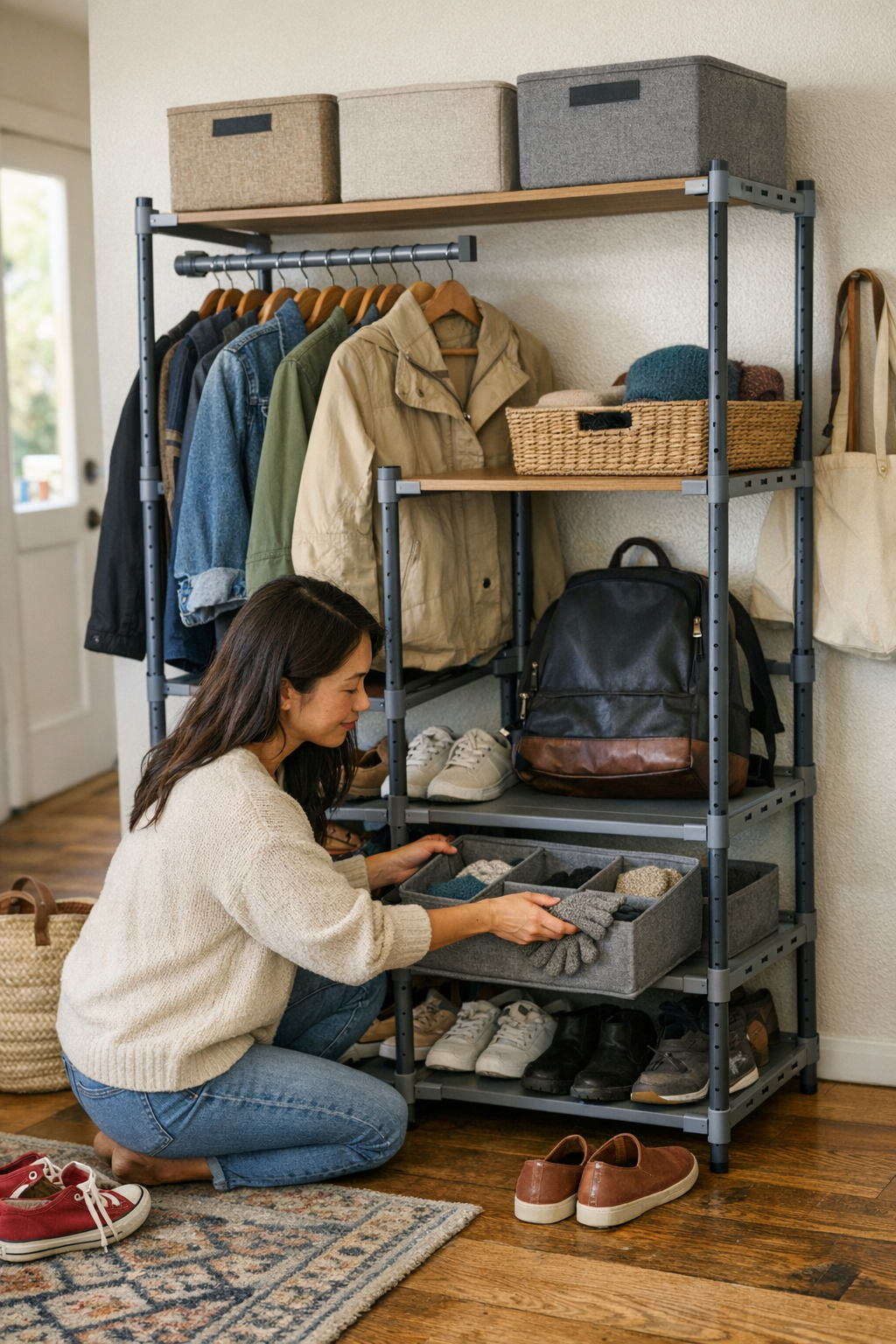
When the Closet Looks Right, But Works Against You
That “after” photo moment—the closet where every shoe is lined up and every basket is tagged—only matters for a snap. The real test comes at 7:15 am, when shoes are missing, bags are buried, and the morning routine leaves fresh piles in its wake. This is where many so-called organized closets actually fail: not in how they look, but in how they get used. The corners start catching overflow, hooks go ignored because they require an awkward reach, and the reset never quite happens. If your closet starts each week picture-perfect but by Thursday feels like a detour and a balancing act, the problem isn’t you—it’s the setup that isn’t designed for the friction of real life.
Every Extra Step Grows the Mess
Small obstacles add up fast. The tiniest inconvenience—reaching behind a basket, crouching for shoes stashed beneath a low shelf, sidestepping a bench—sends people into shortcut mode. That means sneakers collect by the door instead of going up on the shelf. Bags slide from hooks to floors. Even a little extra walking or a single blocked spot is enough to derail good intentions. All it takes is one busy evening, and suddenly you’ve got leaning towers of laundry, bins swallowing random odds and ends, and “just this once” clutter that never fully disappears.
It’s not laziness; it’s human nature. If you have to maneuver around hanging coats, you’ll drop your hat on the nearest surface. If shoe storage is one step too far, shoes start gathering in the hallway. What starts as a small detour quickly multiplies: a few missed spots become a full reset job, not a quick tidy-up. Habits always beat layouts designed for empty spaces, not hectic weekdays.
Where Organized Closets Actually Break Down
Pay attention to closets in heavy daily use—a family entryway, a shared coat closet, even an overstuffed guest closet. Friction points show up fast:
- Reaching behind stacks erodes order quickly. That go-to hoodie somehow ends up behind boxes of rarely used hats, so every retrieval turns into a mini teardown. Within days, neatness turns to chaos—just to get dressed.
- Bins become black holes. Those deep, pretty baskets near the door start with neat gloves and mail, but soon swallow receipts, headphones, and everything else that doesn’t have a place. Categories blur, and you’re digging instead of grabbing.
- Folded stacks can’t survive real use. Stiff, straight piles look fine on laundry day but soften and slide into one another after a couple of searches. Instead of a quick reset, you’re restacking shirts and guessing what belongs where.
Once storage categories lose their clarity, or putting something back means making extra decisions, “organized” becomes another form of hidden clutter. The system’s failing not because it got messy, but because it asks too much in real time.
Looking Organized ≠ Actually Organized
Crisp shelving setups, new rods, or matched bins might impress right after install. But run your real routine for a week and see what holds. Are shoes still paired on the rack, or spilling across the hallway again? Do shelves still show open space, or are they a jumble of mittens, hats, and forgotten bags? Good looks can mask underlying friction—because if the closet demands workarounds, the chaos creeps back fast.
Micro-adjustments can have outsized results. One family’s hallway closet always overflowed with hats and gloves beside the door—until they lowered a shelf just six inches and added a divided bin right at hip level. Suddenly, even the quickest drop-off worked. No more overflow in the hallway—even though nothing looked that different. Some of the best fixes barely change the photo, but completely change how the closet handles normal wear and tear.
Building Storage for the Way You Actually Use It
Stop organizing for “someday” and build for right now. The best storage isn’t about perfect labels or everything matching—it’s about making the routine routes friction-free. Everyday grab-and-go items should live at the height you naturally reach, not on an aspirational upper shelf. If kids use the closet, double rods or low baskets mean they can actually put things away themselves, without reminders or an adult swooping in.
Press pause on the showroom logic and look at your patterns:
- Main shelves near the door get the most action. If putting boots away means a traffic jam or walking around someone else, expect piles to start creeping past the threshold.
- Bins are only useful if they match your grab spots. Too big, too deep, or tucked in the back? They’ll become bottomless catch-alls, not tidy categories.
- Deep shelves tempt you with the promise of extra storage, but the stuff in the back almost always gets lost. That’s when overflow begins: it’s easier to throw new things onto a growing pile than to wrestle with tight corners.
Map the repeated breakdowns—where items never seem to stay put, or piles keep forming—and you’ll see where the layout fights your habits. The trick is to make it easier to put things away properly than to leave them out “for now.”
Spot the Early Warning Signs of Clutter
Storage doesn’t usually collapse in one big disaster. The slow creep is the real threat. Look out for:
- Needing to unstack or move an item daily just to access something else.
- Feeling like putting things away means more shuffling than actual organizing—a sign your system is fighting back.
- Opening a bin and realizing you can’t tell what’s inside anymore—categories vanished, and labels ignored or forgotten.
These are signals, not shortcomings. Sometimes all it takes is lowering a shelf, adding dividers, or shifting a bin closer to your true drop zone for the space to keep pace with your routines, not the other way around.
Small Shifts, Real Wins: Tweaks That Actually Last
You don’t have to gut the closet to make it work better. Start with:
- Dropping a shelf just enough to add a slim, easy-reach basket—so grab-and-go items always land where you need them most.
- Adding or moving dividers inside bins to stop category creep, so you don’t have to resort each week.
- Swapping out unreachable shelves for dual rods or hooks at the height of your youngest user, turning routine storage into an easy, automatic habit.
The best system is one that keeps its balance even as life gets busier. If clearing up after yourself and others feels faster, steadier, and less frustrating with each passing week, then your closet is working—finally matching the way you actually live, not just the way it looked right after organizing.
For more solutions designed for real homes and real routines, visit ClosetWorks.