
Renovation dust resets the rules at your entryway—fast. It only takes a few days of ceiling patching or drywall sanding before the usual setup falls apart. The spot that should smooth out comings and goings—bench, bins, row of shoes—starts turning against you. Dust drifts in no matter how careful you are, settling on open benches, working deep into shoe seams, and making every dropped bag a new dust magnet. Where you once breezed through the door, now you pause, weigh options, and wonder if this “quick drop” will mean another full reset tonight. Open layouts lose their edge the second airborne grit arrives—and what worked for fast routines now multiplies the cleanup load instead of reducing it.
How Open Storage Falls Short When Dust Moves In
Baskets and benches promise calm at the threshold—until the first week of renovations. By midweek, the illusion is gone: powder lines every exposed edge, coats bag handles, invades shoe linings and slinks into pockets. There’s no being careful enough. Drop a work bag on an open bench or leave shoes in a neat row and you’ll see it—one day of dust, maybe two, until organization turns to mess. Every surface you meant to keep clear becomes storage for debris instead.
If you have to move quickly—hanging a jacket on a wall hook, dropping a backpack in a bin—there’s no buffer. Dust wins instantly. Soles, laces, zippers, even the bench frame start accumulating a gray film. The “grab-and-go” routine stalls; you choose between cleaning every piece in the evening or chasing grimy buildup that never really stops. The work isn’t just visible. Grit works deep into leather, sticks to bag linings, and waits in places you don’t have time or patience to clean. The look of control lasts less than a day; the extra cleaning duties last the whole renovation.
When the Fastest Storage Becomes the Messiest
Open setups excel—until they collide with ongoing contamination. That line of shoes near the door works for a few hours, but as dust settles and routines repeat, everything starts to blur. Every new trip—one more bag, a pair of rain boots, loose keys—leans into old debris. There’s no threshold maintenance, just slow fade: open shelves and shallow baskets hold the shape, but they don’t protect the habits. The organized look holds maybe a morning; then, everything is touched by the same unfiltered mess. Each use turns “temporarily stored” into “slowly compromised.” Shoe insoles turn gritty, bag linings taste like drywall, and even a slim bench gets drafted into overflow—without ever feeling cleaner or clearer.
Movement and Reset Friction in Dusty Conditions
The real friction is cumulative. You start brushing off shoes every morning, vacuuming around the bench at night, and wiping out bins you never needed to clean before. Resets get longer, not shorter. Every time you need to move through the threshold, you’re interrupted: pause to clean, move a pile, dust off a “clean” tote. The daily reset that used to take seconds now stretches—because the entryway keeps pulling outside mess inside, without slowing it down or containing it.
The Sealed Box Solution: Slower But Stronger
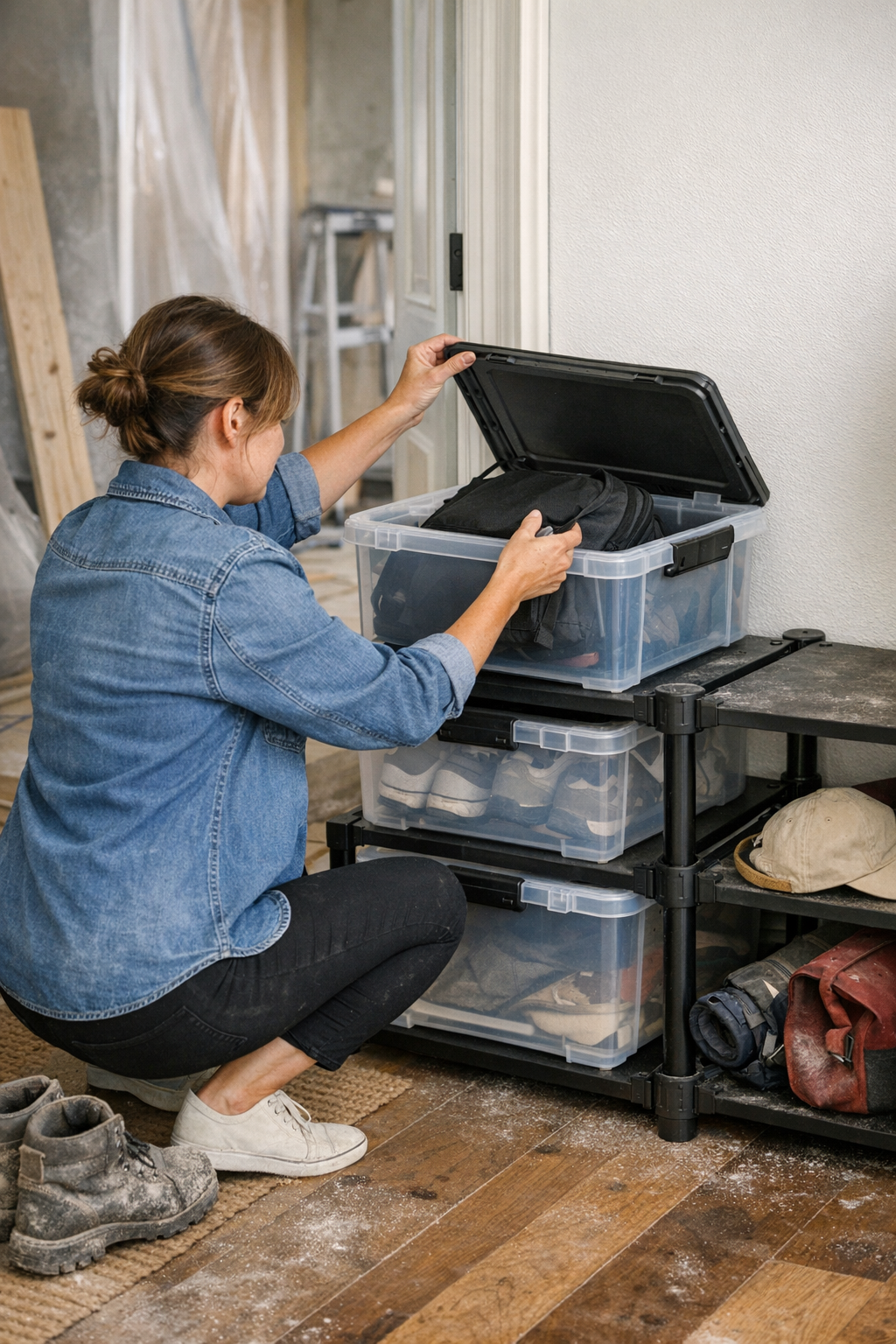
Sealed storage shifts the odds back in your favor. At first, bins with tight lids or weather-resistant cabinets feel like overkill. But when every drop zone is coated in airborne grit, that single degree of separation makes all the difference. Shoes, daily bags, and sports gear stay shielded—dust can drift past, but not in. The floor may be powdery, but what you open up stays ready to use.
This is not perfection—it’s breaking the lose-clean-repeat trap. The price is one more step: open a lid, slide out a bin, maybe knock your shoes together first. What you save is measurable—no more nightly full-surface resets, just a check and a quick wipe when needed. You notice the difference on the first morning you reach for running shoes and don’t have to shake debris out of the insoles. It’s order you feel in movement, not just in appearance.
Real Setup, Real Relief
Place a sealed box along the wall and watch the routine re-stabilize. Shoes go in, lids go down, dust stays out. The bench doesn’t become a second floor. Bags get their own enclosure instead of taking on every particle in the air. With each pass through the space, clutter creep halts. The nightly reset shrinks to a minute instead of forty-five. It’s not an abstract fix—you see it each time you leave and come back: what you rely on is still usable, not disguised under a new layer of grit.
Hard Tradeoffs: Accessibility Versus Containment
Sealed storage slows down access, and in shared or tight households, even a five-second delay can matter. But in renovation conditions, every shortcut that saves a minute at the door costs ten on the back end. The equation shifts: a little inconvenience up front buys back your evenings. There are side effects: stacked boxes tighten the path, too, and fast storage risks trapping moisture or odors—especially if shoes go in wet. Vented boxes or a quick wipe-down help, but the main tradeoff remains: open setups are easier until dust arrives, then they pile on the work.
Clarity Where It Matters Most
The entryway isn’t just a picture of order—it’s either a working barrier or a weak channel between outside mess and indoor routine. A space can look minimal, even controlled, but fall apart under repeated dust intrusion. Sealed units, well-placed next to the door, create a zone where clean gear survives the weekly grind. You only realize it the first time you open a bin after three days of sanding and find your running shoes untouched. No more “looks organized, feels dirty.” Just a visible division: the chaos stops at the lid, not at the doorway.
Everyday Scenes: Recognizing the Right Change
You drop a gym bag after work—the bench looks clean, but by morning, there’s a pale print marking the spot. Shoes multiply in a careful row, but each return pushes them wider, debris staging a slow invasion toward living space. You come in late, muddy boots in hand, and realize your only option is to set them right on top of yesterday’s dust pile. The once-minimal setup now forces you to step around clutter, move bins just to open the door, and spend more time shifting obstacles than moving through the threshold itself.
Switching to sealed storage doesn’t make the space flawless. It gives you back time, resets, and the ability to move without cleaning after every entry. Fewer surfaces to dust, fewer regrets after a hurried drop, and gear you don’t have to de-grit before putting on. When the renovation is dragging on, the only practical fix is a setup that outlasts the dust—and once the work fades, you’ve already built yourself a better way to handle whatever drifts in next.