
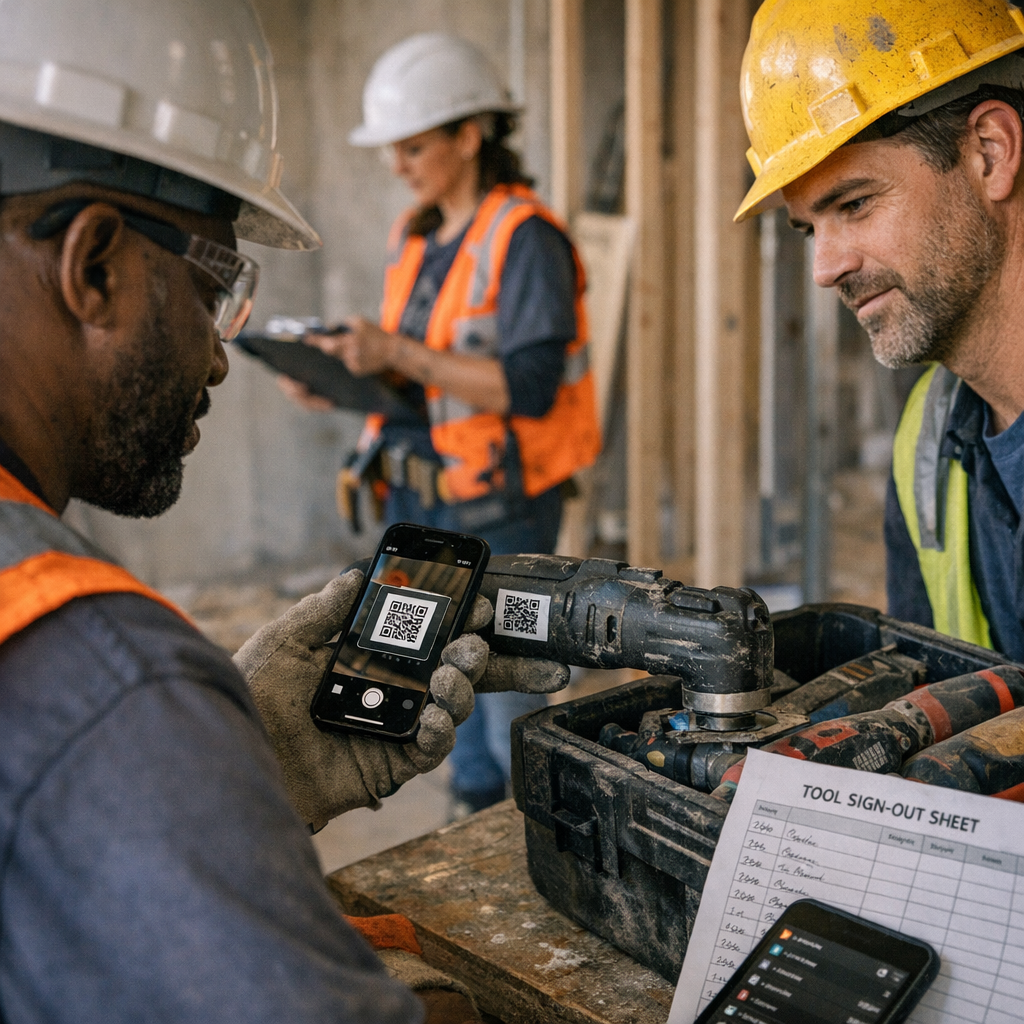
Misplacing a specialty tool doesn’t just slow a busy jobsite—it throws off the whole day’s rhythm. Picture this: you’re ready to notch a jamb with the oscillating multitool, but it’s missing from the kit. Within minutes, two crew members have abandoned their own tasks to hunt it down. Soon, you’re combing through dusty bins and decoding initials scribbled on a coffee-stained logbook, all while everyone is asking, “Who had it last?” The clock ticks. Frustration builds. Work grinds to a halt over a tool that should have been a 30-second grab. On tight jobs, the problem is never just the missing multitool—it’s the wasted time, lost focus, and the profit quietly draining away, one search at a time.
Growth Exposes the Cracks in Old Tracking Habits
When it’s just you and one other, tracking tools might mean jotting names on a scrap of paper or trusting memory. You might even snap a photo of the pile at the end of the day. But bring a third worker, a second shift, or a new trade into the mix and suddenly, tools start vanishing into pockets, trucks, and workbench clutter. The old “I’ll remember who used it last” method collapses fast under real job pressure.
This isn’t theory—it’s the actual site routine. The oscillating multitool, a right-angle drill, maybe the perfect-size paddle bit: these tools don’t stay in the box. They float between tasks, vanish under insulation, or wind up on the wrong end of the floor. By midweek, tracking down that one multitool is less about being organized and more about running damage control.
Oscillating Multitools: Critical, Constantly Shared, and Always Getting Lost
Few tools disappear faster than the multitool. It’s small enough to toss into a pocket, but essential for the awkward cuts—like slicing a baseboard clean after flooring, trimming shims in a tight jamb, or cleaning up a miscut electrical box. By late afternoon, it’s been handed off to three or four people, and nobody knows where it landed next.
And here’s where the headache expands: mid-task, the finish crew waits because the multitool is missing. Another team stands idle, unable to start until a specific trim cut frees up their workflow. Missing tools don’t just cost time; they create pileups—dead hours, mounting stress, and a resentment that lingers long after the actual tool turns up under a pile of drop cloths.
Paper Logs and Tracking Apps: Real-World Friction
Try to solve this with a paper log, and you’ll collect a week’s worth of chicken scratch—duplicate initials, bad handwriting, checked boxes that don’t match the timeline. Someone signed the multitool out at eight, marked it in at four, but at 2:20, someone else needed it and played detective. The logbook tells you everything—except where the tool actually is.
Switch to a barcode app and you might get a little further. When it works, every tool gets scanned, and you know who had it last—unless the app crashes, WiFi drops, or someone skips scanning because their hands are covered in glue and sawdust. Suddenly, the tech solution is just another blind spot, with missing check-ins and a crew that quietly reverts to the old ways.
The Last Hour of Friday: Scene From the Real
Picture the sprint before the weekend: one crew finishes outlets while another preps baseboards. Both claim they “just dropped the multitool off.” You check the log—same initials twice, crossed-out times, half-filled checkout slots. The tool’s gone, the schedule slips, and nobody trusts the process. What’s really lost is trust: in the record, in each other, in finishing the week strong instead of scrambling.
Digital Tracking Fixes Churn—Not Human Nature
Moving to barcode tracking and check-in apps doesn’t fix the human mess, but it brings actual order to the chaos. Now, every high-turnover tool gets its barcode. Instead of spending half an hour tracing who “probably had it,” you follow the scan trail. The difference isn’t full reliability—it’s how quickly you spot gaps and move on. Instead of four tool hunts a week, maybe it’s once—ten minutes, not forty.
Tech fails too: phones die, scans get skipped, the app clogs up. But here’s where it’s an upgrade—the errors become obvious. You see missed scans, not blank guesswork. Resetting the trail takes minutes, not tedious debate. The lost momentum shrinks, and everyone can get back to cutting, drilling, or wrapping up a punch list instead of playing tool bingo.
Are You Losing Time—or Just Losing Tools?
Ask yourself: if you’re routinely sidelined for twenty minutes, circling the van or double-checking bags for a multitool, or if your logbooks show more edits than clean lines, the tracking system isn’t holding up. Most break down the same way—not enough buy-in, too much friction, or a process so clunky it gets skipped the minute the site moves into “production mode.” The goal isn’t a flawless log. It’s trust at work speed: fast, obvious, and hard to ignore.
The System Gets Tested When Everything Gets Tight
Tool tracking doesn’t matter when things are quiet; it matters when time gets short, scopes change, or crews overlap in a final push. It’s in these high-pressure windows—where every minute counts and every missing tool messes up sequencing—that you separate a reliable tracking method from a wishful one. Fast trace equals fast recovery. Steady, scan-based tracking means less blame, smoother handoffs, and a team that can actually focus on making sharp cuts, clean holes, and crisp finishes—without the background jitters that come with endless searching.
What Changes On Site: Tangible Relief, Not Perfection
Solid tool tracking isn’t about turning the jobsite into a showroom. It’s about daily wins—shaving ten minutes here, twenty there, keeping focus on the actual craft: dialing in flush cuts, swapping blades before burnout, drilling clean holes on the first pass, or swapping batteries before you run dry. Those small savings shift the mood and the profits. And everyone gets to leave a little less fried at day’s end, knowing the tools are more likely where they should be, ready for tomorrow’s mess.
For more practical jobsite gear and no-nonsense tool setups, visit Gumboll.