
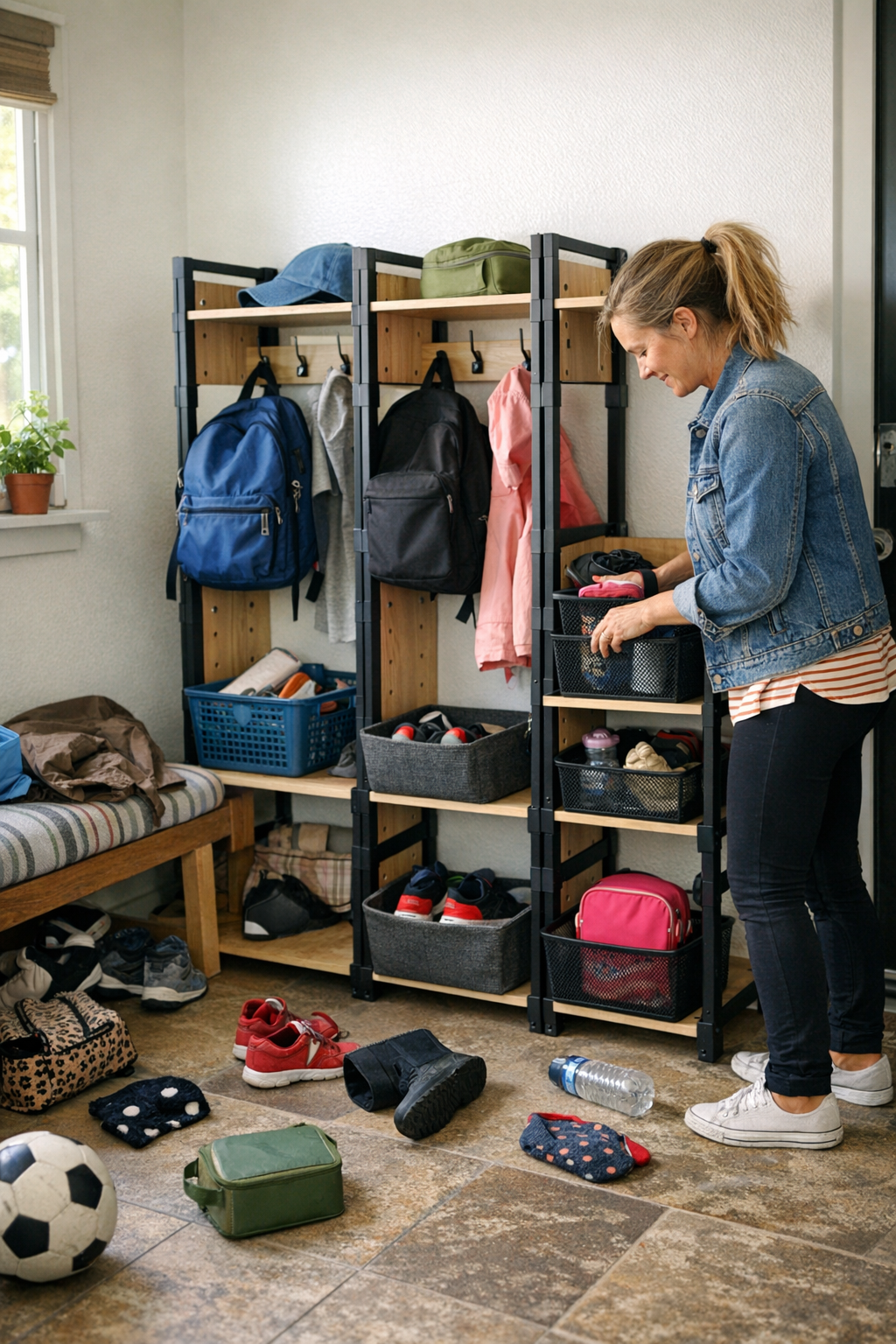
When “Organized” Still Means a Morning Scramble
It’s easy to believe your storage system is working—neat stacks, bins labeled by category, everything tucked away with military precision. But walk into that same closet or mudroom on any Wednesday morning and it’s a different story. Shoes drift from their shelf, hats mix with scarves, and the jacket you need is squeezed behind three other coats. Instead of simple grab-and-go, you’re sliding bins, unstacking baskets, and backtracking just to find what you use every day.
That visual order? It fades fast when routines get real. You’re not just fighting mess, but the slow breakdown where every step—digging, reshuffling, searching—turns “organized” into another layer of daily hassle. The system looks good; it just doesn’t keep up.
Where “A Place for Everything” Gets in Your Way
Picture the entry closet after four days of normal use. Shoes on the bottom shelf, bags on top, coats lined up—until real-life rush sets in. Kids dart through, dropping a single boot under the coats or tossing today’s gym bag onto yesterday’s hats. You reach for one lunchbox and unsettle a whole pile. By Friday, every shelf is a mix: an umbrella wedged between sneakers, hats crushed under backpacks, and a floor in open rebellion.
This is how friction builds up: bins that start out single-purpose slowly swallow castoffs; folded stacks lean and collapse as you paw through for a missing glove; shelves fill because nothing ever quite gets returned to its precise spot. The system expects you to remember the plan—while your routine just wants things fast and within reach.
From Category Chaos to Task-Based Flow
Task-based storage flips the logic: instead of “what category does this belong to?” it asks “what do I need for this routine?” No more trekking from shoe zone to bag shelf to hook; now, each person or daily job gets a mini-station—bin, cubby, hooks—all in one spot, all at the right height.
The difference is immediate. Kids stop hunting and start grabbing. You stop doubling back for the thing you forgot. The entryway becomes a hallway, not an obstacle course.
The Mudroom, Unscripted: What Happens During Rush Hour
Think of the critical minutes before school or work. Shoes go flying, someone’s missing a glove, the lunch bag is out of sight. In a category-based setup, everyone’s scrambling—shuffling stacks, sidestepping piles, juggling two bins just to get one thing. The floor’s a catch-all, parents circle back to stuff things into their proper home—until next time.
Switch to task-based, and each child (or adult) has a single station: backpack, jacket, shoes, water bottle—all together, all easy to put away. The reset at the end of the day shrinks to minutes. Gear is contained, the floor stays clear, and nothing disappears mid-routine. It’s not magic, it’s a system that works the same way you do.
How Storage Actually Improves—And Where It Won’t
The biggest difference isn’t just less clutter—it’s less movement. No more ping-ponging between corners, no digging behind towers of other people’s stuff. Essentials are collected by routine and returned in one stop. Resetting the space is faster, even with kids. The usual spread—shoes out of place, hats on the floor—becomes occasional interruption, not a chronic condition.
Daily wins you’ll notice:
- Shelves and bins stop turning into random catch-alls—there’s less item migration, so clutter slows down.
- Folded stacks and cubbies keep their shape because you’re not reaching underneath or sorting through unrelated things.
- Vertical space gets used with intent—hooks at the right height, low bins for grab-and-stash, high shelves reserved for what you rarely touch.
- Cleanup isn’t a project; it’s a quick pass, especially after heavy use midweek.
It’s not flawless. Task-based zones can look uneven, and the boundaries are never perfect. But an imperfect match to your real habits beats a perfect layout that’s impossible to keep up with.
When Category Systems Still Make Sense—and Where They Unravel
Some gear just isn’t daily—think party shoes or holiday scarves. Those belong in clear, out-of-the-way category groups. The trouble starts when that logic creeps into your everyday lanes. One big glove bin in mouth-of-the-mudroom territory? Suddenly, you’re rifling through Lost & Found at 8 AM. When routines run together and categories merge, it just makes the reset harder and the floor messier.
Set the system by use, not just by type. Remove bottlenecks. High-urgency, high-frequency items need their own “fast track” stations.
Quick Upgrades for Flexible Storage
For any space that gets constant traffic, draw hard lines for daily routines: one bin per person, labeled hooks, low cubbies for shoes you actually wear. If stray items keep piling up, the solution isn’t always more sorting—it’s more defined, bite-sized zones. Make it just as easy to put things back as it is to dump them.
One easy improvement: If you notice one shelf turns chaotic every few days, break it into smaller task-specific baskets. Even two is better than one. Sort by how you move through mornings, not just by what you own.
Storage That Withstands Real Life
The win isn’t a picture-perfect reset. It’s what happens after five days of normal mess—when you can still find your gear, the routine flows, and cleanup doesn’t fill an afternoon. Does your system clear the path after a long week, or just send you on another hunt? The better your storage mirrors how you actually live, the longer it lasts (and the saner your mornings feel).
The test is motion, not stillness. If your setup keeps pace—handling rushes, drops, and late returns—order stays visible, and you spend a lot less time fighting your own closet.
For more practical storage ideas that fit real routines, visit ClosetWorks.