
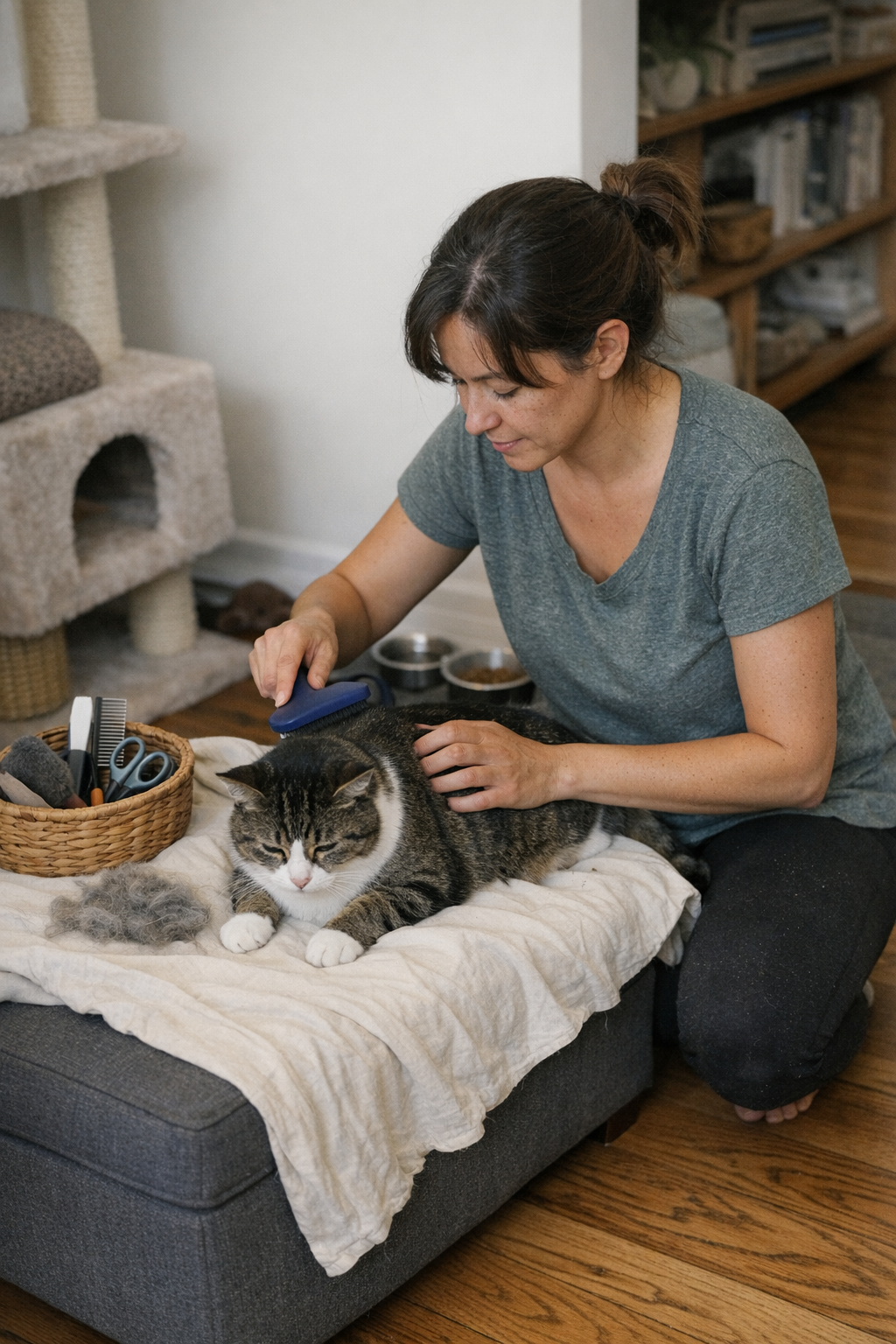
Grooming an indoor cat isn’t just a one-off chore—it’s the start of a cycle that can quietly push your patience and disrupt the flow of your home. The first brush-throughs seem harmless enough: a towel thrown down, tools lined up, and a cat who doesn’t mind the extra attention. But by the third week, the routine reveals all the cracks. Kneeling in uncomfortable corners, fur slipping past flimsy towel edges, brushes migrating from feeding area to couch—your living space slowly gives way to scattered bits of the last session. Suddenly, that easy grooming setup starts interfering with quick feeding resets, clean water refills, and every other shared routine that matters in a small home. It’s not just a stray hair here or a misplaced comb there—the real cost shows up as extra work and a cat that keeps dodging the spot you’ve picked out.
Grooming as a Repeated Home Routine—Not a One-Off Tidy-Up
A true indoor-cat setup means grooming never ends with one session. Finish a brush-out, and flecks of undercoat drift to the edge of the rug; miss a spot, and tufts appear days later in the very rest corner your cat claims next. Tools meant to be “put away” can easily end up blocking a water bowl or cluttering up the entryway to your feeding zone. Instead of a few tidy minutes, small disruptions creep into places you never intended—where food gets delivered, where toys usually pile up, or where you just want to sit without a new layer of fur.
The idea that one cleanup keeps things ordered is a trap. Even if the towel folds neatly and the brush slides back into a basket, the reality is this: indoor-cat grooming setups only work if they’re built for constant, repetitive use. Otherwise, every session multiplies friction—in more cleaning, slower routines, and a home that feels just a little less your own.
When Setup Friction Builds: Real-Life Cat and Human Signals
It sneaks up. You reach for a grooming brush, only to shove aside a box of wipes that has drifted from last time. One careless toss and both hit the kitchen floor. Or you finish brushing, confident you’ve contained the mess, only to find a film of fur bordering the play mat or clinging to the napping blanket, needing another round of cleanup that delays a simple feeding reset. The “quick cleanup” never stays quick—fur rides out to litter-adjacent corners, under seating, and even across the shared walkway.
The strain isn’t dramatic, but it doesn’t let up. You start scouting for spots that won’t punish your knees, or you simply avoid grooming unless absolutely necessary. Cats, always tuned to your patterns, circle wide around your turf or only approach once everything has been packed away. That hesitance adds minutes to every session—not because grooming got harder, but because the setup failed under actual repeated use.
Uncontained Mess: From One Spot to the Whole Room
The difference between what seems “tidy enough” and what’s actually easy to live with becomes loud after a few cycles. Maybe you start on a towel in the living room center. Not long after, stray fur finds gaps at the towel’s edge, then clings to table legs, chair rails, or makes a home under the adjacent couch. Tools slip into odd spots—one brush under the water stand, a comb under the litter cabinet, nail clippers that somehow end up on the windowsill. The true cost? Every tool put away is a little further from next use, and the next reset feels longer—rest zones, food mats, and water bowls all picking up fuzz you never meant to share.
That meant-to-be-quick grooming gradually crowds out regular routines. Wiping down mats takes two steps, blankets need an extra shake, and your own favorite spot starts to feel like a landing zone for everything you thought you’d cleared.
How Grooming Setup Undercuts (or Supports) Daily Flow
It’s easy to accept a little extra fur or the annoyance of reorganizing after a grooming session, until you see how those weak points ripple into the rest of your routine:
- Refill friction: The feeding mat or water bowl sits clean—until fur and loose wipes, left wandering post-grooming, turn a fast refill into another cleanup job.
- Slow reset zones: Wiping down what should be an easy-clean mat now means fighting embedded fur after every session. Cat blankets show new layers of hair, never fully clear even with extra effort.
- Tools always off target: You need a specific brush; it’s buried behind a tangle of old grooming mitts, extension cords, or unopened mail in the all-purpose basket you hoped would keep things neat.
Individually, each friction point seems small. But the buildup shapes every attempt to keep up. A spot that’s “clean” on the surface may be slow to reset—or worse, make your cat less willing to return. Every shortcut in the setup quickly makes something else in your routine harder or less predictable.
Spotting (and Breaking) the Bad Setup Cycle
The real break point arrives a few weeks in. The room looks almost like before, but routines feel heavier. Why? Because:
- Uncomfortable bends and stretches linger after every brush-through
- Resilient flecks of fur migrate to feeding stations, resting corners, and busy walkways
- Grooming tools scatter—never where you left them, rarely within reach
- The cat, once curious, now circles the periphery or flat-out ignores calls to the “official” grooming area
If you’ve swept fur from beneath the couch minutes before guests arrive or gathered up a pile of mixed grooming and unrelated household items for the third time in one week, setup friction is dictating your pace—and attitude—toward your own space.
When “Neat” Stops Working: Visual Order Versus Real Containment
It’s straightforward to create a scene that looks organized—a folded towel, a lined-up tool bucket, a quick pass with the lint roller. But if the next cycle feels slower or you end up pushing fur and misplaced tools from place to place, the illusion fades. By week two or three, towel edges can’t contain drifting hair; brushes slide off “designated” spots; and the cat leaves the old grooming zone, choosing somewhere you didn’t prep, leaving you to chase down fur across half the living room. Resetting takes longer and even a room that looks under control keeps adding steps to daily life.
What Actually Changes the Routine: Firm, Bounded Grooming Zones
What makes the difference isn’t a better-looking grooming area—it’s a real structure that preempts repeat mess and failed resets before they take over. Leaving grooming to “wherever’s open” means the problem follows you. But shifting from a loose towel to a bounded, physical grooming zone changes things right away. Replace wandering layers with:
- A firm, wipeable bench or ottoman that doubles as seating (and stays stable)
- A washable pad tightly anchored at the edge, easily shaken out outdoors and re-laid in minutes
- A corner blocked off to define the zone, keeping cat and mess from leaking into shared walkways or rest corners
The visual doesn’t have to be perfect—what matters is how much lighter cleanup and resets become. No more fur drifting into food prep, no tools lost under the couch, and cleanup that ends where it started. Cats begin to recognize the new boundary, choosing to linger or settle rather than immediately hunt for an escape route. The cycle breaks—not because the area looks showier, but because the entire home routine starts to run faster, with less resistance in everyday movement.
Human and Cat Comfort: Less Movement, More Trust
A grooming setup that doesn’t demand you constantly shift positions, clear access paths, or kneel in drafty corners isn’t just a “nice-to-have”—it minimizes the interruptions that wear you down. With fewer abrupt moves, your cat watches more, resists less, and might even settle by habit. The risk of blocked doorways, cold floors, or off-limits rest mats disappears. Both of you adapt: less chasing of mess, more willingness from the cat, and less friction bleeding into the rest of your daily rhythm.
Grooming and the Rest of the House: Why Containment Matters
It’s easy to treat grooming as a self-contained task, but in reality, every loose edge lets the mess spread and slows down otherwise routine resets. Fur finds its way to bowls, blankets, walkways, and play mats—right when you need the area clear to prep meals or relax. The switch from a drifting setup to a clear, contained grooming zone brings sharper differences:
- Containment is visible: Less fur shows up in feeding areas or shared spaces because everything is edged in, not loosely defined.
- Tools return automatically: Each time, brushes and combs land in the same reachable spot—no forgotten cache in a different corner.
- Routine, not randomness: The cat learns where grooming happens and where it doesn’t—help