
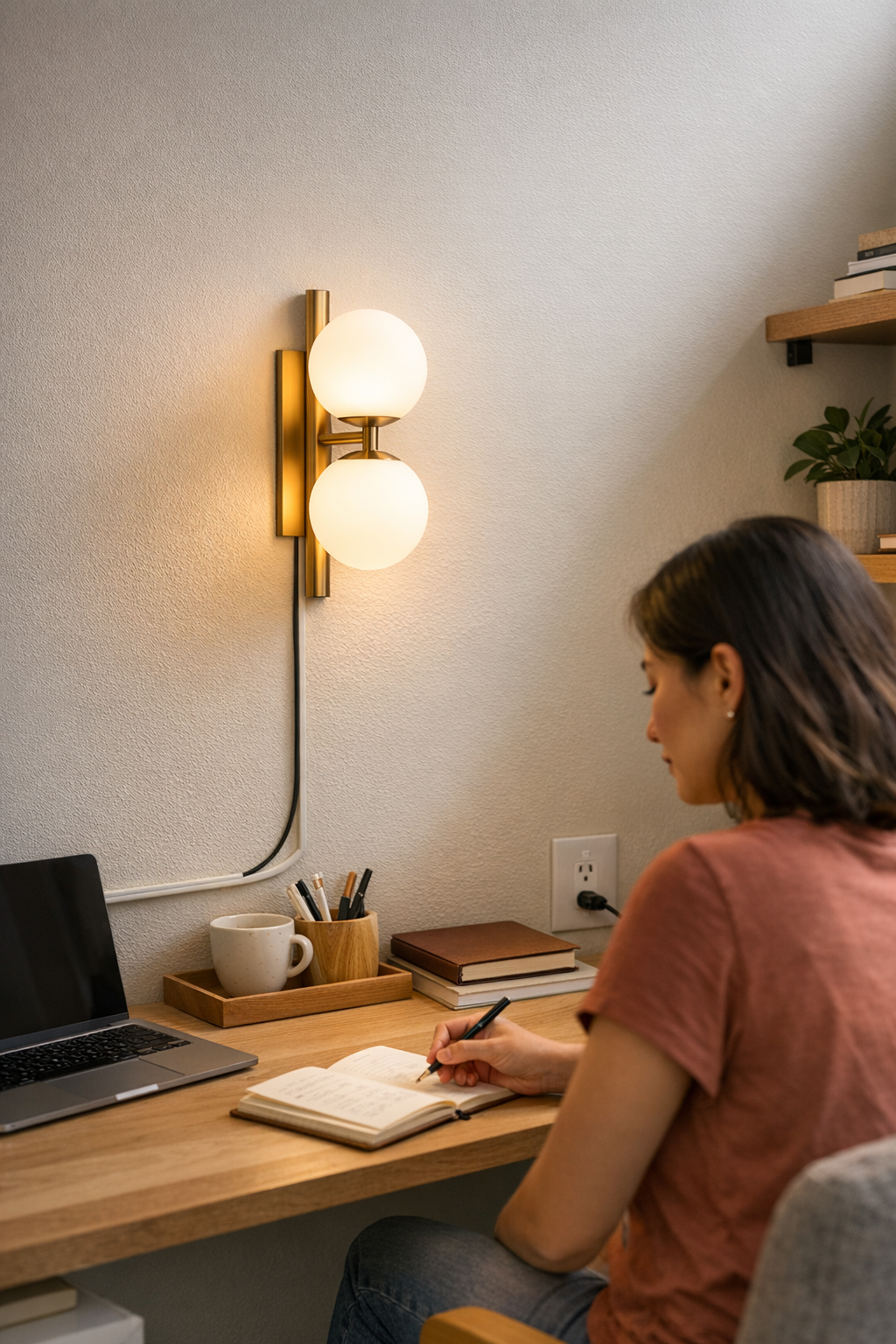
Plug-in lighting promises instant freedom—no drilling, no landlord approval, cords out the box and into the wall. But watch what happens in your first week actually using it: cable slack creeps across floorboards, a lamp that looked precise on move-in day keeps drifting, and desk setups that seemed “clean” quickly collect tangled lines and off-angle glare. Plug-in is fast, but fast frays—routine use exposes every shortcut. What looked tidy on Monday becomes a snagged cable, a half-lit work zone, and a scramble for outlets by Friday. If daily friction keeps pulling the room apart, it’s not really flexible, just fragile.
How a Plug-In Setup Drifts from Neat to Nuisance
The first time you anchor a desk lamp or sconce with nothing but its cord, the setup feels resolved. Place it. Tuck the cable. Plug in—done. But within days, as you slide your chair, tap for the outlet behind the desk, or swap a charger, the system breaks down. The lamp shifts off-center with casual nudges. Cables slip free, rerouting themselves into sightlines or walk zones. A clamp support sags just enough to angle your light into glare instead of the page. Minor annoyances, but constant—and they multiply fast under real daily pressure.
- You reach for the lamp and tug a cord hidden under paperwork, or catch it beneath a rolling chair.
- Focused task lighting migrates—what was a crisp beam on day one now hits your screen, making you dodge reflection just to see the display.
- The “finished” setup turns into a recurring cleanup: realigning, untangling, or re-securing cords with nearly every session at the desk.
Common Trouble Spots: Lessons from Real Shared Spaces
Plug-in lights seem made for flexible workstations—student bedrooms, rented offices, co-working corners. That’s where their weak points show up the fastest. Picture a shared desk: single plug-in lamp, two users, a web of laptop and phone chargers. Everything lines up the first morning. By week’s end:
- Slack cord loops cross into the walk path, tripped over or wheeled over by accident.
- Every lamp adjustment leaves the beam slightly wrong, the angle less useful, light spilling away from actual work zones.
- Frequent movement not only exposes cords, but sometimes unplugs the lamp entirely—just brushing past the outlet is enough to lose light mid-task.
The core problem isn’t even appearance; it’s interruption. Each adjustment means lost time untangling, resetting, or negotiating clutter. Lighting that’s meant to follow you instead falls apart when exposed to the push and pull of lived-in space—flexibility turns into perpetual distraction.
Pain Points That Don’t Show Up on Move-In Day
Plug-in under-cabinet bars or LED strips tempt with their minimal look—cord high and nearly invisible. But in routine kitchen use:
- Cables slip toward visible prep space, making the counter busier and messier.
- The lighting’s useful reach shrinks—half of what’s meant for the chopping area now highlights blender cords or unused shelf edge.
- Every cleaning session, cables shift out of hiding, snaking across the backsplash, spoiling any hope of “out of sight, out of mind.”
Small Support Choices, Big Ongoing Difference
The breakthrough rarely comes from upgrading the lamp alone. The fix that matters is how you anchor, route, and discipline those cables and mounts. In one rental desk, adhesive cable troughs placed right along the desk edge locked down what moved most. Maybe a ten-minute tweak—cut, press, snap cable in. Suddenly:
- Chairs slide as needed; nothing gets yanked loose or dragged into the path.
- Cords stay put, flat against the desk, even when extra chargers join the mess.
- The lamp finally holds its angle, the beam covering the keyboard each time instead of the wall or your lap.
The result is practical—not just visual clarity, but reliable, repeatable action. No emergency fixes mid-meeting, no “where did that cord go?” moments at the end of a long day. Lighting supports your routine, not the other way around.
Keeping Cords Under Control: Key Principles that Actually Work
- Use the shortest cord route possible. Any slack is an invitation to drift or tangle. Keep runs direct and concise, from fixture to outlet.
- Favor fixed, predictable paths. Run cords tight to furniture or along walls—never across walking space. Cord channels, adhesive guides, or shelf lips create natural lines that resist chaos.
- Stabilize every movable piece. If a lamp or bar light gets touched more than once a week, give it a physical anchor—clip, bracket, or trough—to keep both cable and light direction where you actually need them.
- Insist on clean removability. All anchoring should pull up cleanly—think adhesive channels, soft clips, removable guides—sparing you residue when it’s time to change rooms or routines.
- Spot routine weak points early. Under-shelf lights and edge-run cords fail fastest where hands clean, reach, or rearrange. These are first-priority targets for targeted cable control—otherwise friction wins fast.
Appearance vs. Actual Daily Usability: What Holds Up?
Anyone can stage a picture-perfect plug-in install—cords hidden for hour one, light caught just right for a photo. But real daily use exposes which setups can actually survive shifting chairs, repeated movement, and device turnover. A “minimal” support isn’t about looks. It’s about a bracket, trough, or clip that takes repeated use and still keeps lighting and cables exactly where the routine demands—never drifting, never doubling maintenance. The setup that holds for weeks, not hours, is the one that was actually structured for friction, not just first impressions.
Two Small Tips That Make Setup Stick Longer
- Anchor both ends of every cable. Especially where cleaning, moving, or foot traffic is common—fix the cord both near the fixture and right before the plug. This chokes off slow creep and keeps everything working, even after a month of use.
- Schedule small check-ins. Every few weeks, set aside two minutes to scan your setup. Spot new slack, support drift, or visible cables before they turn into a mid-meeting emergency or a daily frustration spiral.
The Long-Term Value of Stable Support
A plug-in light’s real flexibility is always limited by its support structure. Overlook the friction and your “hack” devolves into clutter and distraction that adds up every day. One well-placed adhesive trough, anchor clip, or bracket makes the difference—no-tools, no-permanent marks, but a lasting fix for cable creep and drifting light. The move is small; the relief is real. Flexible stays flexible only when the support acts like part of the routine, not an afterthought.
Visit LightSupport for practical lighting solutions and indoor setup support.