
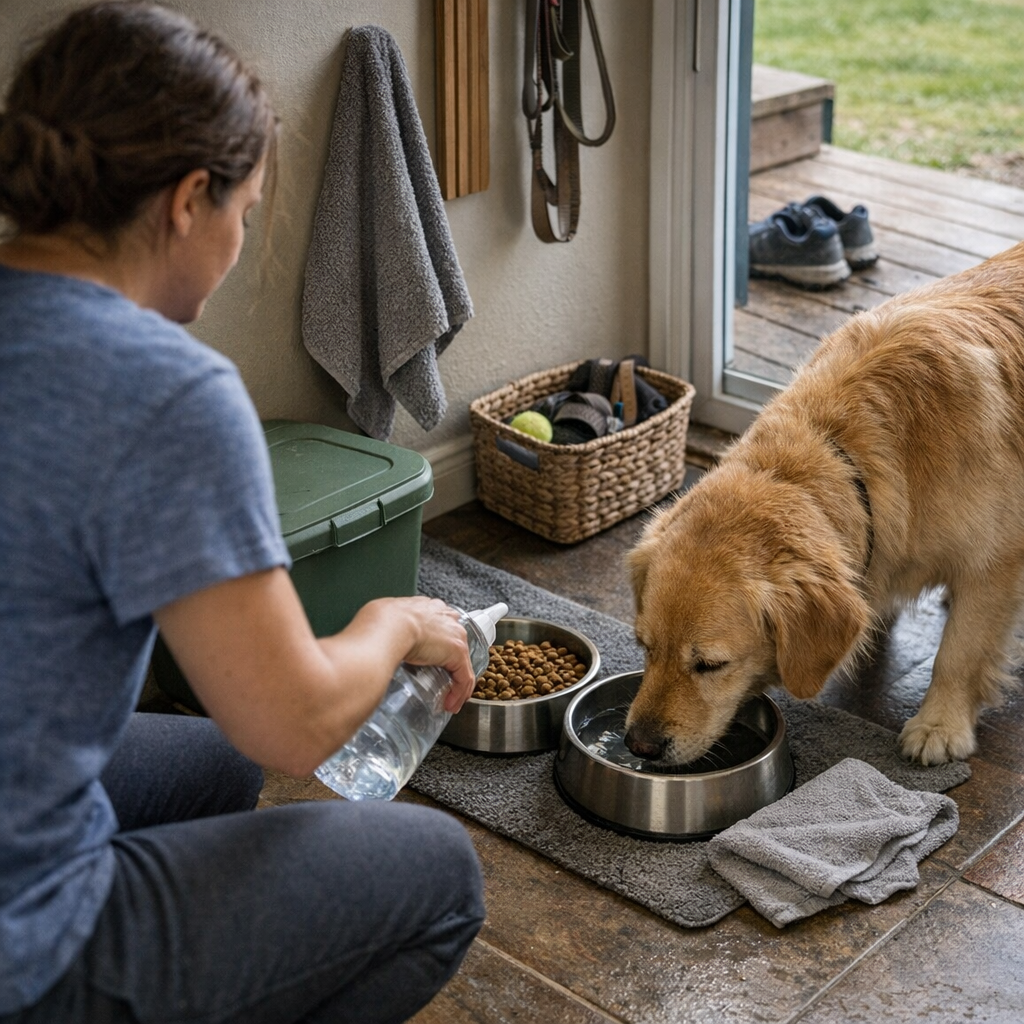
Resetting your pet’s food and water setup each morning looks simple—just a quick switch, a spot wipe, and a refill for the bowls. But in real daily use, what should be a two-minute reset often turns into a stop-and-go routine: one missing scoop, a towel gone walkabout, or a refill bottle out of reach, and now you’ve started your day with a half-finished chore, a confused pet hovering, and your own coffee getting cold. The real issue isn’t big messes—it’s tiny supply gaps and small delays that pile up when the basics aren’t where you need them, right when you need them. CalmPetSupply is made for exactly this kind of repeated routine friction—the difference between a setup that’s ready for use and one that stays stuck in “almost.”
The Slippery Slope of Small Misses
Ever walk up confident you’re set to feed and water your pet—only to halt, mid-task, when you realize the towel’s in the laundry or the scoop has disappeared again? It doesn’t seem like much. But the second you pause to hunt down a missing item, that quick reset unravels. Multiply a few “where’s the refill bottle?” moments across a week, and now breakfast involves more steps, extra trips, and a pet idling by the bowl. Your morning momentum takes the hit.
Picture this: feeding done, you go to refill water—except the refill bottle is behind yesterday’s mail, and the counter now has crumbs because the towel isn’t there to catch them. Every extra detour, even a short one, slowly eats away at your routine until you start rushing through steps or skipping basic wipes just to move on. These aren’t single-day headaches. The drag shows up over weeks as small inefficiencies that steal time and energy from the rest of your morning.
When “Tidy” Doesn’t Mean “Easy”
Setups can look neat: bowl edges aligned, towels on hooks, everything stowed out of sight. But organizing to look tidy often means you end up putting tools out of easy reach, tucked behind bins or inside pantry drawers. If you’re shifting another kitchen item every time you need to grab a towel or food scoop, that surface-level order just hides new frictions underneath. Instead of helping, appearances now create extra steps you feel every single reset.
It’s not just feeding. Maybe your dog returns from a damp walk, paws needing a quick wipe. The towel? Out of the way, blocked by bags. With a restless pet at the door, you dig around for a cloth. That “quick” cleanup drags—adding five minutes, tracking water through the hall, interrupting your routine yet again. Your floor stays clean, but the effort behind the scenes keeps climbing.
When One Weak Point Keeps Coming Back
Plug one gap and another crops up. You finally keep the refill bottle by the mat—but later, it gets moved behind kitchen clutter. You hang a towel within arm’s reach, only to find it borrowed and never returned. The setup always looks fixable, yet keeps breaking at random steps. You only notice the cracks when you’re trying to finish up quickly—late at night, at lunchtime, or right before work.
Imagine the late-evening water check: if the cleaning towel is present, it’s done in seconds; if not, you stall or consider leaving the mess for morning. Visually, the feeding station reassures, but in action, you end up searching, stepping around clutter, or skipping a needed rinse—all because the “easy” part failed on its third repeat.
The Flow of Daily Routines
These disruptions don’t just haunt feeding time. Grooming, litter pickup, toy cleanups, and after-walk resets—all rely on tools that rarely stay perfectly in place. One missing brush, a linen bin stuck behind storage, or a scoop left in the wrong spot triggers fresh interruptions. Suddenly, the reset isn’t so “quick.” These layered delays bleed into the rest of your day, pulling your focus and slowing even unrelated tasks.
A bowl may look fine from the doorway, but the real indicator is a pet loitering nearby, nudging an empty dish, or sniffing around for a missing treat. Reliable routine depends on having all essentials—within reach, always returned, always visible. The moment supplies drift further from the work zone, the mental load and step count climb. Running a smooth routine means the station resets itself: one container, one towel, one scoop—all anchored at the point of use, not migrating back and forth from storage.
What Actually Helps—Simple Tweaks
You don’t need a full overhaul. Improving daily care often comes from nudging each tool closer to where it gets used—bottle beside the mat, towel on a side hook, scoop parked in the container (never wandering to another room). Use, reset, return—same place, every day. Slowed down by the same snag twice? Don’t tweak the whole system. Isolate the step that blocked you and move just that tool into the work zone.
Over a few weeks, you’ll spot when your setup shifts from “looks fine” to “works every time”—the proof living in routines that stop breaking down under pressure. The difference is no guesswork, no backtracking, no searching for basics when you’re already in a rush. The feeding zone finally keeps up, not just with your standards, but with real repeated use.
Find practical feeding setup solutions right where routine friction starts at CalmPetSupply.