
The promise of order hits hard when you first set up those tidy rows of bins and baskets. Everything has its spot, the shelves look photo-ready, and for a moment, your closet feels conquered. But fast forward a few days—morning rush, laundry still warm from the dryer, your bag sliding off the shelf as you reach for a clean shirt. That seamless system? It’s suddenly in your way. The bins that looked perfect are now stubborn, slow, and somehow encourage more chaos with every use.
When “Organized” Turns Against You
Early on, new storage gives the illusion of control. Neatly stacked containers and folded piles satisfy in that fresh-start way. But soon enough, daily patterns wear grooves into the setup. Pull out one shirt and the whole row sags; slide a bin forward and socks escape from behind. If grabbing your go-to sweater means emptying half a shelf, the appeal of order fades quickly. Little by little, those bins bought for “just socks” become home to last season’s scarves and a creased grocery bag. By week’s end, you’re stacking things wherever they’ll fit and shoving the closet door shut.
Micro Headaches That Add Up
It’s rarely just one dramatic mess—it’s a steady parade of minor irritations. Shelves too deep swallow loose items until they’re out of sight. Stacks topple after you lift one thing from the middle. Deep bins become black holes—whatever goes in disappears under newer, less-used stuff. Before long, the edge of the shelf fills with “for now” clutter: a belt, a paperback, that one glove. What looked organized now requires work just to keep from sliding out of sync.
Looks Organized—But Does It Work?
Clutter doesn’t always look messy from a distance. It sneaks in when the system requires constant fiddling. You might spend an afternoon getting your closet in line: bins labeled, categories sharpened, everything stacked. But by the third rushed morning, clean laundry lands wherever there’s space. Need running shorts and a pair of matching socks? You’re foraging blind, upending baskets that were labeled only a week ago—until, defeated by tangled belts, you let things pile up “just to deal with later.”
Reset Fatigue—When Maintenance Gets Harder
The most honest test comes after a full week of everyday life. If you’re leaving items on a chair instead of putting them back—because putting them back is genuinely annoying—it’s not a motivation issue. Good storage lets you reset with minimal effort. If you’re forced to restack, refold, or reshuffle every day just to keep up, your closet is working against you, not with you.
The Real Impact of a Smarter System
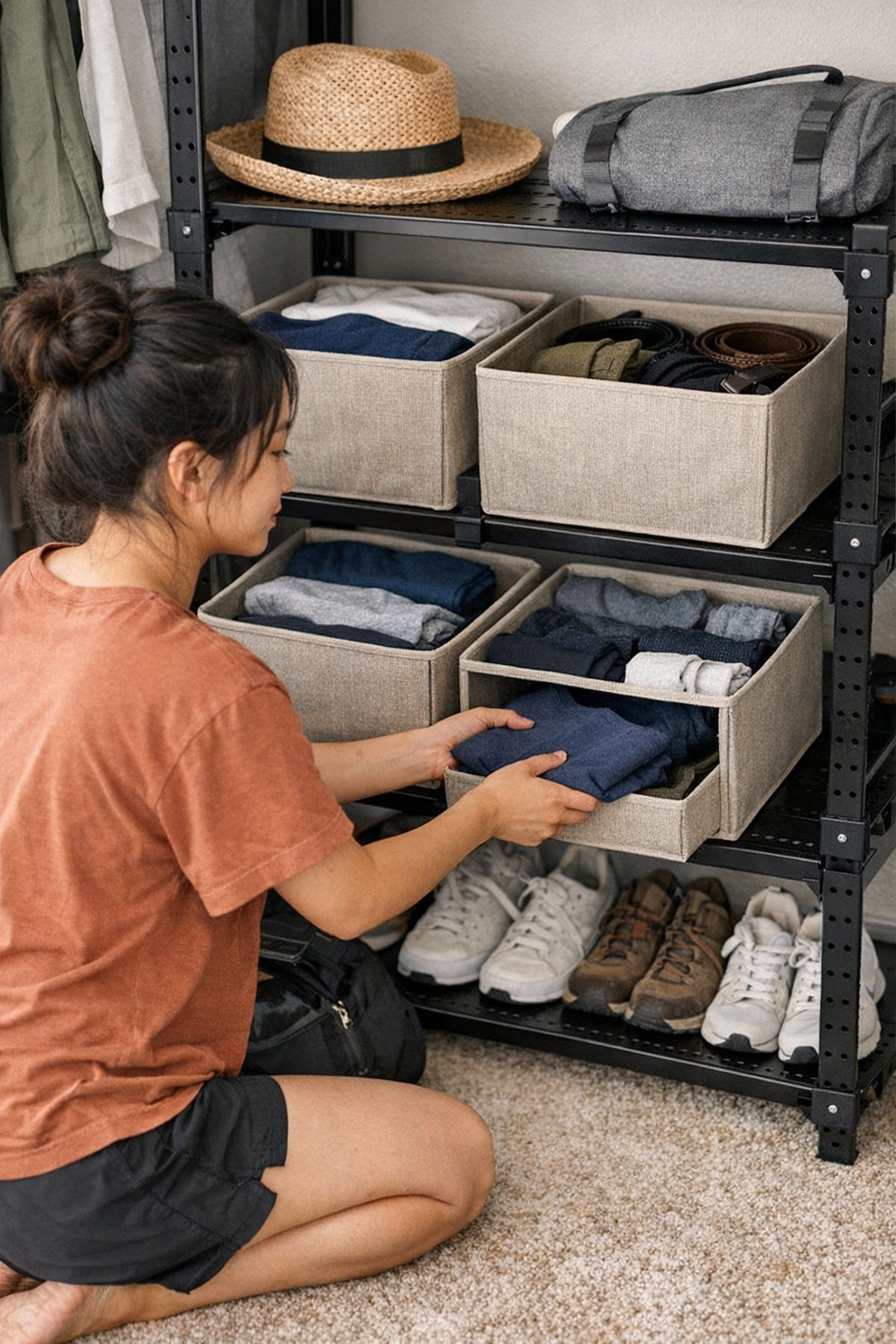
I swapped a few oversized baskets for several smaller, open-front bins and the effect surprised me. Suddenly, grabbing a shirt didn’t mean moving five things out of the way. Every daily-use item found its own slot. Instead of digging beneath sweatpants to reach for gym socks, I could just glance and grab. The usual creep of clutter slowed, and “putting away” became so simple I barely thought about it—no spillover, less refolding, and the shelf held its shape all week.
In the Trenches: Mornings Made Faster
Picture it: You need an undershirt, a tie, and the second black sock—fast, before the clock runs out. With a setup that’s just bins stacked four high, you’re busy unstacking, peeking, and sacrificing neatness for speed. With clear, open bins and labels that actually map to daily life, you reach once for each thing. No accidental avalanche, nothing stuck behind something else—and when things go back, no puzzle to solve. What used to slow you down becomes nearly automatic.
Spotting the Trouble in Your Setup
It’s easy to blame yourself, but your storage is often the culprit. Watch for these:
- Reaching behind bulky bins to fish out small daily items
- Baskets and shelves growing cluttered after each week—even post-cleanup
- “Category drift”—when socks wind up with charging cables or shirts wander into shoe territory
- Baskets that tip or stacks that collapse if you touch the wrong thing
- Floating piles gathering on the floor or next to doors
If these annoyances keep recurring, your setup is quietly adding hassle to your routine.
Why True Fit Matters Over Time
The best storage gets easier as routines settle. It doesn’t just hide stuff—it makes returning things almost mindless. Systems built on clear categories, easy-open bins, and shelves sized to your actual use reduce the need for discipline or daily clean-up rituals. The more the storage fits what you do, the less thought it takes to keep the space working—and the less likely you’ll find stray clutter taking over again.
Simple Tweaks That Change Everything
A total overhaul isn’t required. Small, strategic swaps add up: trade one big bin for a pair of smaller, purpose-driven ones. Add real labels—actual use, not what you wish you had. Use shelf dividers to prevent collapsing stacks, but not so many that you build little prisons for your stuff. The sweet spot is a storage rhythm—flexible enough for real life, sturdy enough to survive messy days.
Adapting With Your Routine
Seasons shift, new gear arrives, your family’s needs evolve. When that happens, does your closet morph with you—or does it turn into a jumble zone? Experiment, shift categories, and see where things pile up or slot themselves back. The right system isn’t just about looking organized; it’s about making order frictionless, no matter how chaotic the week gets.
Good Storage Shows Up on Hard Days
The real proof isn’t the day you finish setting up—it’s the back-to-back mornings when you don’t have time to think. If, after a whirlwind week, your shelves are still holding firm and nothing has tumbled overboard, you’ve won. The gold standard? Picking up feels effortless, and the urge to “just close the door” never comes back. Your closet doesn’t demand— it quietly works so you can focus on anything else.