
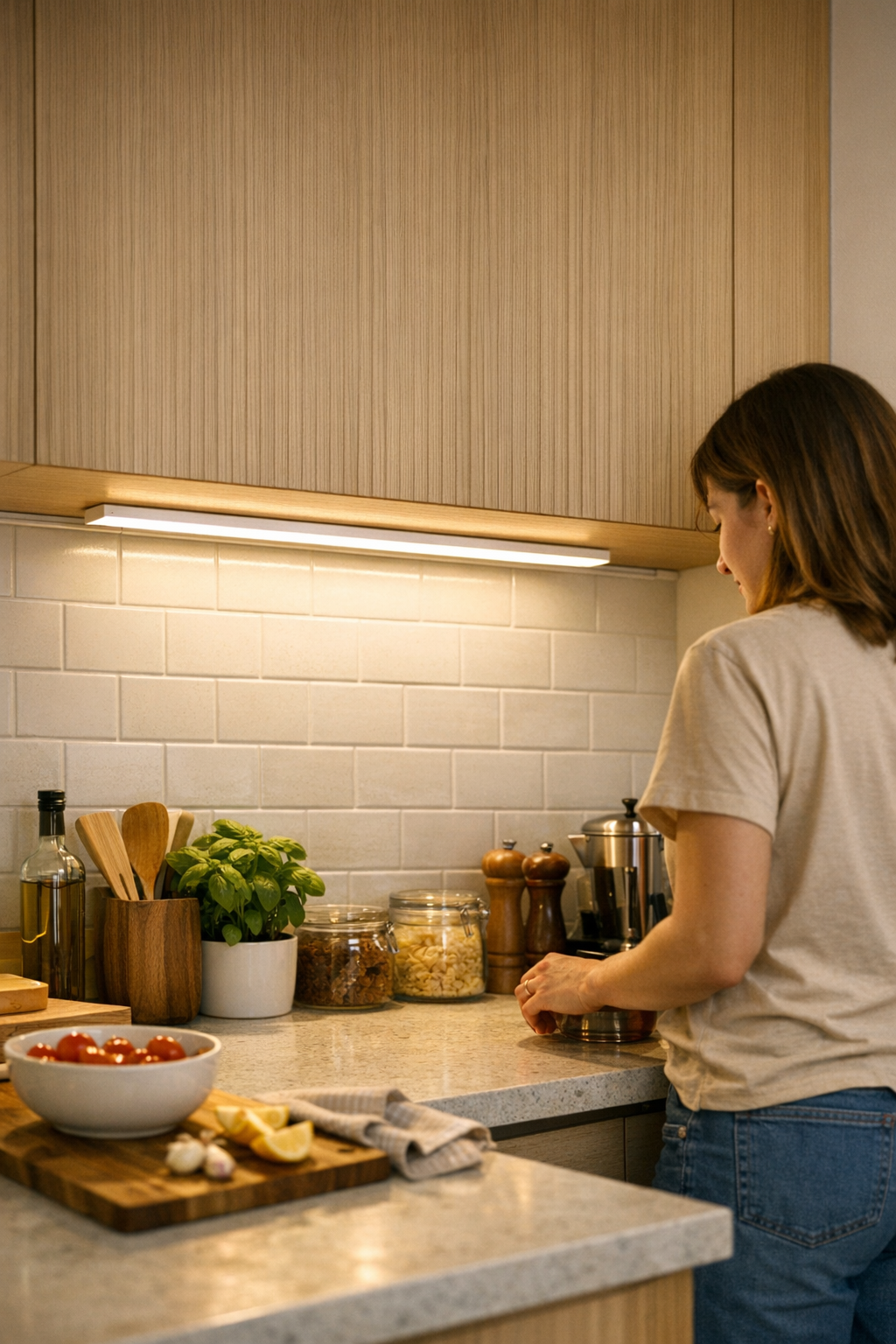
A room that looks “finished” in photos rarely survives a week of real use without one flaw showing up first: the exposed lighting cable. Maybe it’s a black cord dangling from a wall light, a white line tracing the side of a floating shelf, or a thin wire sagging under a kitchen counter—whatever the type, the story is the same. The moment daily movement begins, that cable pulls every eye and most routines off course. It gathers dust, snags under the wheel of your desk chair, or hangs just close enough that you start working around it. The difference is immediate: lighting that looked smart in setup now interrupts every reach, wipe, or rearrangement. If you catch yourself adjusting the cable more than using the light, you’re living with the most common indoor lighting breakdown there is.
When a Tidy Space Fails the Real-Use Test
Lighting setups seem perfect right after install, when shelves sit empty and no device has been charged. But the first time you slide a chair, plug in a laptop, or clean under a fixture, friction starts. A cable that was “tucked” in photos slips into daily view, getting moved, bent, or brushed aside every time the room is actually used. This isn’t just visual noise—it drags down the room’s function in dozens of small, stubborn moments. Cable management quickly shifts from afterthought to the silent breaker of order, efficiency, and comfort. Miss it, and you’ll repeat the same frustrations every day.
As soon as the cable, not the light, grabs your attention, productivity drops. In compact desks, narrow kitchen counters, or crowded workstations, cord chaos is often the first symptom of a setup failing real use. Cables won’t stay flush, catch crumbs and dust, push objects out of position, or get unplugged by a careless sleeve—each one making the setup feel less finished and more stressful. The problem never fixes itself; instead, it deepens until the cable becomes a permanent, grimy detour in your everyday path.
Surface Perfection vs. Everyday Movement
The gap between “looks resolved” and “works day-to-day” is simple:
- True Hidden Support Holds: Where raceways or cable channels run wall-tight right up to the fixture, cables vanish from experience—even after a week’s worth of spilled coffee, shifting chairs, or new chargers plugged in and out.
- Half Measures Break Down: Cables looped behind desks or loosely clipped under a shelf always creep forward. Within days, they sag, slip, and snag on anything moving past. The visual order collapses the instant the routine resumes.
Picture an under-cabinet LED: With its cable coiled along the open edge, every item—box, bowl, or cleaning hand—nudges it further out, leaving smudges in the wire’s path and tempting every spill or crumb to cluster there. You soon find yourself dodging the sagging cable, wiping twice, and never quite restoring the surface the way you expected.
Cable Frustration in Shared and Work Spaces
Lighting in work areas rarely sits untouched. Every time someone shifts a chair, reaches back for a cord, or drops a backpack on the floor, any exposed or half-secured cable becomes the next source of distraction, accident, or slow repair. A wall lamp’s cord left loose will tug at its connection, catch on bags, or cause the fixture to shift out of level. Over days, the routine slips: cleaning gets slower, small accidents repeat, and your workspace feels more fragile, not less.
Recognizing the Repeated Annoyances
- Chair back or bag loop catching on a cable end you thought was tucked away
- Dust lines tracing the path of every exposed cord under shelves and against walls
- A desktop or work zone that slips from crisp to cluttered in days, always beginning with cable drift
Anchoring: The Small Move That Makes the Difference
Solving these ongoing issues rarely means a total overhaul—or ripping out old wiring. Nearly always, the right move is sharper and subtler: secure every visible cable with purpose-built support exactly where the wear happens. Use adhesive raceways, cable tracks, or snap-in channels that run flush along backs of shelves, under edge lips, or down unobtrusive wall lines. When each length is anchored directly to the surface, object collisions and accidental snags disappear. Cleaning feels faster, shelves stay clear, and the cable stops being a daily reset point. Five uses later, you aren’t reminded of the wiring at all—it just doesn’t interfere.
The real win isn’t invisible cables—it’s cables you never touch or notice, even after a full week of use. A support part that works removes friction without calling attention to itself. If the cable channel or stay is doing its job, you won’t have to adjust or see it with every routine pass. Your light becomes as easy to live with as it looked when installed.
Questions from Real Setup Friction
Which Cable Management Works for LED and Under-Cabinet Lighting?
For linear fixtures and under-cabinet LED runs, adhesive or snap-in cable channels that fully cover and control the line are best. Choose a track deep enough so the cord doesn’t bulge below tight shelves. Always match the path to the real cable length—don’t force bends around corners or cover outlets just for tidiness. Access is as important as appearance, and the best channels disappear into daily use, not just initial setup.
Is Cable Clutter Still a Problem If the Room Looks Clean?
Yes—cable clutter is often the first sign a room is sliding back toward disorder, no matter how tidy the rest looks. Every time you swipe a countertop, shift a chair, or reach for a charger, a loose cord drags on the experience. Only cables so well managed you forget to check them actually keep a space feeling finished. Anything less becomes a distraction the first time you return to it.
What About Safety Concerns from Unmanaged Lighting Cables?
Unanchored cords aren’t just untidy: in busy or shared areas, they’re a tripping hazard, a source of stray yanks that unplug devices, and a risk for wear or even damage at hard bends or fixture joints. The more people or actions a surface sees, the more critical it is to keep lighting cables properly routed and stable. Untamed wiring doesn’t just look out of place—it makes accidents more likely, cleaning more awkward, and the whole system less durable by design.
Lighting That Actually Stays Organized Week After Week
Any lighting—no matter how clean and low-profile at first—will degrade into constant micro-adjustments if its cables aren’t anchored and protected where they’re exposed. Real comfort isn’t the tidy look at install, but the absence of cable irritation on day ten when the surface is full, the chairs are in use, and devices come and go. A setup only becomes dependable when there’s nothing left to drift, snag, or distract you from real tasks.
Lighting only looks “done” if it stays that way after a week of normal use. The small parts—raceways, tracks, clips, and cable stays—are what separate rooms that merely look settled from rooms that let you live and work in peace. Every cable kept tight and out of your path is one less daily reset, and one more quiet reason your space works smoothly.
Find practical cable management, mounting, and lighting support tools at LightSupport.