
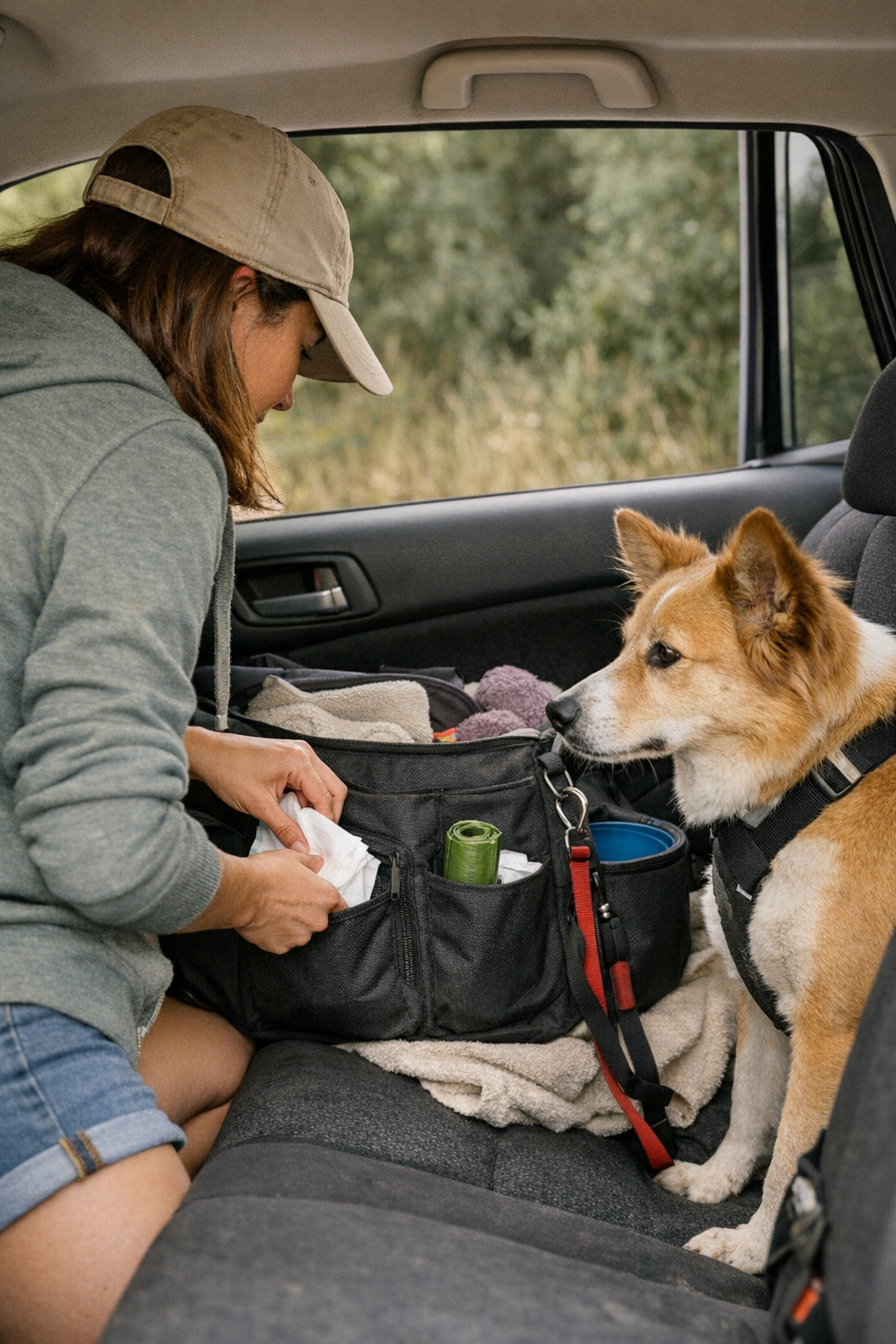
Every pet traveler knows the gap between looking ready and actually managing clean, smooth stops. Your bag appears organized at home—each pocket zipped, essentials carefully placed. But one real outing, and the friction starts: the leash slips under towels, wipes bury themselves, and by the second curbside pause you’re kneeling by an open bag, one hand steadying your dog while the other sorts a growing mess of spilled comfort toys and crumpled cleanup packs. “Prepared” fades fast; actual usability is tested stop by stop.
When Ready Isn’t Enough: The Gap Between “Prepared” and “Usable”
A bag that looks perfect on your kitchen counter rarely keeps its shape after a real trip. The very first rush—an impatient dog tugging, a sudden need for treats, or a cleanup emergency—immediately exposes any hidden flaw. That tangle of towels you packed “just in case”? They’re now wrapped around the wipes you need. The water bowl, safe and upright at home, slides beneath the leash, trapping it just as you reach. Repeated friction isn’t about the total storage, but about whether you can actually get what you need, the moment you need it—without everything else tumbling out or getting in the way.
Every small delay stacks up: each fumbled zipper, each double-check for treats, each second spent searching instead of moving. The feeling isn’t just inconvenience. It’s a shift in how you interact—your pet senses the tension, the travel flow breaks, and even the best-packed carrier can become a silent pressure point as the trip goes on.
The Stop-and-Go Test: Where Ordinary Setups Break Down
Friction multiplies at every real-world stop. Picture this: twenty minutes into your trip, your dog’s pacing sets the clock running. The car door cracks open, you grab the leash with one hand, reach for cleanup wipes with the other—and now you’re digging through a pile where bowls, plastic bags, and snacks have all tumbled together. What started out crisp and sorted now forces you to work against your own setup.
This repeated scramble isn’t rare, it’s predictable. Most bags with a single central compartment collapse into a catch-all pit within two quick transitions. Treats slide out of sight, wipes wedge under beds or toys, and the more you move, the more your “organization” unravels into overlap. Your own urgency echoes down the leash: a rushed search means sharper motions, less patience—and your dog reacts to every shift.
The Feedback Loop: When Your Rush Becomes Your Pet’s Stress
Small holdups spiral into big stress signals. You reach faster, your voice shortens. Zippers snap, items clatter, your dog’s attention narrows on each sudden move. The moment slows down—your signals speed up. Each clumsy reach feeds your pet’s restlessness, building a cycle where every stop becomes more tangled than the last. The neat routine dissolves; distraction and pressure edge in for both of you.
Item Overlap: The Invisible Drag in Every Trip
Try listing what you actually need, mid-trip, by memory: can you name which pocket has wipes, which side holds treats? Most can’t after three or four stops. Single-compartment bags invite spillover—leashes snagged on bowls, comfort items sinking below cleanup bags, your most-used gear hiding two layers deep. Instead of single-move access, you face an awkward shuffle: to grab wipes, you eject snacks; to reach treats, you toss aside towels. Each attempt makes the next one slower, and you lose track of essentials right when quick access matters most.
Short Trips, Repeated Friction: The Same Weak Point Returns
The pain point isn’t obvious at first. It appears in the repeat cycle: the second gas station pause, the third dog park detour, the fifth time you need to change pace under a time pinch. No matter how fresh your setup looked at home, one unreliable access point—be it wipes stuck at the bottom, a toy blocking the treats—keeps coming back to break your flow. The result is slow movement, missed cues, and a rising tally of small, frustrating corrections as the trip adds up.
Reshuffling on Repeat: When Small Delays Stack Up
Every reset is a hidden drain. The more you pause to untangle, rearrange, or “fix” your setup, the more energy leaks out of the trip. You pause, your pet waits—impatience rises on both sides. Five seconds here, ten seconds there—all those mini-complications convert to repeated stress signals and lost focus. By the third stop, you’re on edge; your pet feels it. Instead of a flowing routine, you’re caught in a loop of minor emergencies and constant reshuffling created by weak structure, not by chance.
These aren’t dramatic disasters—they’re the slow, repeated interruptions that turn a simple trip into a string of fixes and re-dos. Every return to the car is a small reminder: the way your bag is built matters far more than how full it is.
The Shift: Practical Seat-Side Pockets vs. Catch-All Compartments
The biggest real-world upgrade isn’t adding more stuff, it’s changing where the essentials actually live. Travel setups with true exterior, seat-facing pockets alter the entire flow: wipes in a side pouch you can reach while holding a leash, treats in a slot your hand finds without looking, a spare leash clipped—visible, not buried. Suddenly, the response time compresses. There’s no more fishing in the “main well”; you grab, use, and return in two direct moves, and each access gets easier, not harder, as the day goes on.
This altered structure isn’t just convenience—it shapes your movement. Your attention returns to the pet, not the bag. Your routine holds up through restarts. Speed and clarity return because the bag’s layout is built for immediate, repeated access, not for photo-perfect packing or once-a-day use.
A Setup That Moves With You—Not Against You
By the end of the trip, a well-designed travel kit might look less “neat,” but it hasn’t turned against you. You aren’t wrestling zippers, or making your dog wait while you fix another spillover. The setup supports the routine—every swipe of a wipe, every reach for a treat happens where your hand expects it, not where the bag designer thought it should go. With correct sectioning and predictable access, you keep nerves calm, your pet steadier, and transitions less jarring. The payoff isn’t just fewer delays—it’s genuinely less agitation collected along the way.
Real Observations: Little Fixes, Big Difference
One seat-side change can cut more stress than an overpacked kit. Place waste bags and wipes in the side pouch your hand finds first at every stop. Keep treats by the entry point you naturally reach. Clip a spare leash on the outside. Don’t coil it up again. You’ll notice: fewer last-second digs, fewer accidental signals of urgency, fewer distractions streaming down to your pet. Stress doesn’t build quietly in the background—it’s stopped at source by removing tiny access delays.
The best tweaks rarely require buying more. They’re about changing movement: less bending, less searching, less confusion at the door or curb. A practical arrangement does overtime work, quietly evaporating tension and making every transition less costly for your focus—and your pet’s patience.
Matching Setup to the Realities of Movement
A good pet-travel structure passes the repeat-use test, not just the one-time pack. The goal is fewer interruptions, not just tidier gear. A setup that keeps wipes, treats, and leashes in distinct, reliable zones—especially ones you don’t have to look for—teaches your muscle memory, not just your eyes. You spend less time managing your stuff, more time moving and reassuring your pet. Every cut in overlap or misplaced gear cuts anxiety and keeps both traveler and pet more present through the day. When your setup doesn’t slow you down, the whole trip stays workable the third, fourth, and fifth time—long after “looking prepared” has faded.