
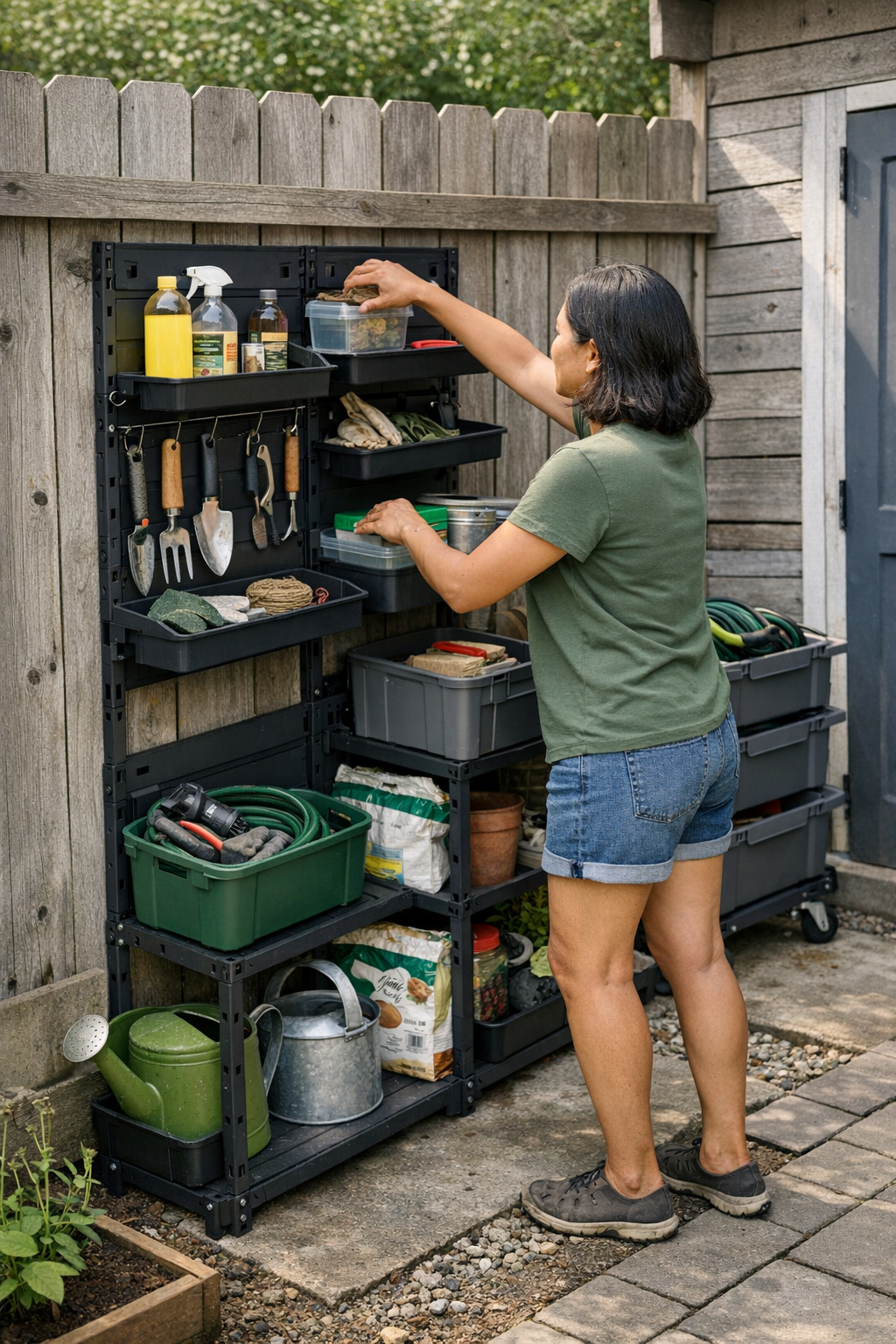
It’s not just a lack of square footage that makes small yard storage so exhausting—it’s the way perfectly good setups quietly trip you up. The side-yard cabinet, the bins lined along the fence, the deck box that promised an empty patio: they fill up, overflow, and then start to get in your way. Shoes line up along the back step where the shelf is always one move too far. A spade perches on the gate post, waiting for its “real” home. That storage bin meant to rescue your flow? It sits half-a-foot forward, quietly squeezing the walkway every time you pass. None of this looks like chaos, but it chips away at the space’s usefulness, day after day.
When Clever Storage Stops Feeling Clever
Every outdoor setup hits that turning point where a good idea turns into a small headache. The new storage chest arrives and, at first, everything tucks in. But patio chairs block the lid halfway. You need to move two things to return one. Bins that started out organized turn shapeless with the mix—seed packets, stray dog toys, one muddy glove, the random bit of wire. Floor space becomes an obstacle course. What looked tidy one weekend slips gradually: a toolbox balanced on the bin lid, the grill brush wedged behind the folded chairs, the path to the side gate now a sideways shuffle. Organization becomes friction—each “reset” feeling heavier than the mess it’s meant to prevent.
Why Traditional Storage Keeps Losing to Real Routines
The breakdown isn’t dramatic—it’s cumulative. The more you rely on big bins and closed cabinets, the more you end up digging, doubling back, or skipping the reset altogether. A bin swallows rope, then hides that trowel you reach for midweek. Overflow collects in predictable blind spots: gardening pots stack up behind the shed, balls roll under the table, watering cans cluster by the fence. Those “dead corners” soak up the overflow. So every few days, you reshuffle, reclaim an awkward patch of floor, and know it’ll fill back up before next week.
Wall Storage: The Illusion of Freeing Space
Mounting hooks and racks is supposed to clear the floor, but unless they’re placed where your routine naturally passes, they’re decoration more than solution. Gloves land on the hooks on day one, but on day three, they end up on the nearest bench. A rack above the spigot stays empty because it’s that one step too far when your hands are muddy. Wall panels fill quickly, but the path between gate and fence keeps getting tighter. Wall storage that only looks right is quickly outpaced by how you actually move.
The Daily Reset Struggle, Scene by Scene
Picture the cramped side yard after a week. Morning watering means dirt-caked boots pile outside the door—close, but never quite inside. Gloves disappear beneath last season’s planters, forcing a midweek hunt. Deep bins become black holes: last Sunday’s pruning shears lost to a tangle of forgotten gear. By Thursday, you’re sidestepping piles instead of working. That precious five minutes for a quick project is eaten up by dealing with minor blockages—paths constricted, corners filling with overflow, access narrowing room by room. The system isn’t broken, but it isn’t working for the way things actually get used.
The friction is all around you—tight walkways, mounting overflow, and a reset routine that gets heavier with every return trip. Storage setups that ignore the way you move just hide the mess until it spills back across your path.
When Setup Follows Real Flow
No storage system handles the work for you, but you feel the shift when organization starts matching your outdoor habits. Take the difference between a deep bin at the patio edge—where pruners and trowels get buried—and a few hooks and trays right on the fence by the planting zone. Suddenly, the reset is built into the motion: finish watering, hang the hose; drop gloves in a tray just outside the door. Stray items stand out instead of hiding in a pile. It’s not perfect—some dirt collects, and sometimes an item is still misplaced—but the clutter you have to handle stays visible, and the tidy-up shrinks from a major chore to a passing gesture. Over the months, those micro-adjustments reclaim time and space that would otherwise be lost to constant reshuffling.
The Power of Tiny Tweaks
Small physical changes transform how you use your space. It might be a hook near the back gate so the sprinkler gets returned after use, or mounting a narrow shelf right where muddy boots actually land. Replacing one dead corner with a vertical module forces overflow upright—overflow you see and deal with, not trip over. Suddenly, resets happen mid-routine: gloves hung one motion earlier, tools dropped where you actually finish working, not where the system says they ought to go.
Questions That Actually Unclog Outdoor Organization
Why not just add more bins?
Because another bin becomes a new hiding spot, not a fix. It turns daily-use items into missing tools, especially if there’s no assigned zone or route. More storage without smarter setup only stretches out the same frustration—longer hunts, more blocked paths, another heavy reset ahead.
How do you keep the small stuff from vanishing?
Visibility beats containment. Shallow trays and hooks, placed directly along the routes you already use (not just on available wall space), keep essentials from getting swallowed up. The next time overflow threatens, you’ll spot it and adjust before it takes over. Deep bins only hide what you’ll end up searching for anyway.
Tidy versus usable: can you actually have both?
Only when you split the setup. Keep open, visible storage for everyday tools where you already walk, and stash seasonal or rarely-used items further out of sight. This cuts down reset time and keeps core pathways uncluttered. No more scavenger hunts—just a straight return.
Turning Setup Friction Into Real Flow
Outdoors, there’s no “forever tidy.” The goal isn’t pristine surfaces, it’s a system that bounces back with minimal fuss. If you’re dragging bins aside to reach the hose, or wading through corner clutter to find a tool, your storage is asking to be realigned. Usually, it’s as simple as moving a unit, planting a hook by the exit, or swapping a buried bin for a visible tray. The biggest gains come from tweaking the trouble spots: the fence bend where stuff piles up, that garage threshold that always bottlenecks, the shadowy patio edge that fills with overflow. Once your setup works in step with your routine, resets happen as a side effect of use—no big cleanup block required.
In the end, the real difference isn’t how much storage you have outside—it’s whether the setup makes your space easier to move through every day. The best outdoor organization isn’t invisible; it earns its keep each time a task resets itself before the clutter gets a chance to build again.