
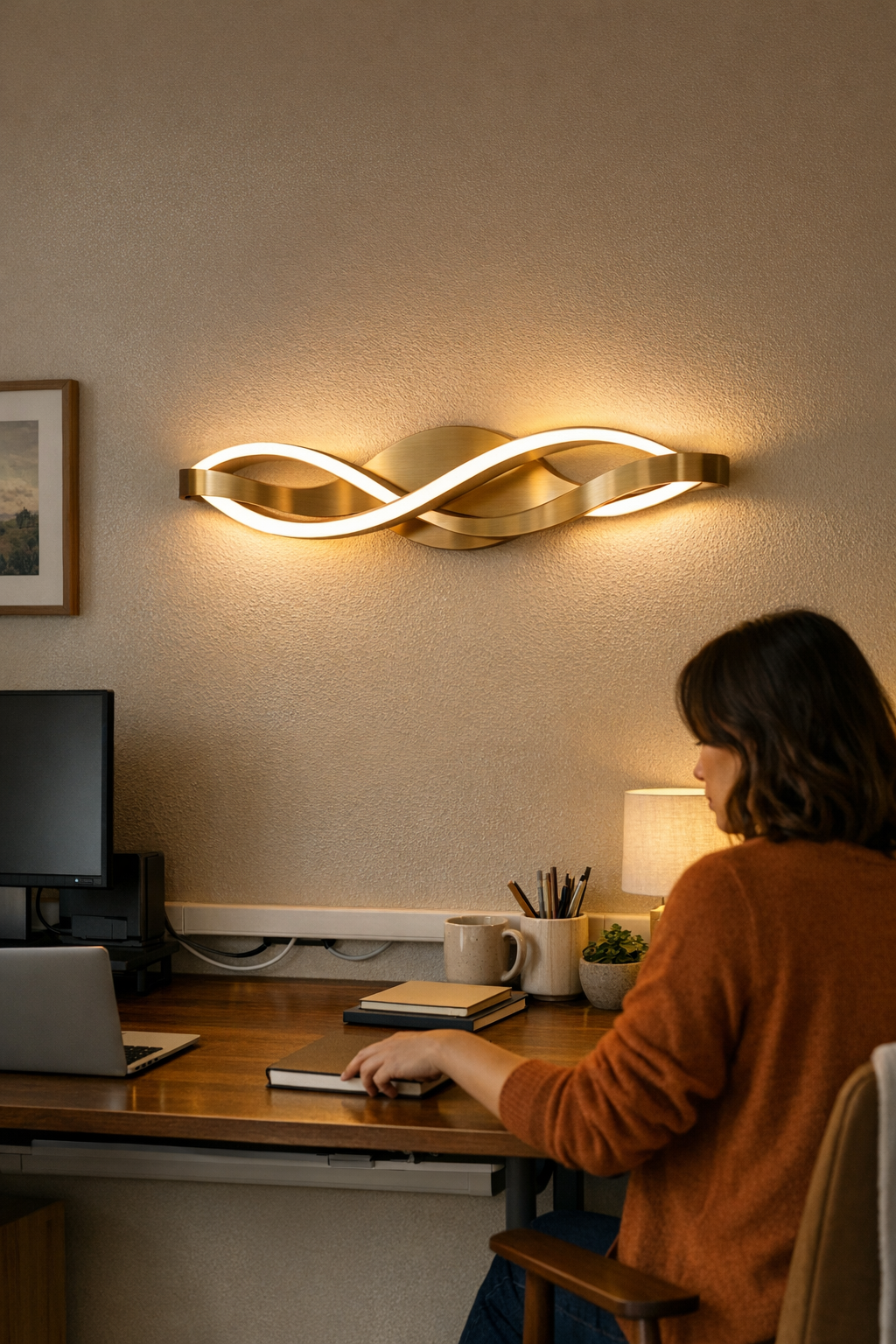
Every tidy lighting setup feels deliberate at first: lamp, light strip, or wall fixture perfectly placed, surface clear, cables tucked—until the small drags begin. By the end of the first week, the clean desk lamp cable is catching your sleeve, the LED strip’s cord has slid forward to dangle where your knee knocks it, and the sconce’s line is coiling dust behind the chair. The setup looked minimal; what you actually notice, day after day, is the return of cables into your hands, feet, and sightlines. Even the lowest-profile lighting turns into source of friction when unmanaged cords keep shifting, snagging, or trailing into places you have to work around.
When Cords Stop Being Invisible—and Start Slowing You Down
Cable clutter rarely arrives all at once. You start by nudging your desk lamp to cut monitor glare; the cord tugs at a stack of notes or drags the charging cable with it. Another day, you add a phone charger to the cluster below your work surface. By Friday, untying a knot at your feet has become part of your shutdown ritual. Each friction—a chair catching, a wire blocking a drawer, bumping a cable every time you stand—doesn’t just break the visual order. It slows movement, snaps your focus, and steadily reminds you that the space won’t stay “done” on looks alone.
Visual Clutter Becomes a Physical Drag
Loose lighting cables don’t only clutter up the view—they interrupt the way you actually use a room. A power line running the wrong way across a shared table catches a coffee mug or snags on the edge. Every lamp repositioned is a chance to scrape the wire or expose slack you’ll later nudge back into place. Shared home offices multiply the mess: lamp cords, chargers, and USB lines tangle and overlap, cables shifting with every person who plugs in, leaving a new small problem under every elbow or heel. A seemingly organized setup asks for constant adjustment simply to keep it working.
A Setup That Looks “Done”—But Feels Awkward Under Routine Use
Spaces built to look resolved—cables clipped, lines hidden—don’t always survive real routines. Adhesive guides last until you shift a lamp to chase glare, or lean under to swap a light plug and dislodge the whole fix. Cords work themselves out of their channels, spill toward the edge of the surface, or slacken out of reach. Cleaning becomes a project: wires need unhooking, piles of slack attract dust, and finding the right charger means pausing to untangle and trace lines that were supposed to stay separate. What looked controlled now interrupts each simple use.
Real-World Friction: Shared Spaces, Repeated Interruptions
In a shared workspace—one desk, two users—the difference between temporary and lasting fixes shows quickly. The first person plugs in a task light, the next needs the ambient strip near the wall. Between them, cables creep out of order, chargers tangle, lamp cords pull loose or block a needed outlet. Chairs drag cables sideways. Each time a new device comes or goes, micro-knots and minor snags accumulate, prompting another round of hunting, untangling, and re-routing. The entire setup, however clean it looked after install, starts bleeding time and attention out of every small task.
How Effective Cable Management Changes the Routine
A committed cable path resets the rhythm of the room instantly. Clip a raceway under the back edge of your desk: lamp cords and strip wires vanish from top view, show up only at the outlet. Actions shift—move a light, slide a chair, wipe down surfaces—without tracing or bumping into errant cables. You clean without pausing. You shift a lamp and no longer feel a tug or risk a sudden slip halfway through a call. The space not only looks better, but the drag of small, constant corrections disappears. Over weeks, the desk or shelf starts to feel genuinely usable, not just good in photos.
Setting Up Cable Paths That Hold Up—Not Just Look Good
Lasting cable management is structural, not decorative. It’s about eliminating places where snags, tangles, and reroutes keep returning. The details matter:
- Anchor early, guide along the whole run: Mount a cable channel or adhesive guide under every active surface—desk, shelf, rear wall—so cords are contained from plug to light, never given a chance to pool into a nest. Each shift of a lamp or swap of a charger keeps cables in line, never letting drift start.
- Use anchor points, not a single clamp: Instead of gathering everything at the outlet, secure cables at intervals along their path, preserving just enough slack for movement but never letting them strip loose into the workspace or loop out beyond reach.
- Address neglected lighting roles: Under-cabinet LEDs and wall sconces accumulate chaos too—cords dangle down shelf backs or coil along wall trimming, especially if lights must shift for cleaning or bulb changes. Guiding their cords to a fixed, out-of-the-way path means these setups require less recovery work each time you use the space.
One Small Adjustment, Repeated Benefits
Install even a single cable raceway beneath a cluttered work edge and the routine shifts: cords stay put, cleaning is distracted by nothing, and adjustments happen without planning the next workaround. You notice what’s on the desk, not what snakes behind it. Weeks pass and the room requires less correction, not more—a shift from “how do I keep this tidy?” to a setup you forget the moment after it works.
Weak Points Revisited—and Fixed for Good
The real evidence of a solid lighting support setup? You stop having to double-check, pause, or untangle. The old routine of tracing power lines, sorting which plug belongs to which light, or bending to clear cable chaos is gone. The setup you once fussed over simply runs as intended—lamp, strip, shelf light, and charger ready in sequence, no detours. Maybe it never looks like an untouched showroom, but it works: cords fall out of sight, and daily friction falls away with them. Each clean, direct adjustment—without a pause to fix a snag—signals the difference between a setup that only looks right and one that finally acts right.
For setups that need less clutter, less friction, and more predictable comfort, thoughtful cable paths are as important as the lighting itself. Find the fittings and accessories you need at LightSupport.