
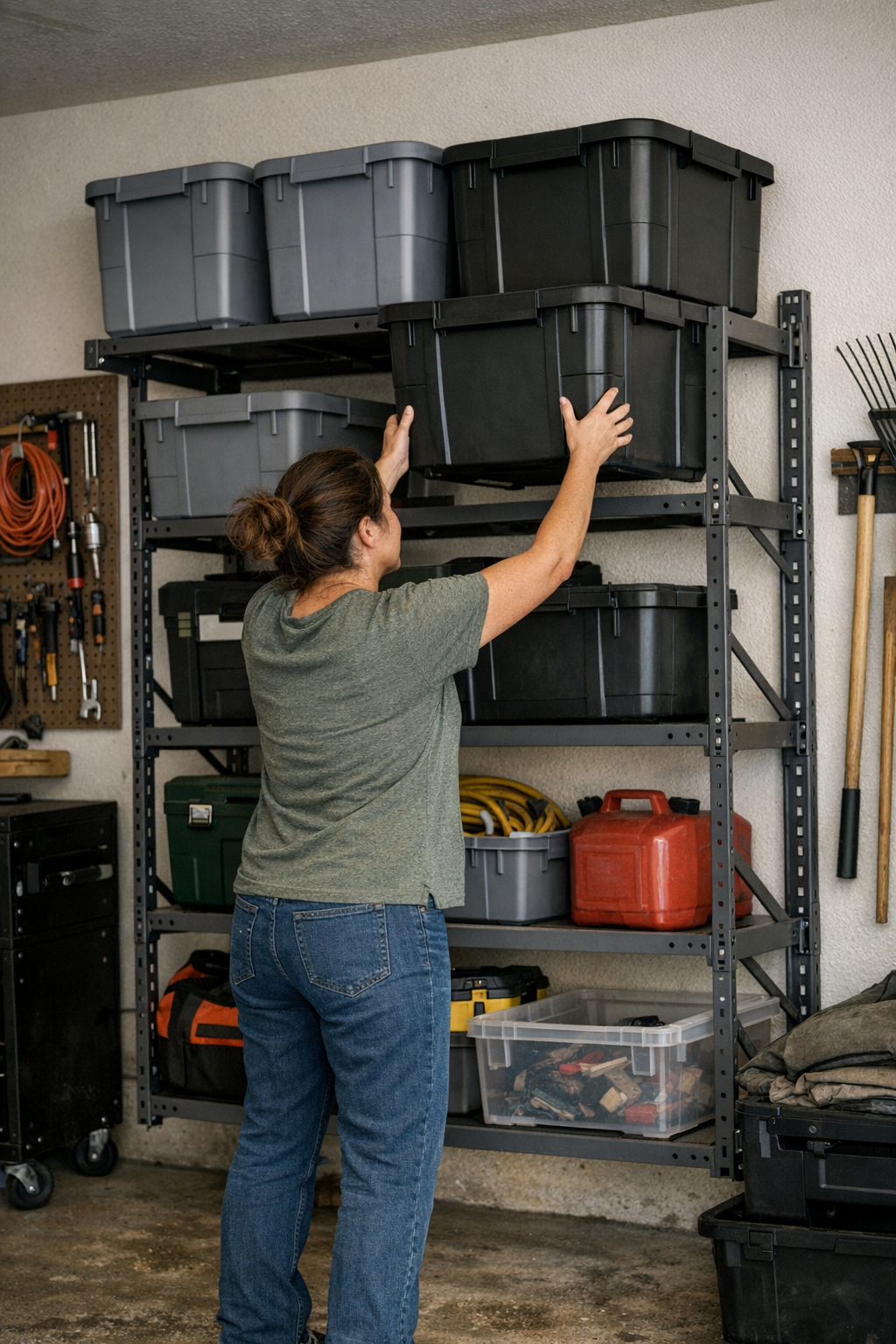
No storage setup proves itself on day one. The real test comes weeks later, when your habits clash with the promises of a new system. Whether you’re outfitting a garage wall for the third time, stacking up gear in a narrow laundry nook, or hoping your workshop finally circulates better, the line between an anchored shelf and a freestanding rack doesn’t reveal itself until real routines set in. Both might look perfectly stable when empty, squared off for a quick photo. But as you load and shift, as bins get cycled and heavy gear moves from one season’s project to the next, those differences move from invisible to unavoidable.
Everyday Annoyances: The Subtle Cost of a Wobbly Rack
You clean up after a job or return another armload of bulk supplies. It’s nothing dramatic—just a quick trip to the shelf, a bin to restock. And then it hits: that soft flex, the slight forward lean, the fraction of movement that interrupts your natural rhythm. What was a barely-noticeable wobble on day one is now a steady presence, prompting a pause every time you store something heavy overhead.
It’s the small adjustments that accumulate: bracing with one hand, sliding dusty bins with extra care, keeping your heaviest boxes lower just in case the frame shifts too much. You adapt, re-sort, and build little workarounds—spreading out the weight, using the top shelf mostly for light overflow—but with every workaround, flow gets choppier and the clean order you pictured keeps slipping out of reach.
Looking Organized, Feeling Blocked
Unanchored shelves look good in a lineup along the wall. The symmetry is appealing. For a moment, the impression is: “This space is finally under control.” But surface order rarely holds up under real demand. In a shed or workshop, racks that wobble or shudder under load turn from background infrastructure into active obstacles.
As soon as you’re forced to pull a whole unit away from the wall to hunt for that runaway bolt, the weaknesses become obvious. Dead corners stay awkward, always accumulating what doesn’t fit anywhere else. Tools or materials originally meant to be easy to grab end up shuffled to new spots, just to avoid fighting the flex. Suddenly, you’re rerouting the whole flow of traffic: nudging a cart aside to open a path, reaching around a protruding leg again, stepping out of the way when two racks crowd each other. What looked organized becomes a zone to tiptoe and avoid—resetting after each project instead of working smoothly through them.
How Small Shifts Snowball
Here’s the routine you know too well: By the weekend, you’ve stacked three heavy containers on the upper rack. Midweek, you pull one down, feel the frame shift—so you move lighter gear to the top and vow you’ll reorganize “later.” The overflow you need most starts to stack up in an unused corner, out of urgent reach. Meanwhile, the main shelving quietly eats up both floor and wall space without actually streamlining your efforts.
Even with generous square footage, a poorly anchored or drifting unit pushes the rest of your layout out of sync. You shift a rolling cart for the hundredth time; you squeeze around a shelf that juts out half a foot too far; work zones blur, and what should be open movement starts to feel cramped. Each reset takes longer. Each tool is just a little less accessible. You feel the arrangement working against—not for—your routines.
Anchoring: The Invisible Upgrade
Frustration has a breaking point. After one too many near slips, you finally mount the uprights into the wall—just a handful of brackets into the studs. The difference is instant and tangible. That steady background anxiety is gone. The third shelf can take the heaviest box without a twitch; no more hip-bracing or tentative reaches. Each return trip is a true reset: you drop the bin, close the loop, and move on without hesitation.
This isn’t a quest for showroom perfection—it’s about clearing away friction so your setup steps out of the spotlight and simply works. The reset at the end of the project feels breezy, not exhausting. That corner you used to avoid? Now open for business. The floor and wall space actually serve the flow of work, not just storage for storage’s sake.
Making Small Fixes That Stick
Not every space lets you bolt everything to studs, but small improvements count. Anchor brackets at one point, add proper feet, or simply drive a single screw to stop a recurring shift. Don’t just evaluate a shelf when it’s empty: put it through the routines that matter—climb, stack, remove, reload—and watch what happens. Wherever you find yourself bracing, nudging, or working around the shelf, that’s a cue to intervene.
If a rack needs a quick shift before every access, or always seems to inch away from the wall, don’t resign yourself to that pattern. Rearrange with purpose. Test until you find the point where your movement is unimpeded and every zone—corner, alley, or awkward stretch—actually works the way you intended on setup day.
The Difference You Feel, Not Just See
Garages, utility corners, and workspaces don’t need to look perfect—they need to keep pace with your actual habits. Anchoring a single shelf transforms the energy of a whole routine: resets happen on autopilot, fast movements don’t force second guesses, and no space is surrendered to awkward workarounds. Suddenly, storage is background—efficient, unfussy, and always available. That’s not a dream scenario. It’s the quiet difference of a system that’s finally as capable as you are.