
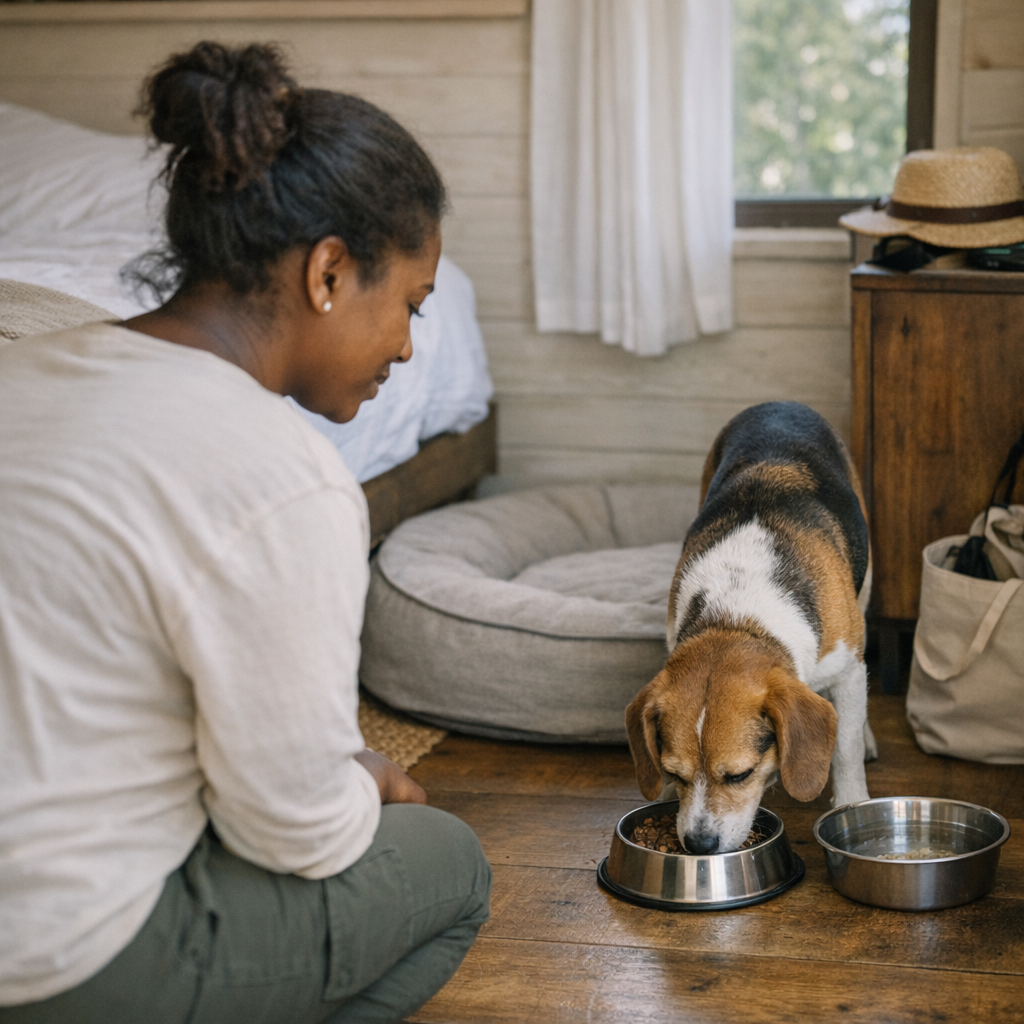
Your dog’s setup may look organized—bowl tucked into a corner, bed right under the window, water bowl nestled beside it. But if every day you watch your dog pause at the food station, circle the bed before lying down, or stand awkwardly between spaces, something’s off. You don’t see chaos, just repeated friction: reaching for the leash and bumping into a scatter of toys, arriving home after a walk and realizing towels or wipes are out of reach, or watching your dog sidestep a bed that looks inviting but never feels easy to use. The “neat” layout isn’t always the routine-smoother you hoped for. What actually stacks up are tiny delays and missed beats—until the setup that looked right on day one keeps snagging the flow for both dog and owner. The DogPile world isn’t about picture-perfect corners. It’s about setups that survive real dog-life repetition—walks, resets, rushed mornings, bedtime resets, and everything in between.
When “Good Enough” Stops Feeling Good
Dog routines don’t fall apart all at once—they slow down through details. Maybe feeding is delayed while your dog picks a path around a wedged-in bowl, or evenings finish with your pup stalling in the no-man’s-land between bed and meal zone. A streamlined setup might hide friction for weeks until you realize: you’ve adapted so well to those small obstacles that you no longer question why the routine drags at certain points. That’s how a “solved” corner gradually resets itself as the place where meals get delayed, rest gets interrupted, and you spend small bursts of time nudging your dog along rather than moving forward together.
No trash spread, no drama—just patterns: dogs hesitating at thresholds, glancing back for reassurance, making one more orbit before eating or settling. If you find yourself straightening beds, shuffling bowls, or pushing a mat “just in case” multiple times a week, you’re not optimizing—you’re managing silent friction that never really leaves the routine.
How a “Dependable” Setup Can Hide Repeated Friction
That corner bowl? Less mess, yes. That bed against the wall? More floor space for you. But for your dog, the geometry changes everything: their entrance and exit path is blocked, their instinct to approach head-on is denied, and what you call “organizing” becomes their daily awkward dance. Most dogs adapt by pausing, circling, stopping to see if you’ll clear the way. After busy mornings or evenings, you start bracing for these delays: the extra time needed when your dog double-backs at the water bowl, or waits in limbo for a cue to settle. The tidy layout fades into the background, but the repeated stalls and reshuffles become the true routine—predictable, but never easier.
The Daily Life Version: Walks, Meals, Rest, and That Annoying Pause
This isn’t theory—it’s the difference between a day that clicks and a day full of micro-slowdowns:
- After the morning walk: You unclip the leash, but the food bowl’s too close to the wall. Your dog hesitates, circles, delays—breakfast never starts on cue.
- Before resting: That bed looks perfect where it is until your dog drags it forward, spins in confusion, or sleeps half-off just to find a better angle.
- Refilling water: The bowl’s ideal for spill control in theory, but cleaning it or reaching past it means blocked hands, scattered drips, and a dog waiting or splashing at the wrong time.
- Evening reset: By the end of the day, toys drift into footpaths, wipes are buried under other gear, and just prepping a clean corner adds steps that weren’t there at first.
Individually, these are minor. Stacked across the week, they become the reason routines stall, why settling the dog always takes “one more thing,” and why the area that seemed solved keeps nagging you at the very moment you need smooth flow.
When Tidy Looks Good—But Doesn’t Work
Visual order and repeated function are two different things. Arranging bowls, beds, and toys in neat lines clears your own path, but not your dog’s. Most setups that look “finished” begin failing quietly as friction points accumulate:
- Forcing awkward bowl approaches that never feel natural
- Making the bed an obstacle course instead of a place to land
- Leaving blank spaces where your dog lingers, unsure where to settle
- Letting toys, wipes, or towels migrate into human space, so everyone moves slower and more resentfully
Small tells—the multiple circles, the wait at the bowl, the scramble for supplies just a beat too late—signal a setup that isn’t quite keeping up with real-world use. The clutter might be hidden, but the interruptions keep surfacing every day.
Why Does the Same Weak Point Keep Coming Back?
Quiet friction is stubborn. Move the bowl, clear the toys, straighten the rest mat, and the same hesitation reappears in a new form days later. The issue isn’t the mess you see—it’s the subtle mismatch between layout and flow. Wiping the same spot under the bowl after every feeding, watching the bed creep inches away from its assigned spot, or doubling back to fetch a missing towel isn’t just bad luck; it means the setup ignores how routines really play out, not how they appear for a photo.
Clear Signs Your Setup Needs Rethinking
You know the cycle’s off when these signals show up:
- Dog pauses at food or water. Stops, stares, or glances for reassurance—never just eating and moving on.
- Rest is restless. Your dog circles or flops repeatedly, aiming for comfort but never quite landing.
- Slowed post-walk transitions. Dog lingers between spaces—pacing or freezing, waiting for you to signal the next move.
- Routine cleanup requires repeated reach-arounds. You fumble for wipes, double back for chews, or shuffle items out of your own path every single time.
- Daily reset takes longer than needed. Arranging toys, repositioning beds, or relocating bowls becomes a drawn-out ritual—the “neat” setup slipping out of alignment with real life.
When routines are interrupted in these silent ways, a setup that looks good on a checklist may actually waste your time and your dog’s focus, day in and day out.
Small Shifts, Big Difference: How Adjustments Unlock Routine
What fixes this isn’t a room overhaul—it’s noticing the hidden snag, then making one adjustment that removes repeat friction rather than adding more organizing. The key is to challenge the “good enough” and tweak a single point, not the whole map.
A Real-World Fix in Action
Picture the daily return: dog in, leash unhooked, bowl in sight. The sticky pause repeats until you slide the food bowl twelve inches out from the corner and rotate the bed to face the center of the room. Suddenly, the post-walk shuffle falls away. Your dog goes straight to the bowl, eats without circling, lays down without fuss. The time cost disappears, and everything feels like it actually clicks without new gear, just a smarter line-up.
Other Realistic Tweaks That Pay Off
- Rotate the bed so entry is direct. Dogs settle faster when the “open” side faces the main path, not the wall.
- Slide water into the main route—but not where you trip on it. This keeps both mess and bottle refills easier for you and more inviting for your dog.
- Put towels and wipes near real transitions. A reset station close to the walk-in makes cleanup automatic, not a scavenger hunt after the fact.
- Account for the busy hours. Temporarily reposition bowls or beds for morning or evening surges. Allow a setup to flex when the routine bottlenecks—not just look neat for guests.
No daily system is truly finished if you’re still working around the same small blocks. With a sharper eye on how routines break down—towel buried, bowl blocked, toys sneaking into walkways—you unlock an easier flow that’s tuned to everyday life, not just a tidy floor plan. The difference might not look dramatic, but it feels better with every real use.
See what’s actually working in real dog-life routines—find setups that fit daily reality, not just a photo, at DogPile.