
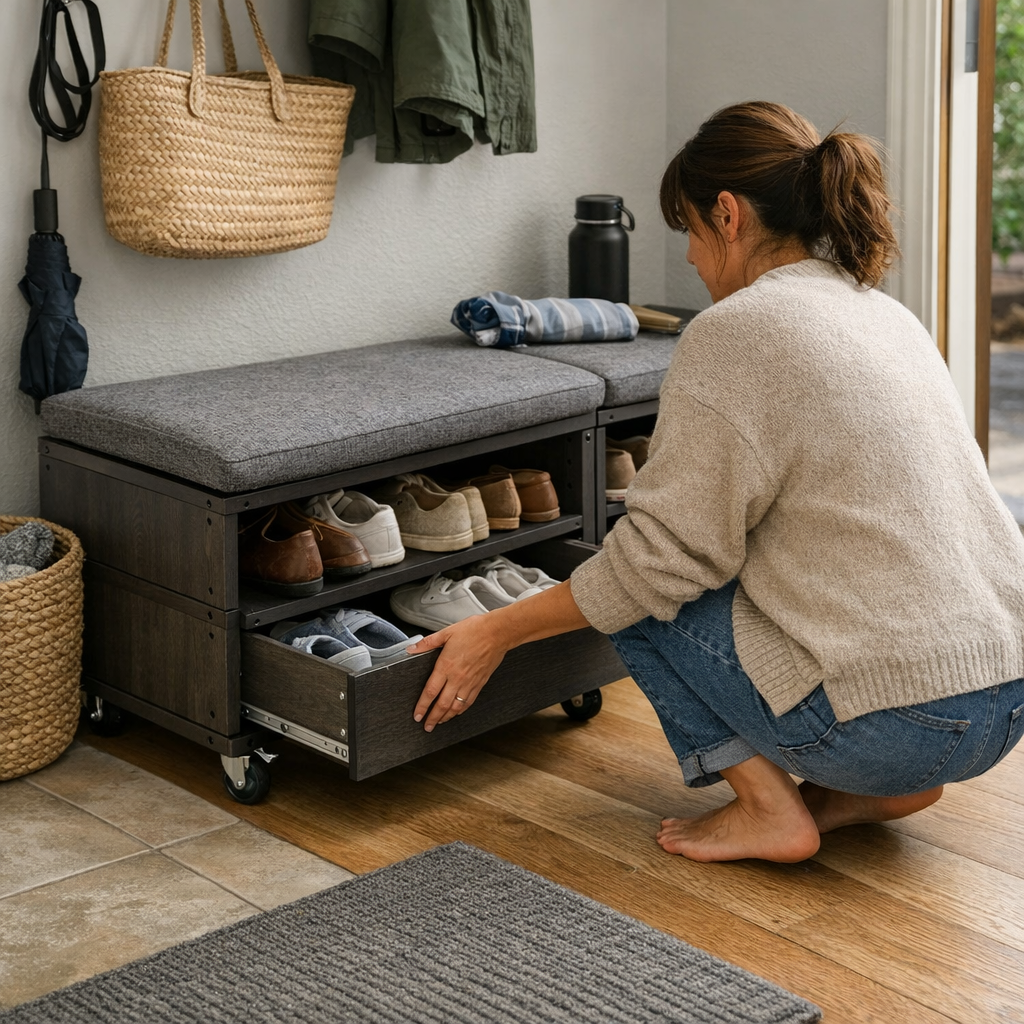
Most transition-space headaches aren’t what you see in the entryway—they’re what you can’t reset fast enough. The difference between easy-gliding mobile storage and the daily drag of stubborn casters is obvious the first time you try to clear a path and the bench jams against a rug, or the shoe rack catches a floor seam just as you need it moved. Mobile storage is supposed to make the threshold flexible, but when the wheels resist, every adjustment—bag drop, shoe lineup, or cleaning pass—turns into its own minor traffic jam.
When Mobility Makes or Breaks Your Threshold
Entryways never stay put, no matter how well you organize in the beginning. Drop a bag and suddenly the path’s blocked; slide the bench to vacuum and realize it won’t move in one go; pull back a cart to hang up a soaked coat and find it wedged tight against the floor. The area looks organized—until you actually try to shift things with hands full or guests waiting. Here’s where most setups quietly fail: hardware that moves too roughly or too little. Instead of quick resets, you get stuck pivoting, bracing, and scuffing surfaces, feeling each small resistance stack up in your routine.
The real problem isn’t clutter—it’s slow recovery from it. Glide should mean push-and-go, not wrestle-and-reset. If the wheels catch, every routine tweak—a quick bench move, a shoe rack shift—becomes a stop-and-fix moment. Delays pile up, the bench migrates into the walkway, and clutter escapes containment. Over time, even a well-laid-out threshold devolves into friction: slow, noisy, workarounds every time you want to reclaim the floor.
Why Rollers Matter Long After Setup Day
Every new entryway piece promises easy routine: clean bench, storage in line, shoes put away. But “easy” crumbles in actual use cycles. Standard casters glide the first week, but wear, dust, and uneven loads quickly change the feel. After a dozen resets:
- Reset friction grows: The floor picks up marks, the shift goes from smooth to shoving, and even simple cleaning gets skipped more often.
- Clutter returns faster: When moving storage feels like a chore, shoes get dropped further out, bags block the bench, and returning order requires an effort you start avoiding.
The area’s organization isn’t lost all at once—it slowly unravels because the storage can’t adapt quickly to real, daily motion across mixed surfaces.
Everyday Scenarios Where Roller Quality Shows
1. Dropping Bags and Shifting Storage
Coming home juggling groceries and a shoulder bag, you try moving the bench with one hand so nothing drips on the floor. Good wheels? Push and it’s done—nothing tips or drags. Cheap casters? The bench lurches, jams at the rug, and you end up blocking the threshold until you wrench it sideways, scraping the floor and losing patience for the next reset.
2. Resetting Zones for Cleaning or Company
Cleaning days shouldn’t mean breaking your layout. Usually, you just need to sweep or mop a patch that collects debris right where everyone comes in. If the storage glides, five seconds clears the space. If not, dragging noise, gouged floors, and awkward shuffling slow every attempt. Eventually, you either skip the reset—living with mess returning faster—or grind your way through and resent the process.
3. Shoe Overflow and the ‘Good Enough’ Shuffle
Shoe rows always drift when storage won’t cooperate. The shoe rack anchored by friction means shoes migrate into the walking lane, bags pile up wherever there’s space, and threshold width shrinks day by day. A unit with real rollers can be nudged back in place—containment restored in a moment. With stubborn hardware, every tidy-up is a hassle, so the area slowly collapses into “good enough” until you finally clear it in frustration.
The Real-World Difference: Premium vs. Basic Rollers
The difference is immediate: Do you adjust your routine for your storage, or does your storage adjust for you? Premium sealed bearings and soft-rolling casters cross seams and tile lips without pause. No scraped floors. No stuck corners mid-cleanup. No hesitating to reset before guests arrive. The area stays workable as entry routines repeat—push, glide, done.
Basic wheels, chosen by default, start fine but quickly stutter as soon as weight shifts, mats bunch up, or dirt collects—turning resets into mini-workouts. Pinch points show up at:
- Mixed floors—tile meeting wood, or rugs at the doorway—where most cheap wheels jam or scrape
- Thin mats or uneven strips that tip or catch the unit mid-move
- Narrow entries, where resisted movement means losing inches of usable space to overflow and awkward alignment
With quality rollers, these problems fade into the background. Without them, even the best-organized space can’t reset fast enough to keep up with daily life.
Small Upgrades, Big Everyday Impact
Can I add better wheels to my current bench?
Usually, yes. Most mobile benches and cabinets use standard mounts, and a swap to sealed, soft-rolling casters is all it takes. This small upgrade changes resets from “production mode” to one-hand adjustments—no new furniture, no living with gouged wood, no lost time every time you clear a path.
Which floors show the biggest difference?
Hard flooring exaggerates every hardware shortcut. Hardwood and tile highlight every scrape; even short carpet quickly scars up baseboards when a stiff caster fights the move. No floor type hides cheap wheels for long. Upgraded rollers mean less resistance everywhere: at door lips, tight bends, or blend points near wall edges that see the most storage movement under real pressure.
Tips for Keeping Entry Mobiles Working Right
- Fit storage to your most demanding spot. If your entry includes seams, lips, or tight bends, use or upgrade wheels to match the toughest stretch—not just the easiest area.
- Watch for problem cues. Squeaks, jolts, or debris sticking to wheels signal it’s time for a quick clean or swap—restoring smoothness in seconds and keeping resets painless.
- Think about return flow. Mobility isn’t just for spring cleaning; it speeds up every item retrieval, returns shoes to order, and lets you shift the bench out of the way without stalling daily routines.
The Threshold that Works—Every Time
Transition spaces do most of a home’s heavy lifting—absorbing drops, resets, bags, and debris day after day. The best setups contain clutter when idle and go instantly adaptable under pressure. Real mobility isn’t a design flourish: it’s the difference between a constantly reclaimed threshold and a slow-slide back into blockage and mess. Swapping to quality rollers quietly transforms entryway storage into the friction-free, background support that keeps the pathway open—even as routines and rush hours change by the week.
Stick with default hardware and resets slow, overflow drifts in, and you start seeing the cost in skipped cleanup, blocked paths, and a transition zone that looks under control but can’t keep up with reality. Upgrade the wheels, and the difference travels with you: clear paths, quick recoveries, and a threshold that stays ready—no matter how often routines pile up.